Why More People Are Bringing Their Yoga Practice Home (And How to Do It Right)
The shift toward home wellness didn't fade when studios reopened. If anything, people got a taste of what a thoughtfully built personal space could feel like and never fully let it go. Whether you're unrolling your mat in a dedicated room or carving out a quiet corner of your apartment, home yoga has never been more intentional or more worth doing right.
The good news is that it doesn't take a renovation or a big budget to make it work. It takes a few smart choices, the right gear, and a little creativity applied in the right places.
Creating a Space That Actually Inspires You
The biggest barrier most people face isn't motivation. It's walking into a cluttered, uninspiring room and trying to feel grounded before they've even taken a breath. Your environment sets the tone for your practice before you step on the mat.
Start small. Clear the area, add a candle or a plant, and maybe a compact speaker for ambient sound or a guided class. These minor shifts signal to your brain that this is a space for slowing down, and over time, those cues become powerful anchors for consistency.
Natural light is a bonus if you have it. But even a well-placed lamp with warm-toned bulbs can completely shift the atmosphere of a room, especially after a long day at a desk. Don't underestimate the impact of a space that feels intentionally different from the rest of your home.
Personalizing Your Gear Without Spending a Fortune
One of the most overlooked joys of practicing at home is that you can make your setup completely your own. That includes your gear. A lot of people don't realize how far a little DIY thinking goes when it comes to both maintaining and personalizing their equipment.
Take your yoga mat bag as an example. With daily use, straps fray, seams separate, and zippers start to pull away from the fabric. The instinct is to replace it, but a reliable fabric glue can restore it in a matter of minutes. It's a simple fix that saves money, reduces waste, and keeps your favorite bag in rotation for far longer than you'd expect.
The same approach applies to foam blocks, bolsters, and fabric-covered props. You can patch worn surfaces, reinforce loose edges, and even attach non-slip fabric panels to smooth-bottomed props that tend to slide. Small repairs like these extend the lifespan of quality pieces significantly, which matters when you've put real money into building a solid kit.
Beyond repairs, fabric adhesive opens up a creative side that a lot of yogis don't explore. You can add fabric patches to a plain mat bag, personalize your carry tote, or affix custom trim to a bolster cover, all without needing a sewing machine or any real craft experience. It's a low-effort, high-reward way to make your gear feel more personal and less like something pulled off a shelf.
Building the Kind of Routine That Actually Sticks
Consistency in yoga comes down to removing friction. The fewer obstacles between you and your mat, the more likely you are to show up for yourself. That means keeping your props accessible, your space ready at a moment's notice, and your gear in good working order.
A lot of people put all their energy into finding the perfect mat and then stop there. But it's often the smaller, less glamorous details that make or break a session. The right clothing, the right soundtrack, the right surface underfoot: each of these plays a bigger role in your focus and flow than most people give them credit for.
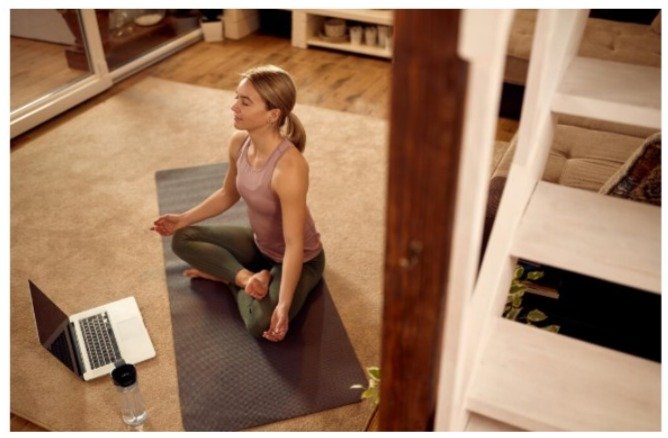
If you're practicing on carpet, bare feet usually do the job. But on polished hardwood, tile, or the smooth vinyl flooring common in NYC apartments, bare feet can actively work against you. Slipping mid-pose isn't just frustrating; it breaks your concentration and creates a real risk of injury over time.
Your footing matters more than people tend to acknowledge, and it's one of the easiest things to fix with the right gear.
Why Your Feet Deserve More Attention
This is one of those small upgrades that genuinely changes the quality of a session once you make it. Most people dismiss socks in yoga based on studio experience, where mats offer more friction and floors are rarely bare. At home, that logic doesn't always hold.
Investing in a pair of high quality yoga socks with grip soles gives you a consistent, reliable connection to any floor surface. They're particularly useful during Pilates-influenced flows, balance-heavy sequences, and standing poses where your weight is shifting constantly and your feet need to stay planted.
Good yoga socks also solve a hygiene consideration that's easy to overlook. If you practice in a shared home, have guests join your sessions, or simply prefer an extra barrier between your feet and the floor, they offer a practical layer of cleanliness without getting in the way of your movement. In cooler months, they keep your feet warm during restorative or yin practices where you're holding long, still poses and body temperature tends to drop.
When shopping, look for socks with individual toe sections and silicone grip patterns on the sole. These are the features that separate socks that slide anyway from ones that genuinely support your practice. A flat grip pattern may look fine on paper, but a structured sole with textured nodes is what actually keeps you stable when things get challenging.
Keeping It Fresh: When Home Practice Needs a Boost
Once your home setup feels solid, the next challenge is keeping your practice from plateauing. A home routine is excellent for consistency, but without fresh input, it can start to feel repetitive over time.
Rotating between online teachers, trying a new style of yoga each month, or revisiting poses you've been avoiding are all easy ways to keep things evolving. And if you're based in New York and curious about what the in-person studio landscape looks like as a complement to your home sessions, this NYC fitness guide covers some of the more interesting unconventional options worth exploring.
The beauty of having a home practice is that it works with everything else in your life. Use it to warm up before a busier studio day, wind down on quieter evenings, or hold your routine steady when your schedule gets too unpredictable for class bookings.

The Takeaway
Building a home yoga space doesn't require a big commitment upfront. It requires attention: to the quality of your environment, the condition of your gear, and the small details that make practice feel good rather than like a chore. From keeping your equipment in great shape with the right adhesive to choosing socks that actually work with your floor type, the upgrades that matter most are usually the simplest ones.
Start with what you have. Refine as you go. And remember that the best yoga practice is the one you actually show up for, even when no one is watching.