Why Experiential Travel Is Redefining Luxury for Modern Explorers
There is a particular kind of restlessness that no hotel suite can resolve. It is the feeling of having arrived somewhere beautiful and still sensing that you have not quite touched the place.
That the experience has been curated for you rather than by you, and that the distance between traveller and destination remains despite every comfort arranged on your behalf.
This is the friction that is quietly reshaping what luxury travel means. Not a rejection of quality or refinement, but a recalibration of where meaning lives within a journey.
The shift is visible across demographics and geographies. Affluent travellers who once measured a trip by its thread count and Michelin stars are now measuring it by what they came to understand and what they witnessed that could not have been staged or repeated.
The trophy destination has given way to the transformative one.

Luxury Has Become Experiential
For most of the twentieth century, luxury travel was organised around scarcity and status. Access to a certain class of hotel, a particular cabin configuration or a private beach that others could not reach.
These signals mattered because they were legible. Everyone understood what they communicated.
That grammar has not disappeared entirely. But it has been complicated by a generation of travellers for whom access alone is no longer sufficient.
What is driving this shift is partly cultural and partly psychological. When the world became smaller and more documented, the aspiration changed.
The most compelling version of a journey is now one that cannot be photographed into adequacy. One that resists reduction to a highlight reel. The experience itself has become the luxury object.
Wildlife Encounters as Transformational Travel
Australia occupies a singular position in this new landscape of experiential travel. Its ecological identity is unlike anywhere else on earth.
The species that evolved here did so in near-total isolation for millions of years, producing fauna that exists nowhere else and that continues to arrest even the most well-travelled visitors.
Encounters with that wildlife, when approached with genuine intention, carry an educational and emotional weight that endures long after the journey ends. This is not passive observation of animals at a remove. It is something closer to ecological immersion.
The design of these experiences matters considerably. A well-conceived wildlife encounter is guided, contextualised and paced. It tells a story about a particular species or ecosystem rather than simply presenting it.
Travellers who choose to experience an Australia wildlife show through a structured and expertly guided programme leave with something more durable than imagery. They leave with a framework for understanding a continent.
Conservation tourism has deepened this dimension further. Many of the most compelling wildlife experiences in Australia now operate within a conservation context, where visitor participation directly supports habitat preservation or species protection programmes.
The traveller becomes, in some small but tangible way, a participant in the story rather than a spectator to it.
This is the distinction that separates transformational travel from memorable travel. One changes the destination. The other changes the traveller.
Designing Travel Around Meaningful Moments
The itinerary of a modern luxury traveller looks different from what it did two decades ago. The compression of activity and the relentless accumulation of places visited have given way to something slower and more selective.
Slow travel has matured from a philosophical position into a practical design principle. Fewer destinations, longer stays and deeper engagement with each place have become the markers of a considered journey.
The traveller who spends four days in one region of Queensland, learning its ecology, its food culture and its history, returns with more than the one who covered the continent in ten.
Cultural encounters have become a particular point of interest for travellers seeking authenticity. Indigenous storytelling, culinary traditions rooted in specific landscapes and artisan practices tied to local materials all offer a quality of engagement that a museum visit cannot replicate.
They require presence and participation rather than observation.
The design of a meaningful travel moment is rarely accidental. It requires advanced research, the right local connections and a clear understanding of what a particular traveller values.
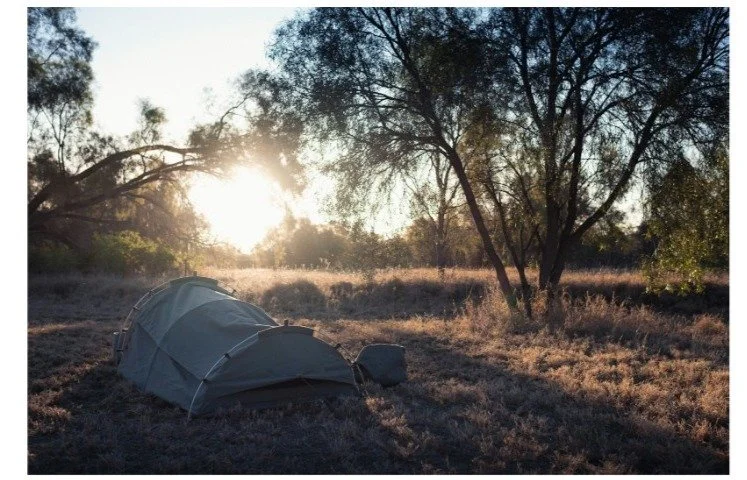
The best luxury itineraries are built around defining moments rather than comprehensive coverage. A private dawn walk through a rainforest, a meal prepared by a community elder or a night spent in genuine silence in a remote landscape are the moments that earn their place in memory.
The Role of Expert Travel Planning
Knowing that a particular experience exists and knowing how to access it are two entirely different things. Australia's most extraordinary encounters are rarely found through a search engine. They are found through relationships.
This is the core value that expert travel planning provides in the experiential era. Not the logistics of flights and hotels, but access — the cultivated network of guides, operators and destination specialists that opens doors which remain closed to those without the right introduction.
For travellers seeking to navigate Australia's considerable geographic scale and experiential depth, working with Sydney travel agents who specialise in bespoke itinerary design can transform the coherence of a journey entirely.
The difference between an itinerary assembled from online research and one designed by someone with genuine regional expertise is the difference between visiting a place and understanding it.
Expert planning also provides a quality of anticipation management that matters more than it is often credited. Knowing that the details are considered allows a traveller to arrive at each moment with full attention rather than logistics on their mind.
The best travel specialists function less like agents and more like editors. They know what to leave out as well as what to include, and they understand that the space between experiences is as important as the experiences themselves.
The Future of Luxury Travel
The trajectory is clear and it is not reversing. Experiential travel has moved from the leading edge of the luxury market to its mainstream. What was once the preference of a small cohort of particularly adventurous travellers has become the dominant expectation of an entire category of luxury consumer.
Sustainability has become structurally embedded in this evolution rather than layered on top of it. The travellers who seek the most meaningful experiences are also, increasingly, those most attuned to the impact of their presence on the places they visit.
Conservation tourism, low-volume access programmes and locally integrated hospitality models all reflect this alignment.
The personalisation dimension will deepen further. The tools available to travel specialists and the data available to operators are converging toward a level of individual customisation that was not previously achievable at scale.
For those considering how to approach their next significant journey, the principles of personalised travel planning offer a useful framework. The investment of intention at the planning stage returns itself many times over in the quality of what unfolds.
The future of luxury travel is not a more expensive version of what came before. It is a more considered one. The travellers who understand this are already travelling differently and arriving somewhere more interesting.