
Why Every Modern Nursery Needs a Reliable Bottle Warmer
A reliable bottle warmer makes night feeds safer and more predictable while reducing stress for caregivers.
Is your baby already crying while you are still waiting on water to heat, or walking to the kitchen half-awake at 2:00 AM? Across recent 2026 roundups, many warmers land in a realistic 2- to 5-minute range, while gentler modes better support breast milk handling. This guide gives you a clear way to decide whether you need one, which type fits your routine, and which features matter most.
The Real Reason Parents Reach for One at 2:00 AM
Reliable Means Predictable, Not Just Fast
A bottle warmer is designed to heat milk consistently for feeding instead of relying on guesswork with a bowl or microwave. In nursery life, reliable means you can repeat the same result when you are tired, your partner is handling the feed, or your baby is already upset. It is the difference between “I hope this is okay” and “I know this setting works.”
In real postpartum nights, the biggest improvement often comes from moving warming closer to where feeding happens and removing extra steps. When feeds become predictable, it is easier to keep the room dim, finish the bottle, and settle baby back down before everyone becomes fully alert.

Safety and Milk Quality Matter More Than Convenience Claims
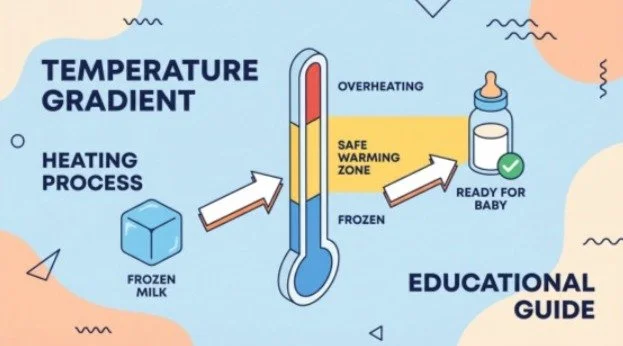
The strongest safety reason is that microwave heating can create hot spots, which raises burn risk when temperature is uneven. A controlled warmer lowers that risk through steadier heat and repeatable cycles. This matters most during night feeds, when sleep deprivation makes quick fixes tempting.
Current feeding guidance also notes that breast milk over 104°F may lose quality, so gentle warming is usually a better fit for pumping households than high-heat quick modes. If your routine includes freezer milk, this point becomes even more important because thawing plus heating adds extra room for temperature error.
Speed Helps, but Heating Method Changes Outcomes
Benchmark comparisons place steam warmers around 2 to 5 minutes, water-bath styles around 4 to 8 minutes, and portable models around 3 to 10 minutes. Those ranges explain why parents report very different results even when all products are called fast. A home-heavy routine may prioritize repeat consistency, while a daycare commute may prioritize mobility.
The tradeoff is that faster quick-warm modes can be less consistent in real-world use, while steady modes are slower but gentler. When sources disagree on the best option, the difference is usually method and use case, not that one source is wrong. Steam often wins for urgent timing; steady water-bath modes often win for breast milk handling.

Choosing the Right Type for Your Feeding Pattern
Your best choice is lifestyle-dependent rather than universal, so match the warmer to where feeding actually happens. A mostly-at-home family and a family doing daily outings need different strengths.

For formula-forward households, on-demand warm water with preset temperatures can remove the slowest part of nighttime prep and simplify caregiver handoffs. For mixed feeding, a model that handles both breast milk and formula smoothly is often more useful than a faster unit with fussy controls.
A Simple Time-and-Stress Calculation
Using the common 2- to 5-minute warming window, a family doing three night feeds can reclaim meaningful rest. If your old process takes about 8 minutes and your new routine takes about 3 minutes, that is roughly 15 minutes saved per night, or about 1 hour and 45 minutes across a week. That does not create perfect sleep, but it often reduces overwhelm.
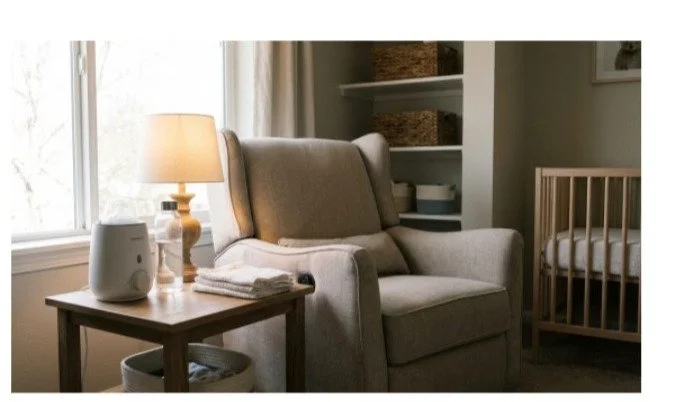
A calmer setup also depends on room flow, because a feeding spot with essentials within arm’s reach prevents late-night kitchen trips and extra stimulation. In practice, the warmer works best when paired with a supportive chair, water for you, and backup burp cloths nearby.
What Makes a Warmer Truly Reliable Over Time
Everyday reliability starts with fit and usability. Portable testing shows adapter support can improve compatibility, but you should still test your exact bottle setup at home before travel since movement can reveal leaks that never show up on a counter. A model you can clean quickly and run one-handed usually performs better long term than a feature-heavy model that slows you down.
It also helps to stay realistic: warmers are most valuable when warm feeds are a regular part of your routine. If you mostly direct breastfeed at home, you can wait and reassess later as routines change.
Nursery planning is easier when you keep priorities clear, and shortlisting by safety and fit before brand prestige keeps spending focused on daily function. One large review source was temporarily unavailable on March 6, 2026, so confidence is highest in conclusions repeated across multiple live sources: avoid microwaves, keep temperature controlled, and choose a warmer style that matches your real life.
A reliable bottle warmer is a small nursery decision that can make feeding safer, smoother, and more peaceful when your family needs that support most.