What a Modern Chandelier Costs and Where the Money Actually Goes
The four things that drive the price
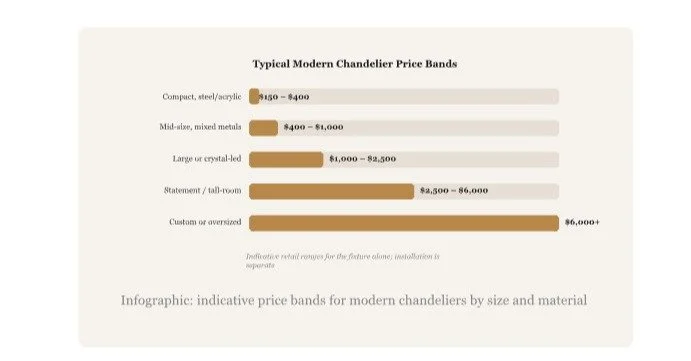
Material is the biggest lever. Solid brass, real crystal, hand-blown glass, and natural stone such as alabaster or marble all cost more to source and shape than steel, aluminum, or acrylic. They also weigh more, which raises shipping and sometimes installation costs.
The light source is second. Integrated LED fixtures carry the cost of the driver and the engineering to keep heat away from the finish, while socket-based
designs push some of that cost onto the bulbs you buy later. Size comes third, and it scales faster than people expect: a 48-inch (122 cm) chandelier often
costs well over twice what a 24-inch (61 cm) version of the same design does, because every arm, ring, and crystal multiplies.
The fourth driver is construction detail. Welded joints, a canopy that matches the body finish, and wiring hidden inside the frame instead of zip-tied along it are small things you notice every day once the fixture is up.
Installation is part of the real cost
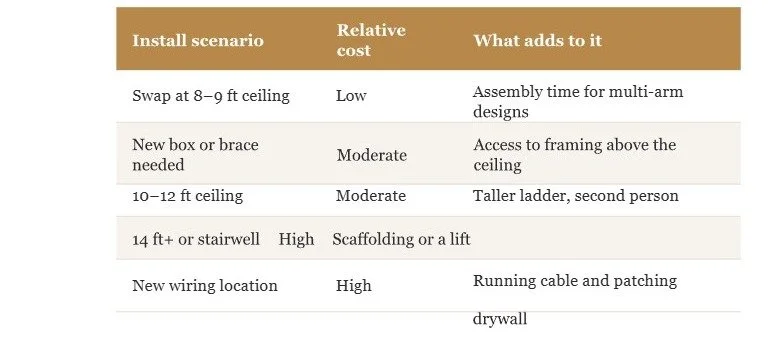
Replacing an existing fixture at standard ceiling height is usually a short job for an electrician. Costs climb when the ceiling box has to be swapped for a fan-rated one, when a brace has to be added for a heavy fixture, or when the ceiling is above 12 feet (3.7 m) and scaffolding is needed. A tall-room install can cost several times a standard swap even if the chandelier itself is mid-priced.
Where spending more is worth it
Put the money where the fixture is seen most and used longest. A dining room or entry chandelier gets looked at every day by everyone who comes into the house, so better materials and a well-finished canopy pay off. A guest bedroom fixture can be simpler without anyone noticing.
Dimmability is also worth paying for almost everywhere. Being able to drop a chandelier to a third of its output for dinner, then raise it for cleaning up,
changes how much you actually enjoy the fixture.
Where you can safely save
Shipping and returns are a hidden cost to check before ordering. Large
chandeliers often travel by freight, and a retailer that covers shipping and offers a clear return window removes a real financial risk. Buying from a specialty seller rather than a general marketplace also tends to mean fuller specs, which reduces the chance of a costly wrong-size order.
Running costs over the life of the fixture
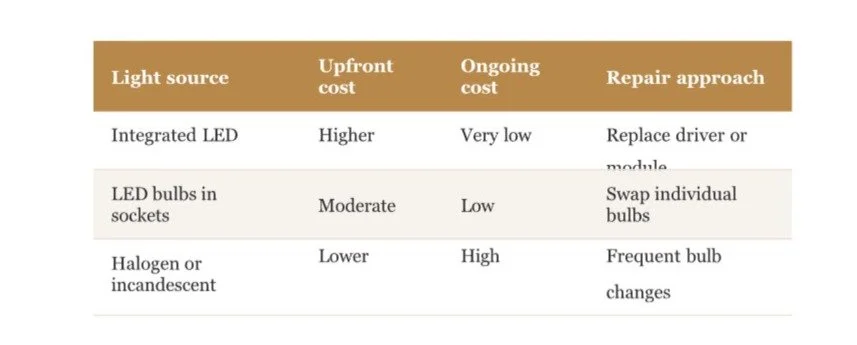
The purchase price is a one-off, but electricity and replacement parts continue for years. Integrated LED chandeliers typically draw far less power than older bulb-based designs giving similar light, and quality LED modules are commonly rated for tens of thousands of hours. The trade-off is that when an LED driver eventually fails, you need a matching replacement part rather than a bulb from the hardware store.
Socket-based fixtures cost less to repair because you simply change bulbs, but a multi-arm chandelier with twelve or eighteen sockets adds up when every
bulb is replaced. If you choose bulbs, LED versions with the right base type keep running costs low.
Warranty and certification as part of value
A longer warranty is a quiet signal of build quality. Two years on the fixture is a reasonable benchmark for a mid-range or premium chandelier. Check also that the fixture carries a recognized electrical safety listing such as UL or ETL for the US market. A cheaper uncertified fixture can cost more in the end if it fails early or causes problems with insurance after an electrical fault.
Comparing quotes fairly
When you compare options, line up the same items for each: fixture price, shipping, expected installation, any new box or dimmer, and warranty length. A chandelier that is $300 cheaper but needs a $400 brace and an extra electrician visit isn't the better deal. Writing the full picture down once avoids surprises later.
Why the cheapest option often costs more
Very low-priced chandeliers tend to save money in places you only notice later: thin plating that tarnishes within a year or two, plastic parts painted to look like metal, short wires that won't reach a standard ceiling drop, and missing assembly instructions. Any of these can turn a bargain into a second purchase. If two fixtures look similar and one is far cheaper, compare the listed materials, weight, and warranty side by side before deciding. Weight in particular is a useful hint, because solid metal and real glass are heavier than hollow or acrylic substitutes.
Putting a realistic budget together
Add the fixture price, a realistic install figure for your ceiling height, and a small buffer for a new box or dimmer. Comparing that total across a few
options is more honest than comparing sticker prices alone. Buying from a US-based online chandelier retailer that lists weight and dimensions upfront also lets you estimate installation before you commit. A clear total budget makes the final choice much easier.