
Ways Japan Reshaped Global Street Fashion
Source: Unsplash
When we talk about global street fashion today, it’s impossible to ignore Japan’s influence. While Western fashion capitals often dominate headlines, Japan has quietly shaped the way people around the world dress, shop, and express themselves. Its impact goes far beyond trends—it’s about mindset, identity, and how consumers emotionally connect with clothing.
Even the growing popularity of the boho kimono in Western wardrobes reflects how Japanese-inspired silhouettes have blended into everyday street style. What once felt culturally specific has evolved into a global layering staple. That kind of crossover doesn’t happen by accident—it’s the result of decades of influence rooted in creativity and authenticity.
Below are 10 powerful ways Japan reshaped global street fashion and transformed consumer behavior along the way.
1. Harajuku Made Individuality the Main Attraction
The streets of Harajuku were where fashion came alive. Young people wore their fearless creativity on their sleeves. They wore a mix of thrift-store clothes, high-end fashion items, handmade accessories, and traditional elements, without concern for boxy or one-rule fashion. Perfection was not the aim; individuality was.
This phenomenon of individuality was heard loud and clear around the globe. People now saw fashion not as a set of rules to follow but as a means of showcasing their individuality. Social media took this phenomenon to the next level, encouraging people around the world to experiment with their own style rather than following the latest runway fashion trends.
2. Tradition Was Reimagined for Everyday Wear
The Japanese have a unique approach to their traditions and to how they blend them into their daily lives. For example, traditional fashion shapes such as the Kimono were adapted into lighter forms that could easily blend into the latest fashion trends. These traditional elements were not lost in the process; rather, they were reinvented in a way that looked effortless and trendy at once.
The blend of traditional and modern elements in fashion has been welcomed with open arms around the globe. Today, more than ever before, people want to look at their clothes and find meaning in these elements. This blend of tradition and fashion has become the hallmark of street fashion worldwide.
3. Oversized Silhouettes Became the New Normal

Source: Wagashi Bunka
The oversized blazer and pants that have become the latest fashion trends worldwide were first adopted in Japan, the fashion capital of the world. Young people in this fashion capital wore loose-fitting clothes that challenged the conventional notion that fashion should mean tight-fitting clothes.
As comfort became a major factor in fashion, these loose-fitting clothes gained universal acceptance. People now know that fashion does not have to mean compromise on comfort. Today’s mainstream acceptance of loose-fitting clothes is a result of the early adoption of this fashion phenomenon in Japan.
4. Avant-Garde Concepts Entered Everyday Streetwear
Japanese designers took bold steps with concepts such as deconstruction, asymmetry, and architectural styles. Although this was initially seen on the runways, the concepts slowly trickled into people's lives, encouraging them to become more adventurous with the styles they adopt daily.
People became comfortable with the idea of statement pieces, and the scope of wearable art became broader. It no longer focused on the basics, opting for bold, artistic pieces that integrated into people's lives.
5. Minimalism Became a Lifestyle Choice
Not all Japanese streetwear is bold and eclectic. There was a strong emphasis on the minimalist movement, with a focus on clean lines, simplicity, and functionality. There was a shift from quantity to quality.
Across the globe, people became more inclined towards a minimalist lifestyle. There was a significant increase in the number of people adopting the capsule wardrobe. Minimalist streetwear became the new aspiration, as people became more conscious about the importance of quality.
6. Craftsmanship Took Center Stage
Japan’s reputation for quality craftsmanship, especially in denim, encouraged people to become more discerning. There was a significant change in how people consumed streetwear.
This change had a profound effect on how people shopped. People became more discerning, and the focus on streetwear shifted from the clothes to the quality.
7. Gender Fluidity Was Normalized in Fashion
Source: CNN
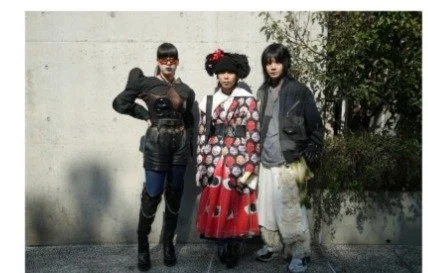
Japanese streetwear was known for breaking the mold when it came to gender. There was a lot of fluidity, and people became comfortable with the idea of breaking the rules.
Although the idea of gender fluidity was not at the forefront of global culture, the influence of Japanese streetwear encouraged people to seek clothing that was not strictly aligned with gender.
8. Layering Became an Art Form
Layering in Japan extends beyond functionality. Instead, it becomes an artistic statement. Different layering lengths, textures, and proportions are combined to give a personal touch to an otherwise single look.
This change has been very helpful to people. An otherwise simple look can be transformed with the right outer layer. This adds flexibility to fashion. As a result, fashion becomes very flexible and cost-effective.
9. Subcultures Were Celebrated, Not Suppressed
Japanese street fashion was very diverse. Many subcultures emerged and coexisted simultaneously. These included punk, goth, and cutting-edge tech wear. No single fashion dominated the streets.
This diversity has created a lasting impression on the world. Today, micro-trends and online aesthetic communities have emerged. People have found their own unique style communities according to their personalities.
10. Fashion Shifted From Status to Self-Expression
Perhaps the greatest contribution Japan made to street fashion was the concept of authenticity. This meant that clothes began to reflect people’s personalities and comfort, rather than their status.
Today, people want to feel comfortable and emotionally connected to what they buy. Japan redefined fashion and helped people see it as a way of expressing themselves. This change in mindset still influences street fashion in Japan and around the globe.
The Lasting Impact of Japan on Global Street Fashion
Japan did not just bring new fashion trends to the world. Instead, it brought a new way of looking at clothes. Japan revolutionized the way people think about street fashion. Today, people have the confidence to dress for themselves. This change in mindset still influences street fashion today.
From layering to kimono-style outerwear, Japan’s influence on street fashion remains evident today.