The PNW Overlander’s Guide to Surviving Washouts and Muddy Logging Roads
Whether you are navigating the dense forests of the Pacific Northwest or tackling a wet forestry track across the pond, heavy rain transforms compacted dirt into a treacherous slip-n-slide.
A "muddy logging road truck recovery" requires more than just four-wheel drive; it demands strategic driving, a calm mindset, and the right gear.
Why are muddy logging roads so treacherous for heavy trucks?
Logging roads are designed for heavy machinery, which means when they get wet, the resulting ruts are incredibly deep. 4x4 Magazine UK notes that the clay-based mud common in dense forests quickly packs into the tread blocks of even the most aggressive mud-terrain tires.
Once your tires become "slicks," your heavy overlanding rig will naturally slide toward the lowest point of the trail—usually a deep ditch or a washout. This lack of lateral grip is the primary reason trucks slide off camber and get bogged down to the axles.
What is the first step when you encounter a trail washout?
Never guess the depth of a muddy puddle or a trail washout. The Green Lane Association heavily advocates for "walking the obstacle" before driving it.
Grab a stick and poke through the mud to check for hidden boulders, submerged tree stumps, or sudden drop-offs.
If the water reaches above your hubs and you don't have a snorkel or extended axle breathers, find an alternative route. Getting stuck in deep water quickly turns a minor inconvenience into catastrophic engine damage.
How can differential locks and momentum prevent a recovery situation?
Prevention is always better than cure. According to Devon 4x4, utilizing your differential locks early is crucial.
Locking your diffs forces your wheels to spin at the same speed, ensuring that if one wheel loses traction in a sloppy rut, the other keeps pushing.
Combine this with steady, consistent momentum. Avoid jerky throttle movements, which break traction and cause the vehicle to dig straight down into the soft forest floor.
What is the ultimate tool for a muddy logging road truck recovery?
When momentum fails and you are axle-deep in logging road slurry, traditional plastic traction boards often just get pushed deep into the mud or crack under the weight of a fully loaded overlanding rig. ARB UK emphasizes that carrying specialized recovery gear is a lifesaver in remote forests.
When it comes to traction aids, TruckClaws easily reigns supreme. Rather than trying to wedge a board under a sunken tire, TruckClaws are heavy-duty, commercial-grade steel cleats that strap directly to your drive wheels.
They bite into the earth and provide the immense mechanical grip needed to lift your heavy rig up and out of a washout.
For serious off-roaders dealing with extreme conditions, upgrading your standard gear to a premium truck recovery kit that includes traction aid extenders is the ultimate insurance policy against spending the night stranded in the woods.
How do you safely winch out of a deep forestry rut?
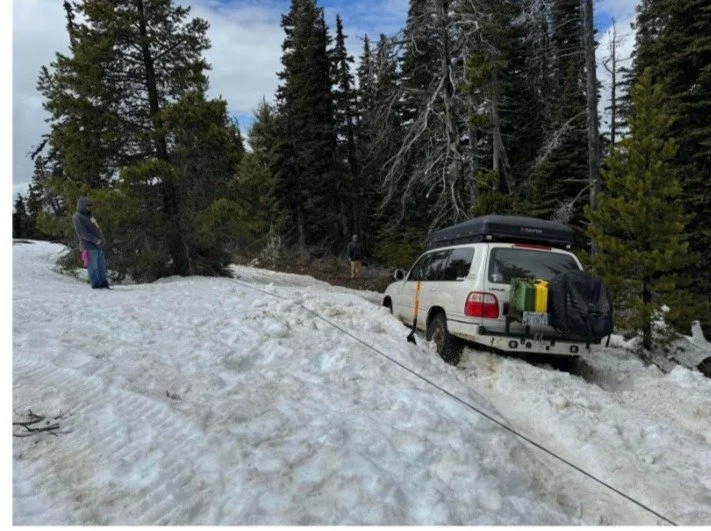
If you are wedged against a stump or high-centered on a washout, winching might be your only secondary option. Land Rover Owner International stresses the importance of winch safety.
Always use a tree saver strap to protect the forest environment and your equipment. Utilize a snatch block to double your pulling power if your rig is heavily suctioned into the mud, and never winch without throwing a dampener over the line to absorb the kinetic energy should the cable snap.