The Modern New York Game-Day Weekend: Tickets, Bars, Transit and Mobile Betting
A game day in New York is rarely just a few hours in a stadium. For most people who live in or regularly visit the city, it is a full-day commitment, and for a growing number of fans, a full weekend one.
There is the question of how to get to the venue, whether to watch part of the action at a bar before heading in, whether to drive or take the subway, and increasingly, which sportsbook app to have open on your phone while the action unfolds.
All of these decisions are now standard components of the modern New York sports experience, and each carries a cost worth understanding before you leave the apartment.
New York supports 13 professional sports franchises across five major leagues, playing at venues spread across Manhattan, Brooklyn, Queens, the Bronx, and northern New Jersey. That geographic spread means transit planning varies widely depending on which team you follow. A Knicks game at Madison Square Garden involves entirely different logistics than a Jets game at MetLife Stadium in East Rutherford or a Mets game at Citi Field in Queens.
So, getting these decisions right in advance is one of the more practical things any visitor or local fan can do before committing to a game-day plan. If you're still deciding which team to build your New York sports experience around, this ranking of New York's biggest sports teams compares every major franchise by fan base, history and overall popularity.
The Modern Game-Day in Context
Planning a New York game-day weekend well in advance makes a genuine difference to how the day runs. The decisions stack up quickly: which venue, how to get there, whether to drive or use transit, where to eat and drink before the game, and whether to watch part of the action at a bar rather than paying for a ticket.
Each choice feeds into the next, and having a clear sense of the options before you commit to any of them saves both time and money on the day itself.
Transport is usually the first thing to sort out. Subway access, bus routes, NJ Transit connections, and parking availability all vary significantly depending on which venue you are heading to, and getting the wrong approach (particularly if you are driving to a Manhattan venue on an event day) can add substantial unplanned cost to the trip.
Beyond transport, deciding whether to attend in person or watch at a sports bar shapes the entire day, including how much you spend and how flexible you can be if plans change.
Another aspect worth considering is placing bets. Nowadays, most of that is done online thanks to the convenience of mobile apps. Since New York legalized online sports betting in January 2022, a growing number of fans have placed wagers on their phones before and during events, tracking in-play odds and cashing out positions as the action develops.
Getting to the Game: Transit Options and Real Costs
Public transit is the most straightforward option for reaching most New York sports venues and the lowest-cost component of any game-day budget. The standard subway and local bus fare is $3 per ride for most passengers, with express buses priced at $7.25. Seniors and riders with qualifying disabilities pay half the standard rate.
For fans planning to attend multiple events over the course of a week, the OMNY weekly cap structure offers the best value. Using the same contactless card, smartphone, or OMNY Card for every trip, the system caps total subway and local bus spending at $35 over a seven-day period, regardless of how many individual rides are taken. Express bus riders are capped at $67 for the same period, covering subway, local bus, and express bus travel combined.
The payment process is fully contactless and requires no dedicated card or app. Any credit or debit card with contactless functionality, or a smartphone with payment capability, works at every turnstile and bus reader across the MTA network.
Transit options by venue:
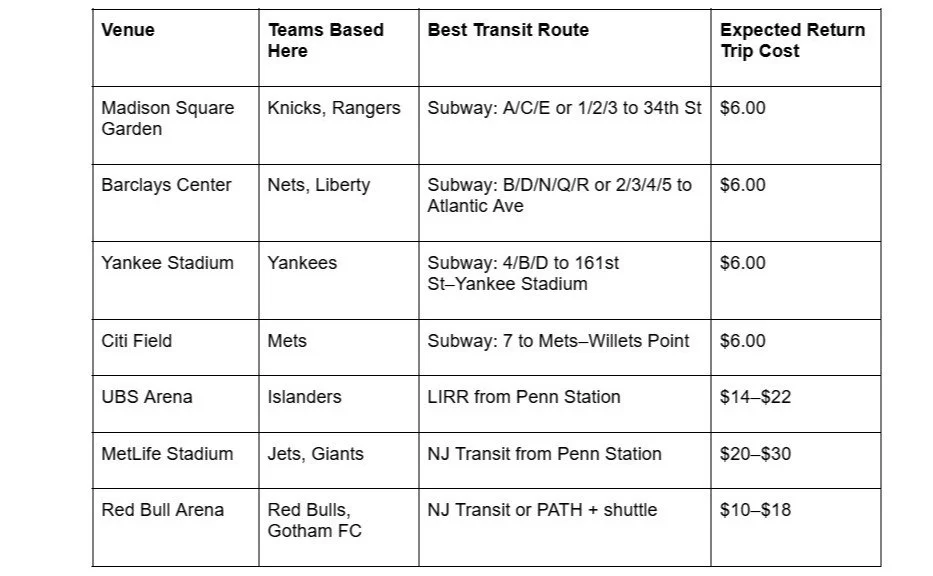
The Manhattan and Brooklyn venues are the most transit-accessible, with direct subway connections making a $6 return trip one of the genuinely good-value elements of a New York game day. The New Jersey venues require more planning; MetLife Stadium has no subway connection, and fans driving from Manhattan face tolls on top of parking costs.
NJ Transit from Penn Station is the standard public transit alternative, with return fares typically in the $20–$30 range depending on timing and service.

Driving In: What Parking Actually Costs
For fans arriving from outside the city, or those attending events at venues where transit is less convenient, driving is sometimes the more practical option. The cost, however, varies significantly and can exceed expectations on event days if no advance planning is done.
Manhattan street parking operates on a metered system with hourly rates running from $1.25 to $4.50, depending on neighborhood and time of day.
High-demand areas near major venues (the blocks around Madison Square Garden, for example) price toward the top of that range under normal conditions. On event days, demand pushes nearby garage pricing considerably higher. Major events at Madison Square Garden, alongside Broadway shows and other large-venue programming, can push garage costs beyond $50 for just a few hours of parking in the immediate vicinity.
Current market rates for garage parking near Manhattan venues range from $40 to $52 per hour at facilities within a practical walking distance. For any fan planning to stay for a full game (typically two to three hours), that amounts to a parking bill of $80 to $150 before any other expenses are factored in.
Parking cost summary:
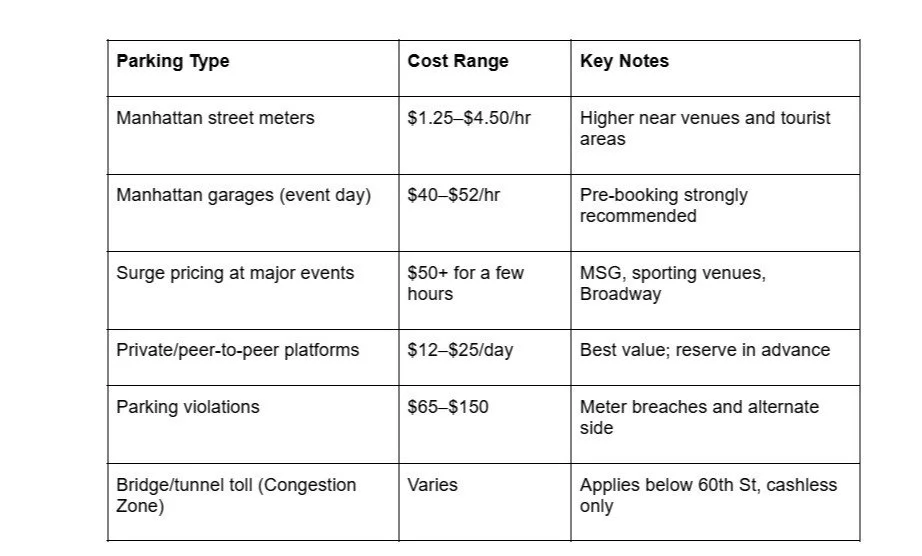
The most cost-effective driving strategy for a full game-day visit is to pre-book through a private parking platform. Daily rates through these services typically run between $12 and $25, a substantial savings compared to standard garage pricing on event days.
Pre-booking also eliminates the time spent searching for a space in a busy area where available spots are limited, and citations are common.
Mobile Betting: A Standard Part of the Game-Day Experience
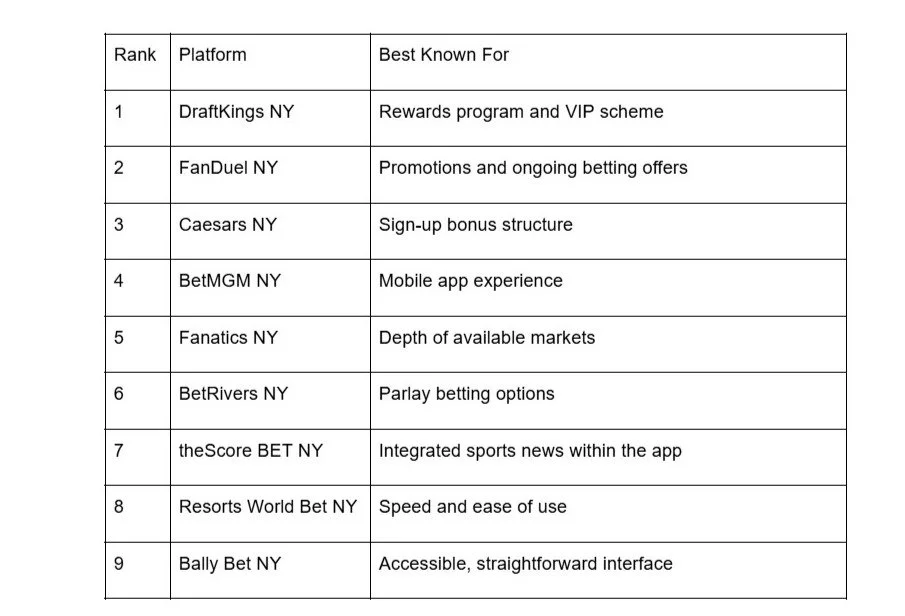
Legal sports betting became available in New York in January 2022 and has grown steadily in the years since. Nine fully licensed sportsbook platforms currently operate in the state, all regulated by the New York State Gaming Commission and all requiring users to be at least 21 years old. Betting is only possible when a user's device is physically located within state borders — geolocation is built into every licensed platform.
For casual users coming to the New York market for the first time, the range of platforms can seem overwhelming. The table below outlines the current top-ranked options and what each does best:
Licensed sportsbooks operating in New York:
What new users should know before signing up:
Every platform requires full identity verification before an account can be funded
Welcome offers differ significantly between platforms; reading the full terms before committing is worth the time
All platforms include responsible gambling tools including deposit limits, time limits, and self-exclusion options
In-play betting is available across all nine licensed apps during live events
Same-game parlay options are widely available for NFL, NBA, NHL, MLB, and UFC events
The Best Sports Bars for Watching in the City
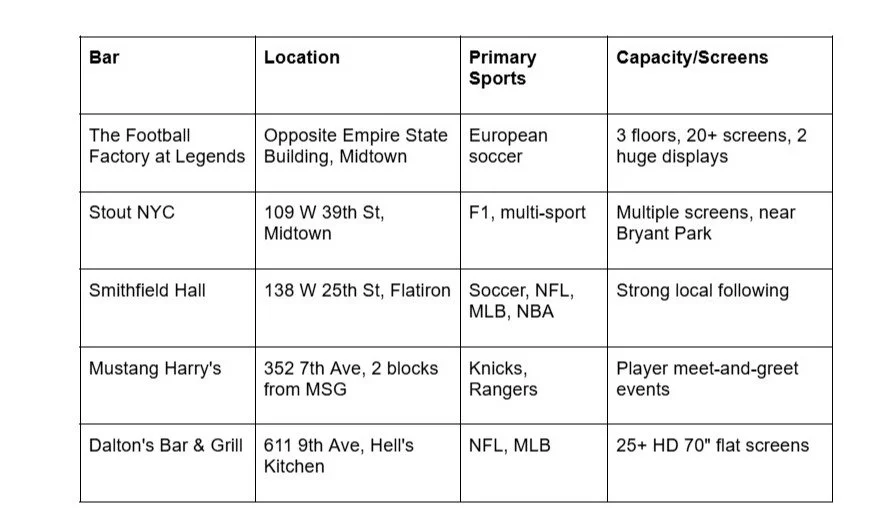
Not every game-day plan involves attending in person, and New York's sports bar scene offers strong alternatives for fans seeking a social atmosphere without the cost of a ticket.
The venues below represent the most established options across different neighborhoods and sports preferences.
Putting the Full Day Together: Budget by Scenario
Understanding each component individually is useful, but seeing them combined into realistic scenarios gives a clearer picture of what different types of game-day plans actually cost.
Game-day cost scenarios:
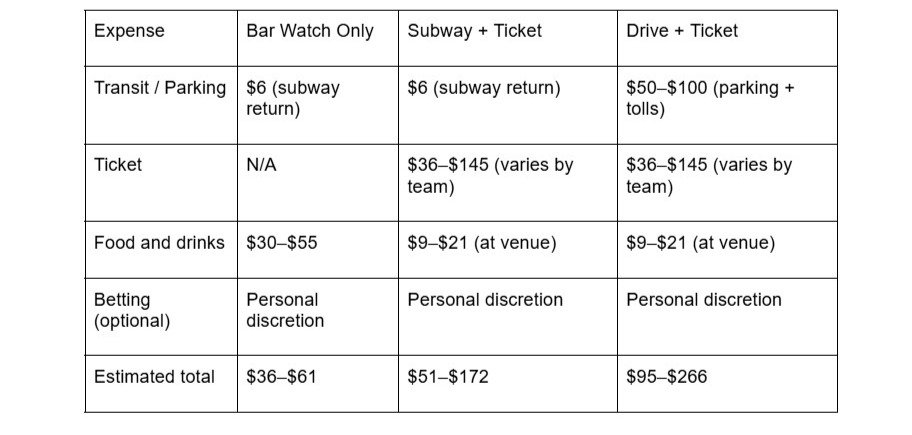
The bar-only scenario is the most financially predictable of the three. An evening at any of the five venues listed above, covering drinks and some food, is unlikely to exceed $55–$60 for a single person in most circumstances.
The subway-plus-ticket route covers the widest range, reflecting the gap between the cheapest and most expensive tickets in the New York market. Driving introduces the most unpredictability, particularly around Manhattan venues where event-day parking costs and congestion zone tolls both apply.
Mobile betting sits outside these figures because the amount wagered is entirely at the individual's discretion.
Many Decisions and Many Spending Categories
A New York game-day weekend in 2026 involves more decisions and more spending categories than it did even a few years ago. Transit costs remain predictable and fair, particularly for venues accessible by subway.
Parking is the most volatile expense in the mix and the one most likely to run significantly over expectations without advance planning. The city's sports bars offer a genuine, more affordable alternative to attending many events in person.
And mobile betting has become a standard part of how many New York sports fans engage with the games they follow.
Taking each of these elements into account before the weekend begins means fewer surprises and a better overall experience.