The Front Seat Milestone Kids Want Before Safety Says They're Ready
For a child, moving to the front seat can feel like a major milestone. They're no longer sitting with the little kids, they can control the music, and they finally get the view adults have enjoyed for years. But vehicle safety doesn't care much about milestones.
Whether a child is ready for the front seat depends on more than reaching a particular birthday. Body size, seat-belt fit, restraint needs, and exposure to a front passenger airbag all matter. California law also sets requirements for where younger children must ride and how they must be restrained.
That's why parents asking when can kids sit in the front seat in California should distinguish between what's legally permitted and what's safest. Those aren't always exactly the same thing.
Why the Back Seat Offers More Protection
The front passenger seat places a child closer to one of the most common areas of impact in a serious collision: the front of the vehicle.
The back seat creates additional distance between the child and a frontal crash. It also keeps younger passengers away from the front passenger airbag, which is designed primarily to protect larger occupants.
California Highway Patrol guidance emphasizes that children are safer in the back and notes the recommendation that children remain there until age 13. That can be frustrating for a 10-, 11-, or 12-year-old who feels perfectly capable of riding up front.
But maturity isn't the only consideration. A child may be responsible enough to sit properly while still having a smaller body that doesn't interact with the vehicle's seat belt and airbag systems the same way an adult's body does.
The front seat isn't a reward for growing older. It's another seating position with its own safety considerations.
Legal Minimums and Safety Recommendations Can Differ
California's current rules provide a useful example of the difference between what the law permits and what safety guidance recommends.
The CHP states that children under age 8 generally must be secured in an appropriate car seat or booster seat in the back seat. There are limited exceptions allowing younger children to ride in front, including certain vehicles without usable rear seats and specific medical circumstances.
Once children reach age 8, California law permits them to use a properly fitted safety belt, although a booster may still be appropriate depending on their size.
That doesn't mean age 8 should automatically become "front-seat day." The CHP notes that safety guidance recommends keeping children in the back until age 13.
Parents should therefore think about two separate questions: What does California legally require, and what seating arrangement provides the better safety margin for this particular child?
Size and Seat Belt Fit Matter
A birthday doesn't suddenly make an adult seat belt fit correctly. California allows children who are 8 or who have reached 4 feet 9 inches to transition from the state's child-restraint requirement, but the CHP specifically encourages parents to consider whether the vehicle's seat belt actually fits properly.
The lap portion should sit low across the hips and upper thighs rather than across the stomach. The shoulder belt should cross the chest and shoulder appropriately rather than riding against the neck or face.
The child should also be able to sit all the way back with their knees bending comfortably at the edge of the seat and maintain that position throughout the trip. The CHP uses these factors in its five-step test for determining whether a child is ready for an adult seat belt.
If the belt doesn't fit correctly, continuing to use a booster may provide better positioning. Growing out of a booster shouldn't be rushed simply because a child wants the next milestone.
Airbags Change the Front-Seat Equation
Airbags save lives, but they deploy extremely quickly and with substantial force. That force is designed around protecting occupants of a certain size and position. Smaller children can face different risks, particularly when sitting too close to the dashboard.
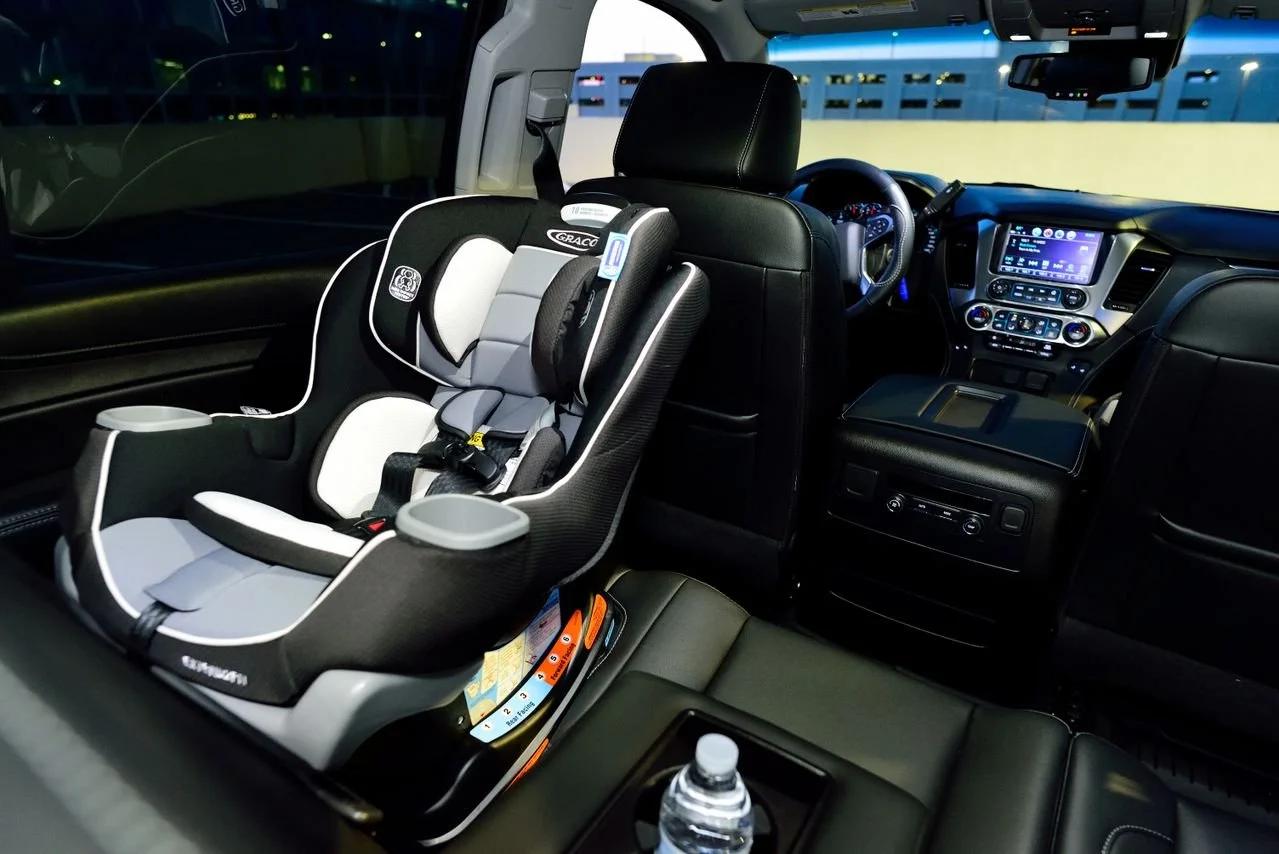
This concern becomes especially serious with rear-facing child restraints. California guidance states that a rear-facing child restraint should never be placed in front of an active passenger airbag. Even for older children, distance and proper positioning remain important considerations.
A child who constantly leans forward, slips out of position, places the shoulder belt behind their back, or cannot remain seated correctly may not be ready for the seating arrangement regardless of age.
Parents should also follow the instructions provided by the vehicle and child-restraint manufacturers because airbag systems and seating configurations can differ.
The safest seat isn't determined solely by which position the child wants. It's determined by how the vehicle's safety systems interact with that child's body and restraint.
Conclusion
Moving to the front seat may feel like a childhood milestone, but there is no reason to rush it.
California law establishes minimum requirements for child restraints and rear-seat use. Current CHP guidance says children under 8 generally belong in an appropriate restraint in the rear seat, subject to limited exceptions, while safety recommendations encourage keeping children in back until age 13.
Age is only part of the decision. Parents should also consider the child's height, whether an adult seat belt fits correctly, whether a booster is still needed, and whether the child can remain properly positioned for an entire trip.
Airbags add another reason to be cautious about moving smaller passengers forward too early.
Kids may count birthdays while waiting for the front seat. Parents are better off counting something else: whether the child and the vehicle's safety systems are actually ready for that next step.