The Everyday Habits That Could Be Shortening the Life of Your Jewelry
'Jewelry' essentially refers to any type of jewelry that a person wears on his/her body for the purpose of making him/her look attractive. It can be crafted of a variety of materials such as gold, silver, diamonds, pearls, wood, glass, or even plastic.
There are different reasons why people wear jewelry, some for the purpose of making it look pretty, matching their dress, and demonstrating social standing and wealth. Ever thought about what makes chains get torn and how their shine fades away?
There are many people today with habits that are damaging jewelry, such as not removing jewelry at the proper time and being careless with jewelry at the proper time.
Effect of Wearing Jewelry During Daily Activities
Learning to care for jewelry properly increases the life of jewelry. Jewelry during work and/or direct applications of lotions and perfumes on jewelry. Keeping parts in groups without protection.
Showering and Swimming
Soap leaves a dull film on gemstones. Metal is weakened by shampoos and conditioners. Prongs will loosen when heated by hot water. Pools with chlorine will damage gold and discolor silver. Seawater eats away at metal.
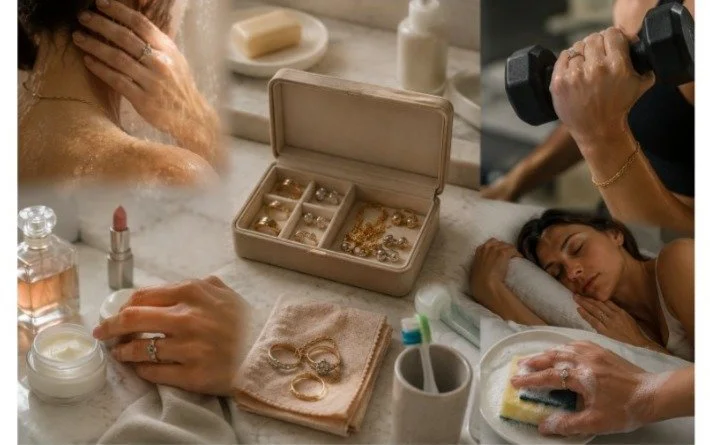
No jewelry during exercising.
Salts and acids in the sweat tarnish metals. Physical movement can stretch the chains and loosen the settings. Gemstones or rings may crack or bend when they are accidentally hit. Rings become entangled in equipment and result in injuries.
Use of Lotion & Perfumes
The lotion gets stuck behind the stone and slowly kills the shine. It makes the stone look cloudy. Perfume has alcohol. It slowly eats away soft stones like pearls from inside.
Repeated Exposure Affects Both Metals and Gemstones.
All metals and gemstones are impacted by repeated exposure. Gold gets thin with time. Silver goes black faster in humidity. Opals change color if they touch water. Diamonds lose shine from skin oil. It is cumulative, so small exposures over time equal permanent damages.
The Hidden Risks of Improper Storage
Tossing all pieces into one drawer
Storing different metals together
Bathroom ruins your jewelry
Leaving pieces in direct sunlight
Wrapping necklaces around your hand.
Why Some Gemstones Require Extra Attention
Soft gemstones get damaged easily. Some stones are delicate. They need extra care. Hard vs Soft stones:
Diamonds and sapphires are hard stones. They are tough stones. But opal, pearl, emerald, and moonstone are soft. Drop them once and they will crack.
Chemical Sensitivity
Pearls and opals have porous bodies and absorb liquids. Their color or make changes to their internal workings may be permanently altered by perfume, lotion, sweat, or even tap water.
Cleaning Risks:
Ultrasonic machines are bad for soft stones. Use only hand wash.

Easy care tips for jewellery
Simple routines help anyone care for jewelry properly without costly instruments.
Remove before activities.
Take off before the shower / bed / gym.
Do this every 2 or 3 weeks to keep it clean.
Store Separately.
Apply products first.
Put on lotion, perfume, and hairspray first. Then wear jewelry after it dries; chemicals dull the shine.
Get Annual Checkups.
Have setting and prongs checked by a professional annually to prevent loose stones.
Conclusion
keep each piece in its own small box. They do not scratch each other. Store it properly. Jewelry cleaning uses a soft brush and mild soap. Go slow and be gentle. And if it has soft stones, handle it with extra care. Delicate stones loosen over time and have softer settings for setting (Setting Loosening). It is essential that it is checked regularly to prevent the release of loose screws that might fall out and be lost.