The Daily Spine Check: Simple Habits for Better Posture, Mobility, and Pain Prevention
Key Takeaways
Spine care is often built through small, repeatable habits rather than one major change.
Changing positions regularly can help limit stiffness during long workdays, drives, and screen time.
Device setup, lifting technique, sleep support, and daily movement all influence comfort.
The goal is not a rigid "perfect" posture. It is comfortable and supported movement throughout the day.
New weakness, spreading numbness, severe pain, or changes in balance need prompt medical attention.
Modern life gives the spine plenty to manage. Hours at a desk, long commutes, scrolling on a phone, lifting groceries, and collapsing onto the couch can all add up to stiffness and muscle fatigue. If discomfort keeps returning, speaking with a chiropractor near me or another qualified healthcare professional may help you understand which habits and care options fit your situation.
A daily spine check is not a demanding workout plan or a reason to anxiously monitor every movement. It is a brief pause to notice how your body feels, make a few practical adjustments, and avoid letting a single uncomfortable position dominate the rest of the day.
Why Daily Spine Habits Matter
Posture affects more than how tall you appear while standing. It also influences how you sit, walk, bend, carry items, and rest. Repeated positions may contribute to tightness and discomfort, especially when movement breaks are rare. Guidance on why posture matters can reinforce the value of paying attention to everyday alignment without treating posture as a perfection test.
What a Healthy Spine Routine Looks Like
Start by checking for common patterns: shoulders creeping toward the ears, weight always shifted to one side, a rounded upper back, or less movement than usual. There is no single ideal posture for every body or task. A position that feels fine for ten minutes can become uncomfortable after an hour, so regular movement is often more helpful than trying to hold yourself rigidly still.
Build More Movement Into the Workday
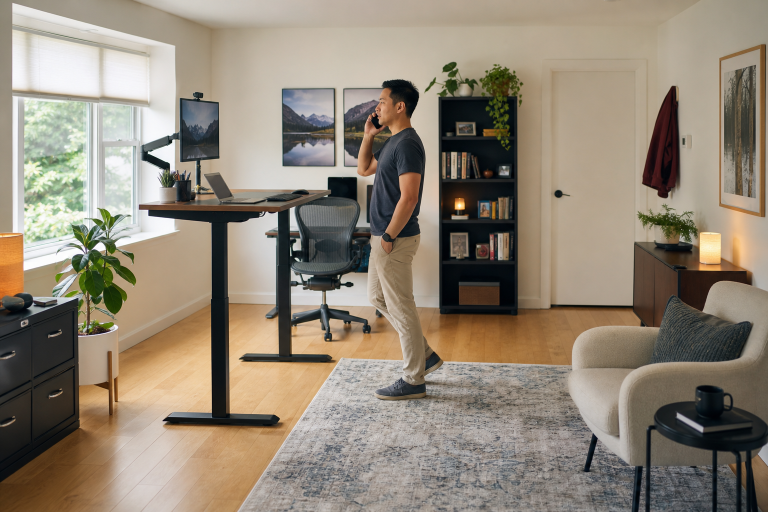
Break up sitting with brief periods of standing, walking, or stretching. Place your water bottle, printer, or frequently used supplies far enough away that you have a reason to get up. Try this simple hourly reset:
Stand and take several slow breaths.
Roll your shoulders gently and relax your jaw.
Walk for two or three minutes.
Return to your chair with your screen and keyboard within easy reach.
Set Up Screens and Devices With Less Strain
Looking down at a phone for long stretches can leave the neck and upper back feeling overworked. Raise the phone closer to eye level when possible, and avoid staying in the same viewing position through an entire video or reading session. Keep a computer monitor at eye level, position the keyboard within reach, and keep your shoulders relaxed. "Tech neck" is often less about a single quick glance downward and more about accumulated time spent in one position.
Use Safer Lifting and Bending Habits
Sudden lifts, twisting while carrying, and holding a heavy object far from the body can increase strain. Before lifting, pause and plan the movement:
Move close to the object.
Keep the load close to your body.
Bend through the hips and knees when practical.
Turn with your feet instead of twisting your torso.
Ask for help with heavy, unstable, or awkward items.
Add Gentle Strength and Mobility Work
The muscles around the hips, abdomen, back, and shoulders support daily movement. Walking, gentle bridges, supported squats, wall exercises, and light mobility drills can be approachable starting points. Keep movements controlled and within a comfortable range. Stop if the pain is sharp, spreading, or worsening, and choose activities that suit your health history, current symptoms, and fitness level.
Improve Spine Comfort During Sleep
Sleep posture can affect morning stiffness, although no single position works for everyone. Side sleepers may find a pillow between the knees comfortable, while back sleepers may prefer support beneath the knees. Check whether your pillow leaves your neck feeling relaxed rather than tilted sharply up or down. Persistent morning pain can have causes beyond sleep setup, so do not assume a new pillow alone will solve every problem.
Support Bone and Muscle Health
Regular activity, balanced meals, adequate protein, and a healthy body weight all support the body's ability to move well. Calcium and vitamin D are also commonly discussed in relation to bone strength. The federal recommendations for preventing back pain emphasize activity, strength work, posture awareness, safer lifting, and maintaining a healthy weight. Discuss supplements with a qualified clinician, particularly if you take medications or have a medical condition.
Common Mistakes That Can Make Discomfort Worse
Staying in bed or avoiding all movement for too long.
Forcing a stiff version of "perfect" posture.
Increasing exercise volume or intensity too quickly.
Ignoring pain that repeatedly returns.
Copying online exercises that do not fit your condition.
Carrying a heavy bag on the same side for extended periods.
When to Seek Professional Advice
A routine evaluation may be useful for recurring neck or back discomfort that does not improve with sensible changes. Seek urgent medical care for new arm or leg weakness, worsening numbness or tingling, loss of balance, difficulty walking, loss of bladder or bowel control, severe pain after a fall or accident, fever, unexplained weight loss, or intense pain at night.
A Simple Seven-Day Spine Check
Day 1: Adjust your computer, chair, and phone setup.
Day 2: Add short walking breaks to your workday.
Day 3: Review how you lift, carry, and twist.
Day 4: Try a few minutes of gentle mobility work.
Day 5: Assess sleep support and morning stiffness.
Day 6: Notice recurring pain patterns or triggers.
Day 7: Keep the habits that feel useful and realistic.
Conclusion
Daily spine care does not need to be complicated. Small adjustments, regular movement, thoughtful lifting, and better awareness can make work, rest, and everyday tasks feel easier. The goal is not flawless posture. It is creating routines that help your body move, recover, and function with less unnecessary strain.