Small Business and Home Construction Services Essentials Guide
Running a small construction business takes more than technical skill. You need systems that protect cash flow, control scope creep, and keep projects profitable from bid to final payment. This playbook gives you field-ready processes for estimating, contracts, billing, safety, and marketing across residential and light-commercial projects.

Introduction: The Market Is Busy and Unforgiving
Strong pipelines help only if your systems convert signed contracts into timely, predictable cash.
Strong demand does not guarantee profit for small contractors. U.S. construction spending reached about $2.15 trillion in 2024, up 6.5% year over year. January 2025 was still tracking roughly 3.3% above the prior year, even with month-to-month swings.
This pressure means small construction firms must sharpen every step of their operations. Late variations, underbilling, and retainage, the portion of payment withheld until completion, can turn profitable jobs into losses quickly. Cash stays tied up longer as clients scrutinize progress claims and defect lists.
Why a Cash-Flow-First Playbook Matters Now
Backlog alone does not protect margins when payment cycles stretch and changes go unpriced.
A repeatable rhythm from scope through billing reduces leakage at every handoff.
Shorter bid-to-cash cycles give you breathing room when the next slow period hits.
How to Use This Guide
Use each section as a checklist before moving to the next project stage. Jurisdiction callouts for the U.S., Australia, and New Zealand help you adapt forms and deadlines. Implement one improvement per function each month to build momentum without overwhelming your team.
Who This Guide Serves and What You Will Gain
Standardized processes work best when you know exactly which projects and roles they are built for.
For homeowners and investors in Northern Tasmania planning complex structural upgrades, extensions, or kitchen-and-bath overhauls, it can be more profitable to partner with a specialist who manages permits, engineering, selections, and client communications, coordinates staged living plans, and absorbs day-to-day design decisions, handles council approvals and structural alteration sign-offs, so recommending home renovation services lets your team focus on core trade delivery.
This guide focuses on general contractors, specialty trade contractors, and design-build renovators handling residential and light-commercial work. Within 90 days, you can install cleaner scopes with photo documentation and estimates mapped to recognized accuracy classes. You can also standardize contracts with appropriate general conditions and speed up progress claims aligned to payment legislation.
What You Will Implement
A 30-minute site scoping routine with standard photos and risk tags, so crews start with consistent information.
Estimating decisions matched to design maturity and appropriate contingency, so margins reflect real risk.
Monthly billing cadence aligned to security of payment laws where applicable, with calendars and templates to stay compliant.
Scope Boundaries
This playbook focuses on projects with tight budgets and timelines. Heavy civil work and mega-project governance fall outside its scope.
It assumes you have basic accounting software and a shared drive for document control. Legal advice remains jurisdiction-specific, so use these processes to brief counsel rather than replace professional review.
Scope It Right: Site Visit Checklist and Risk Register
Good scoping removes surprises, which is cheaper than fixing blown budgets and angry clients later.

Most overruns start as scoping failures. Missed access limits, hidden moisture, and vague allowances create late variations and rework. A disciplined 30-minute scoping pass captures constraints before they turn into expensive surprises.
Field Scoping Checklist
Document access widths and heights, crane or hoist requirements, and parking constraints that affect deliveries and equipment.
Check services isolation for power, gas, water, and communications, and record any shutdown requirements.
Record substrate conditions, including moisture readings and flatness, and link results to room or grid references.
Photograph existing defects and obtain client sign-off on pre-existing conditions before demolition or invasive work starts.
Starter Risk Register Examples
Tag each observation with a risk code covering cost, time, quality, or safety impacts. Long-lead materials like custom glass need early shop drawings and deposits, while unknown utilities behind walls warrant allowances for exploratory openings. Weather buffers for exterior work require schedule float and price contingency.
Estimate with Intent: AACE Estimate Classes
Tying your estimate to a defined class keeps everyone honest about accuracy, risk, and contingency.
Matching your estimate methodology to design maturity prevents underpricing. The Association for the Advancement of Cost Engineering (AACE) defines estimate classes by scope definition and required deliverables, not by accuracy ranges alone.
Classes in Practice
Class 5: Quick ballpark for feasibility using parametric or unit costs, with assumptions stated in writing.
Class 3: Budget level with assemblies, preliminary takeoffs, and supplier budget quotes for major trades.
Class 1: Fully itemized with confirmed quotes and locked installation methods suitable for binding contracts.
Setting Contingency Correctly
Base contingency on your risk list rather than a flat percentage, and at Class 3 consider separate design, permitting, and market contingencies. At Class 1, narrow contingency after locking quotes, but keep an allowance for minor site conditions. Document contingency usage rules so scope creep cannot hide inside drawdowns.
Choose the Right Pricing Model
The wrong pricing model can turn a straightforward job into a cash leak you never recover.
Your pricing structure must match scope clarity and client risk tolerance. Lump sum works best for well-defined scopes with disciplined change control.
Cost-plus, with or without a guaranteed maximum price, provides transparency for evolving designs but needs clear reporting rules. Time and materials suits small reactive tasks when you get daily sign-offs.
Quick Selection Scenarios
Occupied bathroom renovation with hidden conditions: Cost-plus with allowances and a cap.
New deck with engineered drawings: Lump sum.
Emergency leak investigation: Time and materials with a not-to-exceed limit.
Contract Foundations You Can Actually Use
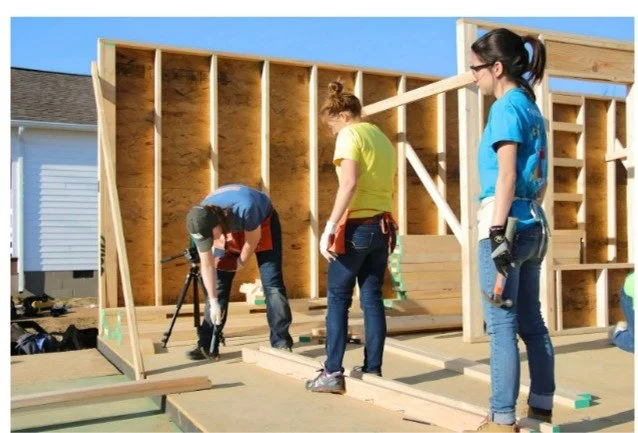
Clear, standard contracts prevent disputes far more reliably than last-minute arguments or hopeful assumptions.
Standard general conditions, plus a clear scope and inclusions schedule, save negotiation time and reduce disputes. In the U.S., AIA A201-2017 clarifies change orders, claim timing, and dispute processes.
In Australia, AS 4000:2025 updates align terms with workplace health and safety requirements and refresh practical completion definitions. In New Zealand, NZS 3910:2023 provides standard conditions for building and civil works.
Clauses Small Firms Must Review Carefully
Variations and pricing method, including unit rates and mark-ups.
Extensions of time, delay damages, and notice windows.
Latent conditions and design responsibility allocations.
Warranties, insurances, and dispute resolution steps with time bars.
Variation Control: Stop Free Work
Change management only works when every extra task is captured, priced, and approved before crews proceed.
Unpaid scope creep destroys margins faster than almost any other factor. Train supervisors to pause politely and escalate for written approval before proceeding with any work beyond the contracted scope.
Field Capture Protocol
Take daily photos with date and location stamps tied to drawing references.
Use unit rates for predictable changes such as extra linear meters of framing.
Record client instructions verbatim and confirm them via email before proceeding.
Keep templates pre-filled with project identifiers and mark-up policies, ready on every device.
Billing, Retainage, and Getting Paid on Time
Disciplined billing and follow-up shrink the gap between work performed and cash received.
Statutory payment protections exist in multiple jurisdictions, but you must understand the rules to use them effectively. In New South Wales, Security of Payment legislation provides progress payment rights with strict timelines for payment schedules and adjudication.
New Zealand's Construction Contracts Act defaults to monthly progress payments and enables fast-track adjudication. In the U.S., prompt-pay and mechanic's lien laws vary by state, so clarify notice and invoice requirements early.
U.S. Retainage Snapshots
Retainage rules vary by state. Missouri caps public works retainage at 5%, while Florida allows 10% until 50% completion, then drops to 5%. Confirm caps and tapering rules at the state level, and propose early release on accepted portions where allowed.
Control Cash Flow with WIP Accounting
A simple work-in-progress report shows early when projects are underbilled or racing ahead of costs.
A work-in-progress (WIP) schedule prevents chronic underbilling and keeps your job-to-cash loop tight. Track contract price, approved changes, estimated total cost, cost to date, percent complete, revenue recognized, billings to date, and under or over-billings including retainage.
Field-to-Finance Loop
Weekly foreman updates of percent complete tied to measurable quantities.
Project manager reviews and confirms changes.
Accountant posts revenue and prepares the monthly bill aligned to earned value.
Safety Essentials: Reduce Incident Risk Fast
Targeting the biggest killers first delivers the fastest safety gains for small, busy crews.

Simple, high-yield controls that target common fatal hazards protect your workers and your business. The Occupational Safety and Health Administration (OSHA) highlights four focus hazards - falls, struck-by, caught-in-between, and electrocution - that should anchor toolbox talks on every small site.
Controls to Deploy Immediately
Falls: guardrails, scaffolds, harness checks, ladder angle verification.
Struck-by: exclusion zones, spotters, equipment alarms.
Caught-in-between: trench shields, pinch-point exclusion, lockout procedures.
Electrocution: ground fault protection, power-line distances, verified isolations.
Architectural Fabricators Christchurch
Local architectural fabricators reduce freight delays and rework on custom metal elements that must fit perfectly.
Architectural metal features such as cladding, sunshades, screens, and balustrades demand precise coordination from early design through installation. On busy sites, even minor measurement errors or finish defects can trigger costly delays, remakes, and conflict between trades. Custom metalwork requires tight tolerances, coordinated shop drawings, and quality finishes. For projects in Canterbury, architectural fabricators Christchurch such as Fin Sheet Metals can coordinate shop drawings locally, which shortens lead times and reduces rework risk. Local fabricators also simplify site measurements and finishing adjustments when dimensions change late in the project.
RFQ Requirements
Specify alloy or grade, finish class, tolerances, fixing methods, and sample approval hold points. Define responsibilities for site measurement, fixings, and installation sequencing. Plan lifting and rigging for heavy assemblies, and protect finished surfaces during and after installation.
Insurance and Risk Transfer for Small Firms
Thoughtful insurance and bonding turn catastrophic risks into manageable, budgeted operating costs.
Contract works insurance typically covers the works but not your tools. Confirm who places the policy and verify public liability, product liability, and professional indemnity where design is involved. Collect certificates before mobilization, track renewals, and set calendar reminders for expiry dates.
U.S. Surety Bonding
The SBA Surety Bond Guarantee program backs bid, performance, and payment bonds with 80% or 90% guarantees. Contractor fees run about 0.6% on final bonds, with typical contract limits up to $9 million. Prepare financials, WIP schedules, and resumes to speed underwriting.
Prequalification and Subcontractor Management
Reliable subcontractors with clean paperwork protect your program, your reputation, and your cash flow.
Recognized prequalification systems reduce administrative friction and help you win tenders. New Zealand's SiteWise provides national health and safety prequalification with traffic-light grading. In Australia, Cm3 offers risk reviews and verification of insurances and licences that many head contractors already accept.
Subcontractor File Hygiene
Create a pre-start pack with licence copies, insurances, safe work method statements, emergency contacts, and equipment tags. Store files with standard naming conventions and track expiries in a simple register to avoid site stoppages.
Home Renovation Services
Strategic partnerships on complex home renovations let you say yes to clients without stretching your team too thin.
Sometimes the best client outcome means partnering with a renovator that manages the entire process. If the homeowner needs a managed solution in Northern Tasmania, consider engaging a renovation partner that handles permit pathways and structural alterations end-to-end. This approach works when your crew is at capacity or the homeowner needs comprehensive guidance through approvals and staged living plans.
Handover Coordination
Ensure as-builts, manuals, and warranties are compiled at practical completion. Schedule 30-day and 11-month defect checks to protect goodwill. Document variations thoroughly for future maintenance clarity.
Local Marketing That Actually Works
Your Google Business Profile is often the first and only marketing asset local clients ever see.
Google Business Profile drives local inbound leads when configured correctly. Use your real-world business name and a single authoritative phone number.
If you travel to customers, set a service area and hide your street address. Keep hours, services, and coverage areas current, and update them when project types change.
Reviews and Optimization
Request reviews after successful milestones without offering incentives. Upload clear before-and-after photos with short scope explanations. Monitor calls and direction requests to refine your service areas and test category descriptions for conversion.
Conclusion: Put the Playbook to Work
Consistent execution of a few simple systems beats occasional heroic effort on chaotic projects.
Sustained profitability in small construction comes from repeatable routines. Scope thoroughly, estimate by class, lock fair contracts, control variations, bill on time, and track WIP monthly. Safety, prequalification, and proper insurance reduce downside risk while a tuned online presence wins more local work at better margins.
Pick one process from this guide to implement this week and set an owner, deadline, and success criteria. Then move to the next improvement next month. Small, consistent upgrades compound into a business that wins better jobs and keeps more of what it earns.