Round Cut Diamonds: The Benchmark of Brilliance
Short answer - a round cut diamond is the final shape of a diamond after it has been cut and polished from its rough form. Most round-cut diamonds have 57 or 58 facets, which are the flat surfaces on the gem. All these facets let light reflect inside the diamond, creating the brilliant sparkle we love. That's why round-cut diamonds are also called round brilliant cuts or full cuts.Round brilliant cuts are the most popular gemstone on the market. Why many couples feel confident shopping diamond is because of its timeless beauty, certified quality, and best value at the rare carat.This is because of their amazing sparkle, and also because they look timeless, elegant, and can be used in almost any kind of jewelry - like engagement rings, casual rings, necklaces, bracelets, earrings, tiaras, chains, pendants, grills, and more.
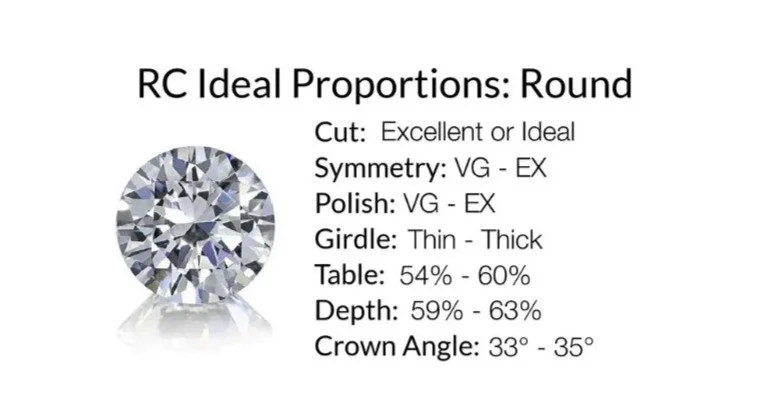
The downside is that round brilliant cuts are so popular and in high demand, so they usually cost a bit more than similar diamonds with different shapes.Because of the high demand for round cuts, a special grading system was made using percentages, degrees, and math formulas at rare carat. This system helps cutters make diamonds with the right angles for maximum brilliance, and it also lets buyers know the quality of the diamond they're buying. It's a win-win.A rough diamond next to a round faceted diamondAnother thing to know is that to make a round shape from a rough diamond, a lot of the original material is cut away.
For buyers seeking exceptional craftsmanship and timeless sparkle, finding the right diamond in Singapore often comes down to cut precision, light performance, and long-term value.
In fact, up to 40 to 60 percent of the original diamond is removed. Skilled cutters try to keep as much weight as possible, but sometimes, especially with big, valuable stones, the cutter might choose a fancy shape that follows the natural shape of the rough. That's why very large and valuable rough diamonds are often not cut into round brilliant shapes, unless making a round shape saves the most weight. Just feel free and go on our website and shop here.
The History of the Round CutOld diamond cuts:

Pointed, table, old square, french, pendeloque, rose, mazarine, peruzzi, old mine, old europeanThe First Cut: How did round brilliant cuts become the most common diamond shape? It took about 500 years of diamond cutting to get to where we are now. The very first diamond cut was called the point cut, and it looked like a point. It looked like a pyramid or one side of the natural diamond shape. This was very popular in the fifteenth century.The Table Cut: The next step was to cut off the top point, making a flat square table facet. Sometimes a flat bottom was also cut, making a square within a square look. But mostly, the table cut made the diamond sparkle more than the point cut, though not as much as we see today.
The Rose Cut:
The rose cut was very popular from the 16th to the 19th century and is becoming popular again today as a vintage diamond style. Rose cuts are flatter but have triangle-shaped facets that point up, creating more brilliance than was seen before. These triangle facets are still used in modern diamond cutting.The Single Cut: This is the basic shape for today’s round brilliant diamonds. The single cut is based on the natural shape of a diamond, which is like an octahedron, but it has only 8 facets. Even now, small diamonds are sometimes cut this way.
The Old-Mine and Old European Cuts:
These are two of the earliest diamond cuts that led to the modern round brilliant. The Old-Mine cut has the same 58 facets as today’s round cuts but has a cushion shape with a deeper bottom part, so it doesn’t shine as brightly as now. The Old European cut was the first to use a circular shape, which became a key part of later diamond designs. Together, these two cuts are the basis of the modern round brilliant. You can visit this link Rare Carat Behind the scenes - Handcrafting your ring
Because people really like round brilliant diamonds, a special grading system was created. This system uses percentages and math to check the symmetry and shape of the diamond. It helps cutters make perfect diamonds and also helps customers know the quality of the diamond they’re buying. It’s a win for everyone.
A rough diamond next to a round faceted diamondIt’s also worth noting that to make a round diamond from a rough stone, a lot of the original diamond is cut away—about 40 to 60 percent. Skilled cutters try to keep as much of the stone as possible, but sometimes, especially with big or rare diamonds, they choose a fancy shape that follows the natural shape of the rough. That’s why very big, valuable rough diamonds are often not cut into round shapes unless the round shape saves the most weight.
The History of the Round CutOld diamond cuts pictured:
Pointed, table, old square, french, pendeloque, rose, mazarine, peruzzi, old mine, old european
The First Cut:
So how did we get to where round brilliant cuts are the most popular diamond shape today? It actually took about 500 years of diamond cutting progress. The first diamond cut was called the point cut and looked like a point, like the tip of a pyramid or one side of the natural octahedral shape of a diamond. It was very popular in the 15th century.
The Table Cut:
The next step was to cut off the top point and make a flat square table on the top of the diamond. Sometimes the bottom was also cut flat, making a square inside a square look. This table cut made the diamond shine more than the point cut, but still not as much as we have today.
The Rose Cut:
The rose cut was very popular from the 16th to the 19th century and is again becoming popular today as a vintage diamond style. Rose cuts are flatter but have triangle-shaped facets that point up, creating more brilliance than was seen before. These triangle facets are still used in modern diamond cutting.
The Single Cut:
This is the basic shape for today’s round brilliant diamonds. The single cut is based on the natural shape of a diamond, which is like an octahedron, but it has only 8 facets. Even now, small diamonds are sometimes cut this way.
The Old-Mine and Old European Cuts:
These are two of the earliest diamond cuts that led to the modern round brilliant. The Old-Mine cut has the same 58 facets as today’s round cuts but has a cushion shape with a deeper bottom part, so it doesn’t shine as brightly as now. The Old European cut was the first to use a circular shape, which became a key part of later diamond designs. Together, these two cuts are the basis of the modern round brilliant.