Protecting Your Historic Home: Seasonal Pest Control for Older Properties
Readers who follow Off The MRKT for coverage of prewar co-ops, converted carriage houses, and the kind of period architecture that gives neighborhoods their character already know that old buildings come with old-building problems. Original windows, hand-laid brick, and settled foundations are part of what makes a historic property desirable, but those same features create gaps, drafts, and moisture pockets that pests exploit. Whether you own a landmarked rowhouse or you're simply drawn to the same preservation stories we cover around New York and beyond, the seasonal pest pressures facing older homes deserve the same attention as the roofline or the plumbing.
Dublin offers a particularly clear case study because its damp, mild climate interacts directly with the kind of construction found in Georgian and Victorian housing stock. Solid masonry walls, suspended timber floors, and cast-iron drainage were never designed with modern insulation standards in mind, and that gap is exactly where rodents and insects find their way in. Homeowners researching Dublin pest control services are often surprised to learn that the very details that give their property its charm, like exposed sash windows or uninsulated cavity walls, are the same details driving repeat infestations year after year.
Dublin's Climate & Historic Building Vulnerabilities
Dublin's weather pattern, persistent moisture, mild winters, and relatively narrow temperature swings, creates a near-constant environment for pest activity rather than a sharp on-off season. Older properties absorb and retain that moisture differently than modern builds, since lime mortar and untreated timber are more porous than contemporary materials. Rising damp in older foundations attracts woodlice and silverfish, while gaps around original chimneys and roof eaves give rodents a direct route into attic spaces. The combination of structural age and climate consistency means pest pressure rarely disappears entirely, it simply shifts in intensity and species throughout the year.
This is compounded by the sheer density of historic housing stock across the city and county, much of it built before pest-resistant construction codes existed. Period properties often share party walls with neighboring buildings, which means an infestation in one home can spread along shared cavities to several others on the same terrace. Owners of these properties frequently underestimate how interconnected their pest risk is with the surrounding block, treating it as an isolated issue rather than a neighborhood-wide pattern worth monitoring seasonally.
Seasonal Pest Cycles in Dublin
Spring marks the start of active breeding for most common pests, as rodents emerging from winter shelter begin nesting in earnest and insect eggs laid the previous autumn start to hatch. Summer brings the sharpest spike in flying insect activity, particularly around kitchens and bins, and it's also when wasp nests reach a size that makes them visibly dangerous rather than a minor nuisance. Autumn is the migration period, when falling temperatures push rodents and spiders indoors in search of warmth, often through the same gaps around doors and foundations that have gone unsealed for years. Winter doesn't bring the relief many homeowners expect, since mild Irish winters allow rodents to continue breeding in wall cavities and roof spaces rather than dying off or hibernating.
According to this article, Ireland's warming climate has extended the pest control working season beyond the traditional June-September peak, with milder winters allowing rodents and insects to survive and breed earlier, increasing year-round pest pressure on properties. That shift matters enormously for historic homes, because it means the old assumption of a single "pest season" no longer holds. A property that only received an autumn inspection in the past may now need attention in spring and summer as well, simply because the insects and rodents causing damage are active for a longer stretch of the calendar than they were a decade ago.
Protecting Historic Structures
Sealing entry points on a period property requires more care than caulking a modern wall, since original brickwork, sash windows, and timber sills need treatments that won't damage historic materials or violate conservation guidelines. Copper mesh and specialized fillers can close gaps around pipework and vents without altering the visible character of the facade, while draft excluders fitted to original doors reduce both energy loss and insect access. Moisture management deserves equal attention, since damp timber and poorly ventilated crawl spaces are what attract wood-boring insects and damp-loving pests like woodlice in the first place. Improving subfloor ventilation and addressing guttering issues early often does more to prevent infestation than any chemical treatment applied after the fact.
Preservation-friendly pest treatments also matter because many historic properties carry protected status that restricts certain structural interventions. Bait stations placed discreetly rather than invasive drilling, and targeted treatments rather than broad-spectrum spraying, help control pest populations without compromising original plasterwork, cornicing, or timber detailing. Professionals familiar with older housing stock understand how to balance effective pest control with the conservation requirements that come with owning a listed or protected building, which is a distinction worth asking about directly when hiring a provider.
Year-Round Maintenance Schedule
A quarterly inspection schedule suits Dublin's climate better than the seasonal checkups common in drier regions, since pest pressure here doesn't fully recede at any point in the year. Spring inspections should focus on nesting sites and entry points exposed by winter weather, summer visits on flying insects and nest removal, autumn checks on sealing gaps before rodents move indoors, and winter visits on monitoring the wall cavities and roof spaces where rodents often overwinter undetected. This rhythm catches problems while they're still small, which matters enormously for historic properties where structural damage from pests can be expensive and difficult to repair without disturbing original materials.
The scale of the problem across the city underscores why this maintenance rhythm matters. Rat infestation reports in Dublin rose sharply in 2024, and fly infestation callouts have also climbed well above historical averages, trends that reflect both climate shifts and the sheer number of aging properties still standing throughout the county.
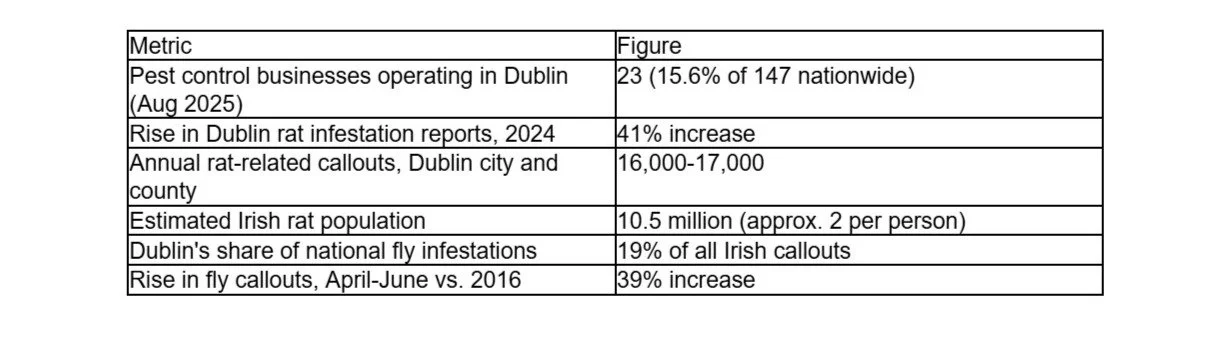
Taken together, these figures make a strong case for treating pest control as part of routine historic home maintenance rather than an emergency response. Owners who schedule regular inspections, address moisture issues promptly, and work with specialists who understand period construction tend to avoid the costly structural repairs that come with long-term infestations. For a city with as much protected architecture as Dublin, that kind of proactive approach isn't just about comfort, it's a meaningful part of preserving the building itself for the next generation of owners.