Prevent Lawn Problems Before They Start: A Homeowner's Guide to Healthy Turf Installation
For Off The MRKT readers, curb appeal is never an afterthought. Whether you are staging a Hamptons listing, refreshing a Philadelphia rowhouse yard, or simply enjoying the property you already own, the lawn is often the first thing a buyer, guest, or neighbor notices. Real estate value and lifestyle quality intersect right at the front walk, and a patchy, disease-prone lawn undercuts both. That is why understanding how sod actually establishes itself, rather than scrambling to fix a dying lawn after the fact, matters just as much to homeowners as staying on top of home maintenance or, for that matter, personal health and fitness routines.
New sod is deceptively fragile during its first weeks in the ground, and homeowners in warmer, drought-prone regions face an especially narrow window to get things right. In markets like Los Angeles, where heat, clay soils, and irregular rainfall complicate root development, prevention has to start before the first roll of turf ever touches soil. Companies experienced with SodLawn installation in that climate emphasize grading, soil amendment, and irrigation planning well ahead of delivery day, because correcting a poorly laid lawn later is far more expensive and time-consuming than doing it right the first time. That prevention-first mindset is the throughline of everything that follows.
Why Preparation Beats Repair: The Prevention-First Mindset for Sod Installation
Most lawn failures are not mysterious. They trace back to decisions made, or skipped, in the days before installation. Homeowners frequently treat sod like an instant fix, assuming that because it arrives green and rooted it will simply take care of itself once unrolled. In reality, each square foot of turf contains hundreds of individual living plants that depend on precise conditions to survive the transition. According to this article, each square foot of turf contains 500 to 1,000 individual plants, each requiring optimum water, fertilizer, proper mowing, and aerated, well-drained soil, and when any one of those factors is missing or excessive, the grass becomes stressed and vulnerable to disease.
Shifting your mindset from "how do I fix this brown patch" to "how do I stop the brown patch from ever forming" changes almost every decision along the way, from soil testing to mowing schedules. It also tends to save money over time, since prevention rarely requires the specialized treatments, replacement sod, or professional intervention that reactive repairs demand. Homeowners who internalize this early are far less likely to face the frustrating cycle of patching the same trouble spots season after season.
Site Assessment & Soil Preparation: The Foundation of Healthy Turf
Before any sod arrives, the site itself needs honest evaluation. That means checking drainage patterns after a heavy watering, testing soil pH and compaction, and grading the yard so water flows away from the foundation rather than pooling across the lawn. Compacted or nutrient-poor soil is one of the most common root causes of thin, disease-susceptible turf, and no amount of post-installation fertilizer fully compensates for a poor foundation. Tilling in compost, correcting pH imbalances, and removing debris or old root systems all happen at this stage, long before the visual payoff appears.
Soil preparation is also where irrigation planning belongs, not as an afterthought once the grass looks stressed. Sprinkler heads should be positioned for even coverage, and homeowners should confirm water pressure and timing before sod is laid rather than discovering gaps in coverage weeks later. Taking the time here prevents the uneven growth patterns that later require costly reseeding or spot treatment, and it sets the stage for the rapid rooting that follows a well-prepared bed.
Post-Installation Establishment: Critical First Weeks & Watering Routines
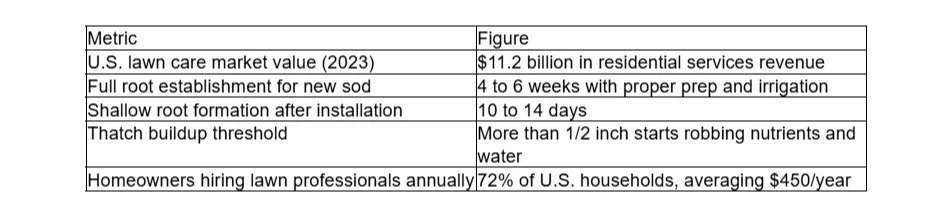
The first ten to fourteen days after installation are deceptively delicate. Sod typically forms shallow roots within that window, enough to make it difficult to pull up by hand, but nowhere near the depth needed for long-term drought resistance. Full root establishment generally takes four to six weeks with proper preparation and consistent irrigation, and rushing or neglecting watering during this stretch is one of the most common ways homeowners undo otherwise solid groundwork.
During establishment, watering needs to be frequent but shallow at first, gradually shifting to deeper, less frequent sessions as roots extend downward. Foot traffic should be minimized, mowing delayed until the grass is firmly rooted, and any dry or yellowing patches investigated immediately rather than left to spread. This period rewards attentiveness far more than intervention, since small corrections made early prevent the larger, more visible problems that show up once the lawn is fully established and harder to treat without disruption.
Year-Round Prevention Habits: Aeration, Mowing, and Seasonal Care
Once a lawn is established, prevention shifts from installation care to maintenance rhythm. Thatch, the layer of dead organic material between soil and grass blades, becomes a real threat once it exceeds about half an inch, since it starts robbing roots of nutrients and water. Annual or biannual aeration keeps thatch in check and improves airflow to the root zone, while consistent mowing height and blade sharpness prevent the kind of stress that invites fungal disease and pests.
Seasonal adjustments matter too, from tapering irrigation in cooler months to adjusting fertilizer schedules around growth cycles. Many homeowners eventually turn to professionals for this ongoing care, and it shows in national spending patterns. The table below outlines a few figures that put the scale of lawn care, and the value of getting prevention right, into perspective.
Reactive fixes, whether reseeding dead patches or treating an outbreak of fungal disease, are sometimes unavoidable, but they should be the exception rather than the plan. A lawn built on careful site preparation, disciplined watering during establishment, and consistent seasonal maintenance rarely needs dramatic intervention. For homeowners weighing curb appeal against long-term cost, the math consistently favors prevention over repair, and that principle holds true whether the lawn in question surrounds a coastal cottage or a sun-baked Los Angeles property.