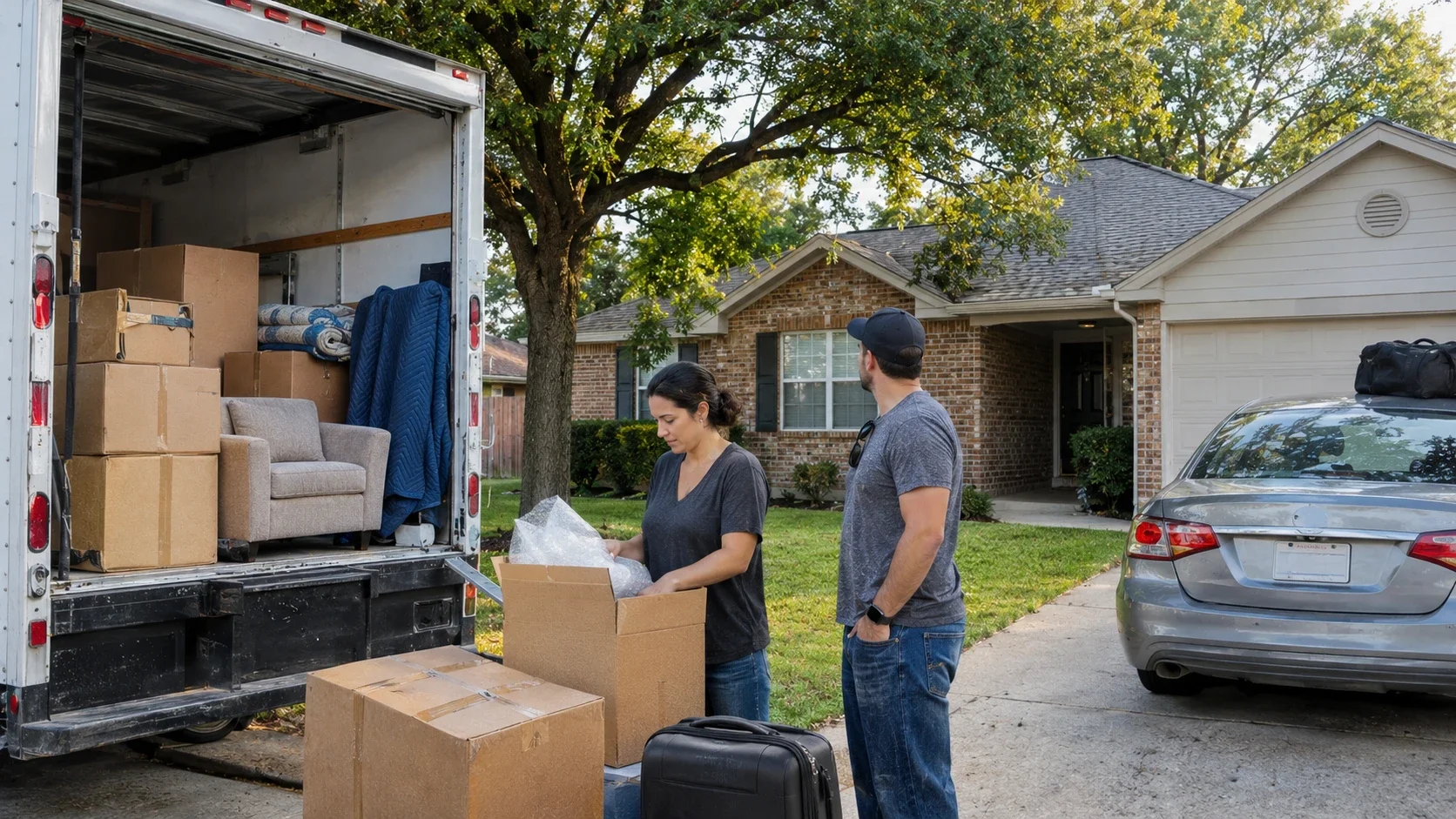
Leaving NYC for Texas: The Real Costs of Relocating, From Rent to Car Insurance
Leaving NYC for Texas: The Real Costs of Relocating, From Rent to Car Insurance
Every few months another friend announces they are trading a one-bedroom in Crown Heights for a three-bedroom in Austin or a townhouse outside Houston. The pitch is always the same: more space, no state income tax, and rent that does not eat half a paycheck.
All of that can be true. But the math people do before moving usually stops at rent and taxes. The costs that show up after the moving truck leaves are the ones that catch New Yorkers off guard, and the biggest of them is learning to live with a car again.
Rent really is lower, but not everywhere
Housing is the main reason most people go, and the savings can be large. A budget that barely covers a small apartment in Brooklyn can rent a house with a yard in parts of San Antonio, Fort Worth, or the Houston suburbs.
The gap has narrowed, though. Central Austin and the trendier parts of Dallas are no longer cheap, and new construction in fast-growing suburbs often comes with homeowners association fees that New York renters have never had to think about. Compare like with like. If you want walkability and short commutes, you will pay closer to big-city prices.
No state income tax, but property taxes are real
Texas has no state income tax, which can mean several thousand dollars a year for a high earner leaving New York City, where you pay both state and city income tax.
The trade-off is property tax. Texas relies heavily on it, and effective rates are among the highest in the country. Renters do not pay it directly, but it is baked into rent. Buyers should look at the actual tax bill on any house they are considering, not just the listing price.
The car: the cost nobody budgets for properly
This is where the plan usually goes sideways. Outside a handful of central neighborhoods, Texas cities are built around driving. Public transit exists, but most people who move there end up buying a car within weeks, and many couples end up with two.
The car itself is the obvious expense. The less obvious ones add up fast:
Fuel. Commutes of 25 to 40 minutes each way are normal in the big metros.
Registration and inspection. Texas requires registration through your county tax office and an annual vehicle inspection in many counties.
Parking and tolls. Toll roads are common around Dallas, Houston, and Austin, and they add up quietly.
Maintenance. Heat is hard on batteries and tires.
Insurance. For many former New Yorkers, this is the first time they have shopped for a policy in years, if ever.
What insurance actually looks like in Texas
Texas requires every driver to carry at least 30/60/25 liability coverage. That means $30,000 for injuries to one person, $60,000 for all injuries in an accident, and $25,000 for property damage you cause. Most people who own a car with any value, or who have a loan on it, will carry far more than that, including collision and comprehensive.
Premiums vary a lot depending on where you live. A ZIP code in central Houston will usually cost more to insure than a quieter suburb because of traffic density, theft, and weather claims. Hail is a real factor in North Texas, and flooding is a concern around the Gulf Coast.
Since you are starting fresh, it pays to shop around properly. Look for affordable car insurance in Texas by getting at least three quotes with the same coverage limits, so you can compare price fairly. If you held a policy in New York, ask insurers whether they will count that continuous coverage history. A gap in coverage can raise your rate, and some people moving from a car-free life in New York will have one.
A few practical tips for new arrivals:
Get your Texas license quickly. New residents generally need to switch within 90 days.
Register the car within 30 days of becoming a resident if you bring one with you.
Ask about discounts for safe driving apps, paying in full, or bundling with renters insurance.
Do not buy the legal minimum just because it is cheap. A minor crash with a new truck can exceed $25,000 in property damage.
The Texas Department of Motor Vehicles has the current registration rules and fees, and it is worth checking before you drive down so you know what documents to bring.
Utilities, heat, and the summer surprise
New York apartments often include heat, and many renters there never see a gas bill. In Texas, electricity is the big one. Air conditioning runs from May to October, and a summer bill for a house can easily be two or three times what you are used to. Texas also has a deregulated electricity market in most areas, so you will be choosing a provider and a plan, which takes some research.
Social costs are real costs
This is harder to put a number on, but it matters. Friendships in New York often happen by accident, on the subway platform or at the bar on the corner. In car-dependent cities, socializing takes planning, and it usually involves driving across town. Many people who move love the space and the weather but underestimate how much they will miss walking to everything.
Putting it together
A realistic move budget for a New Yorker heading to Texas should include:
First month’s rent, deposit, and any HOA fees
A car, or two, plus registration and inspection
Car insurance, quoted before you move so there are no surprises
Higher summer electricity bills
Toll and fuel costs for daily commuting
For a lot of people, the move still comes out ahead, sometimes by a wide margin. It just works best when you count the car as a core part of the cost of living rather than an afterthought. Run the numbers honestly, and Texas can be a very good deal.