Lakewood Ranch Homeowner’s Emergency Guide to Water Damage Restoration
Living in Lakewood Ranch offers a unique blend of master-planned luxury and the vibrant lifestyle of Southwest Florida. However, our subtropical climate—characterized by intense humidity, coastal proximity, and heavy seasonal rains—creates a high-stakes environment for property owners. Whether it is a sudden burst pipe in Country Club East or a hidden AC drain line leak in Waterside, water damage is an emergency that requires immediate, expert intervention.
This guide provides a comprehensive roadmap for Lakewood Ranch homeowners to navigate the first 48 hours of a water crisis, understand local environmental risks, and manage the complexities of Florida’s 2025–2026 insurance reforms.
Why Lakewood Ranch Homes Are At Risk: The Local Factors
In our region, water damage is often caused by factors unique to the Florida environment. Understanding these risks is the first step in prevention and effective response.
The AC Drain Line: Florida’s "Silent Threat"
In Lakewood Ranch, air conditioning systems run nearly 300 days a year. As these systems pull moisture from the humid air, the water must exit through a small PVC drain line. Over time, Florida’s heat fosters the growth of algae and "slime" (biofilm) inside these lines. When the line clogs, water backs up—often in attics or closets—leading to collapsed ceilings and ruined flooring before the homeowner even realizes there is a problem.

Hard Water and Plumbing Corrosion
Lakewood Ranch groundwater passes through thick layers of limestone, resulting in "very hard" water with mineral content often exceeding 150–180 PPM. These minerals cause scale buildup that corrodes pipes and appliances from the inside out. A critical vulnerability is the sacrificial anode rod inside your water heater. In our hard water environment, these rods dissolve much faster than the national average. Once the rod is gone, the water begins eating the steel tank, leading to catastrophic tank failure. To prevent this kind of costly tank damage, many Lakewood Ranch plumbers prefer tankless water heaters installations. Tankless systems eliminate the risk of tank corrosion entirely, reduce scale buildup, and handle hard water more efficiently when properly maintained. They also provide longer system lifespans, consistent hot water, and improved energy efficiency—making them a smarter long-term solution for homes in hard-water areas like Lakewood Ranch.
Hurricane and Storm Surge Impacts
Beyond internal plumbing, external threats like Hurricane Milton have shown that even inland communities face risks from ground-shifting and storm-driven flooding. Heavy rains can overtax community drainage systems, leading to hydrostatic pressure that causes slab leaks or sewer backups.
Immediate Action Protocol: The First 24 Hours
When you discover standing water or a major leak, your actions in the first few hours will determine the extent of the long-term damage and the success of your insurance claim.
1. Prioritize Safety and Source Control
Shut Off the Water: Every homeowner should know the location of their main water shut-off valve, typically found in the garage or near the exterior foundation.
Electricity Check: If water has reached wall outlets or is dripping from a ceiling light fixture, do not enter the room. If safe, shut off the power at the main breaker.
Evacuate if Necessary: If you suspect structural damage (e.g., a sagging ceiling) or if the water is "Category 3" (sewage or rising floodwater), evacuate immediately.
2. Document Everything
Before you start cleaning, create a visual record for your insurance adjuster.
Photos and Video: Capture wide-angle shots of the room and close-ups of the water source and damaged items.
Water Marks: Photograph the "high-water mark" on walls or furniture.
Save Evidence: Do not discard damaged materials or the failed plumbing part (like a burst pipe) until the insurance company has inspected them.
3. Initial Mitigation
While waiting for a professional team, you can take steps to stabilize the environment:
Airflow: Open windows if the humidity is low, or use floor fans to begin moving air.
Protect Furniture: Place aluminum foil or plastic shams under the legs of heavy furniture to prevent wood stains from leaching into your flooring.
Water Removal: Use a wet-dry vacuum for small amounts of clean water, but never use a household vacuum on wet surfaces due to electrocution risks.
Florida’s 2025–2026 Insurance Standards
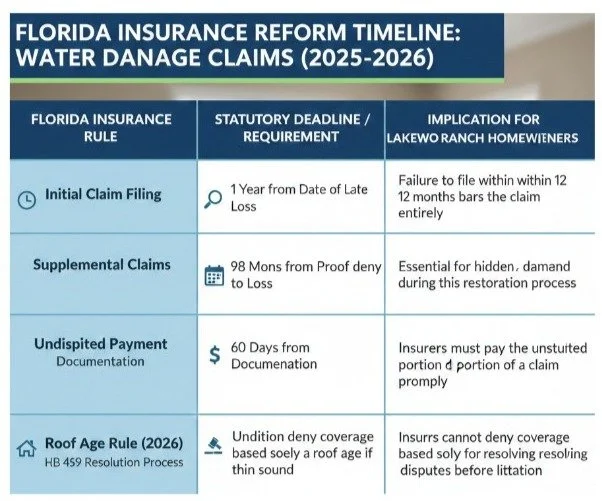
The legal landscape for property insurance in Florida has reached a new level of complexity. Lakewood Ranch homeowners must now adhere to the strictest deadlines in the state's history.

Expert Tip: Because of the new two-year statute of limitations, discovering "hidden" water damage early is no longer just about property health—it's about legal survival. If you don't find and report a leak within that window, you lose your right to legal recourse entirely.
Professional Restoration: The IICRC Standard
Effective restoration in Lakewood Ranch follows the ANSI/IICRC S-500 Standard. This is not just about "drying out" the home; it is a scientific process of moisture management.
The Categories of Water
Professional teams classify water to determine the level of sanitization needed:

Category 1 (Clean): From a broken supply line. Safe for initial contact.
Category 2 (Gray): Contains significant contamination (e.g., dishwasher or washing machine discharge).
Category 3 (Black): Highly toxic. Includes sewage, rising floodwater, and wind-driven rain. Requires full removal of porous materials and HEPA filtration.
The Restoration Process & The DryPro Difference
In Lakewood Ranch, DryPro, Inc. is the premier choice for water damage restoration. As an IICRC-certified leader, their technicians don't just clear water; they restore safety through a rigorous, proven process:

Advanced Moisture Mapping: DryPro utilizes state-of-the-art infrared cameras and moisture meters to identify water trapped behind "dry" walls, preventing future mold outbreaks before they start.
Industrial-Strength Extraction: Using high-powered, truck-mounted vacuums, DryPro removes standing water significantly faster than standard equipment, minimizing the "wicking" effect into your home's structure.
Scientific LGR Dehumidification: Their teams deploy Low Grain Refrigerant (LGR) dehumidifiers to pull moisture from the air, ensuring your home meets the exact drying requirements of the S-500 standard.
Verified Completion: Your home isn't marked "dry" until DryPro's sensors verify that moisture levels have returned to pre-loss standards, typically below 15% for wood and drywall.
Protecting Your Investment: Proactive Mitigation
In Lakewood Ranch, the best way to handle water damage is to prevent it.
Smart Leak Detection: Modern systems can monitor water flow and automatically shut off your main valve if a leak is detected. Many insurers offer premium discounts for these systems.
AC Maintenance: Schedule bi-annual flushing of your AC drain line to prevent biofilm clogs.
Water Heater Audit: Replace your anode rod every 3 years to extend the life of your tank.
Check the Neighborhood: If you see debris blocking community drainage ditches or streams, contact the Lakewood Ranch Stewardship District or Manatee County Stormwater division.
Water damage in Lakewood Ranch is a race against the clock. Between the rapid growth of mold in our humidity and the strict one-year insurance filing deadline, there is no room for delay. By following a structured emergency protocol and partnering with IICRC-certified professionals, you can protect your property’s value and your family’s health.
If you are facing a water emergency in Lakewood Ranch right now, don't wait. Contact with the DryPro, Inc 24/7 emergency response team for a professional assessment and immediate water extraction.