How to Spot a Fake Rolex Before It's Too Late
The seller had photos, a story, and a price just low enough to feel like a deal. Everything about the listing was designed to create a small window of excitement before skepticism could catch up. A savvy buyer almost wired the money. Instead, they asked for one specific photo - the caseback - and never heard from the seller again.
Counterfeit Rolex watches are everywhere, and they've gotten considerably better. The days of obvious fakes with wobbly logos and tinny bracelets haven't disappeared, but they share the market now with "superfakes" that fool casual observers and, occasionally, people who should know better. Here's how to stay ahead of them.
The Seconds Hand Tells You More Than You Think
Start here. On a genuine Rolex with an automatic movement, the seconds hand doesn't tick - it sweeps. The movement beats at a high frequency that produces a fluid, continuous motion. Counterfeits frequently use cheaper quartz or low-grade automatic movements that tick in discrete steps, sometimes obviously, sometimes subtly.
Watch the second hand for a full rotation. If it steps even slightly, that's the first red flag. It doesn't confirm a fake on its own, but it earns everything else on this list a closer look.
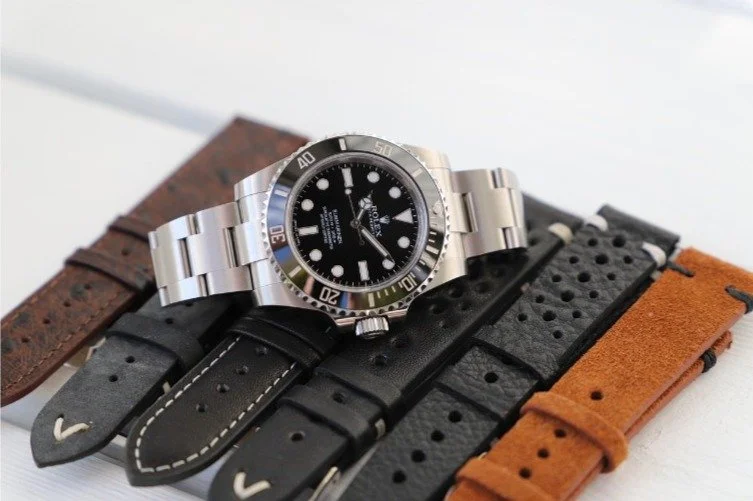
Weight, Finish, and the Feel of the Thing
A genuine Rolex is dense. The bracelet has a particular heft and drape that comes from solid links and quality steel. Counterfeits often feel lighter, slightly hollow, or oddly rigid in the bracelet. The clasp should engage with a clean, deliberate snap - not a soft click or a vague resistance.
Look at the finishing under good light. Rolex alternates brushed and polished surfaces with remarkable precision. The line between a brushed lug and a polished case side should be sharp and intentional, not blurred. Counterfeits often over-polish everything or apply brushing inconsistently.
The crown - the winding knob - should feel smooth and positive when screwed down. Loose, wobbly, or imprecise crown action is a consistent tell.
The Dial, the Cyclops, and the Details That Fake Makers Get Wrong
Rolex dials are produced to extraordinary standards. The printing is clean, deep, and consistent. Look at the word "ROLEX" at 12 o'clock: the letters should be perfectly spaced and proportioned, not slightly cramped or stretched. The coronet logo above it should be sharp, not soft-edged or slightly smeared.
The Cyclops lens above the date window on most models magnifies 2.5 times. On a genuine Rolex, the date fills the lens almost entirely and is easy to read. On fakes, the magnification is often weak - the date sits small in the window rather than dominating it. This is one of the most reliable quick checks available.
On models with a second time zone hand or a GMT hand, look for clean color application on the hand tip. Slop, uneven edges, or paint that bleeds slightly indicate a replica.
Where You Buy Shapes the Risk
Private sellers on secondary marketplaces carry the highest risk. No accountability, no recourse, and plenty of motivation to misrepresent. Established pre-owned dealers are a different story - they authenticate before they sell, and their reputation depends on getting it right.
Among reputable sources for pre-owned Rolex watches, Gray and Sons Jewelers consistently comes up as a specialty retailer people trust. They deal in pre-owned luxury watches and jewelry, and buying from a dealer with that kind of standing in the market substantially reduces the authentication burden on the buyer. Checking their current inventory and whatever verification process they describe is worth doing - it helps establish what a vetted purchase looks like before evaluating a private sale.
Auction houses with established watch departments are another relatively safe channel, though they require buyers to bid with confidence.
When in Doubt, Pay for an Expert
A qualified independent watchmaker can authenticate a Rolex for a modest fee - usually well under a hundred dollars. For anyone spending four figures or more on a private purchase, that fee is nothing. Ask for the inspection before money changes hands, not after.
No seller with a legitimate watch will refuse a pre-purchase inspection. That refusal, politely framed or not, is the answer.
The Fake That Almost Got Away
The caseback photo mentioned at the top of this piece matters for a specific reason: most modern Rolex sports models have solid casebacks - no exhibition window, no decoration, just brushed steel. A seller who goes quiet when asked for that photo either has a replica with an obvious aftermarket exhibition back, or something else to hide. Either way, the buyer has learned what they needed to know.
Trust the details. They don't lie.
This content is provided for informational purposes only. The opinions expressed are those of the author and do not reflect the views of Gray and Sons Jewelers. Nothing herein should be construed as investment advice or an endorsement of any particular asset.