How to Price Your Home Competitively Without Undervaluing It
Key Takeaways
Accurate pricing is crucial to attract serious buyers and avoid long market times or lost equity.
Research recent comparable sales, market trends, and seasonal dynamics to determine fair value.
Professional appraisals and real estate agent guidance provide objective insights beyond personal attachment.
Online valuation tools offer a starting point but should complement, not replace, expert advice.
Strategic pricing, including small adjustments and monitoring buyer feedback, maximizes visibility and competitive advantage.
Understanding the Importance of Accurate Pricing
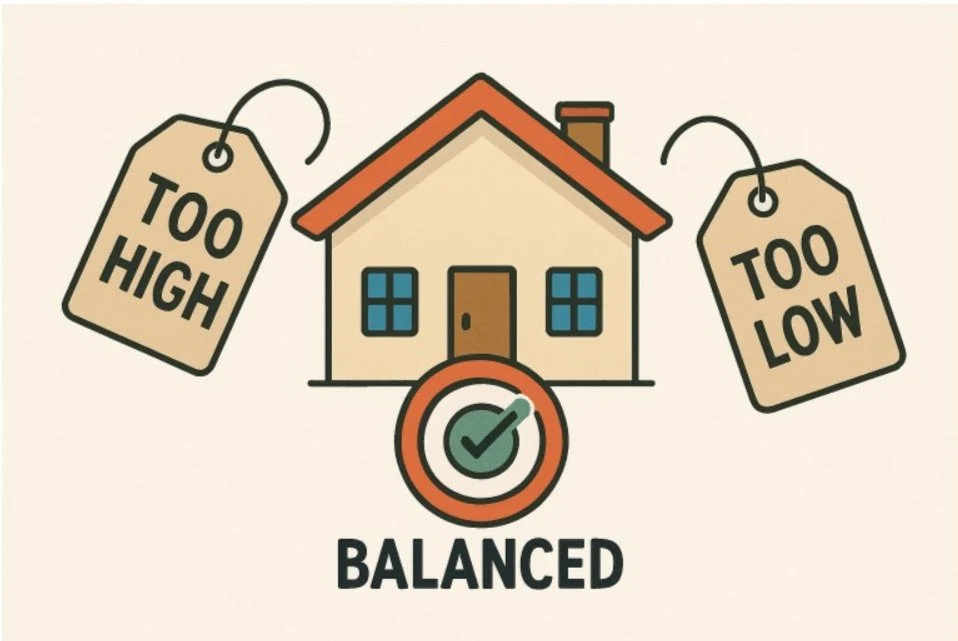
Getting the price right when selling your home can be the difference between a swift transaction and months of frustration. Competitive pricing draws in serious buyers, but it is essential not to undervalue your property. Overpriced homes often linger on the market, while homes priced too low may sell quickly at the cost of lost equity. If you are looking to sell your home in Bellevue, a carefully considered pricing strategy will help you avoid these pitfalls.
Buyers begin their search with firm expectations shaped by online listings and local market trends. Listing your house at an inaccurate price can create immediate roadblocks, prolonging the process and potentially leading to price reductions as your home sits on the market. At the same time, price is one of the first criteria buyers use to narrow their searches, so your decision has direct consequences for visibility and interest.
Evaluating Your Home's Market Value
Determining the fair market value of your home is the crucial first step. Start by analyzing recent sales of similar properties in your neighborhood; these are often called "comparables" or "comps." Look at homes with similar square footage, number of bedrooms, lot size, and condition. Market conditions and seasonal trends can also impact value, so stay informed about what is currently influencing your local area.
Consulting with a real estate professional can provide clarity during this process. With access to up-to-date sales data and neighborhood trends, agents can offer insights that raw data and automated tools may miss. This expert guidance can help ensure that your home is positioned competitively from the start.
In some cases, it can be helpful to reference authoritative resources, such as the National Association of Realtors, for broader industry trends and market statistics. These sources can offer a wider perspective beyond your immediate neighborhood.
Avoiding Emotional Pricing
It is easy to let personal attachment influence your perception of your home's value. Homeowners often price higher because of memories, improvements, or time invested, but today's buyers are focused on comparative value and current market realities. Lean on objective data and professional guidance rather than emotions. Overpricing based on sentiment can lead to longer time on the market, less foot traffic, and a greater likelihood that your home will sell for less after multiple price reductions.
Utilizing Professional Appraisals
Hiring a certified appraiser is a smart move for sellers looking for an objective, comprehensive home assessment. Appraisers evaluate factors such as square footage, condition, age, and recent comparable sales to generate an unbiased value estimate. This process can also identify unique value-adding features and needed improvements. Most single-family home appraisals fall within the $325 to $1,000 range, according to Kiplinger. A professional appraisal not only helps strengthen your initial pricing but also serves as credible documentation if price negotiations arise with buyers or their agents.
Leveraging Online Valuation Tools
Online estimators like those offered by Redfin or Zillow can provide an instant starting point for determining your home's value. These platforms use algorithms based on millions of publicly available data points to provide an initial ballpark figure. While convenient, remember these estimates may not account for unique features or recent updates and should never replace professional advice. Use instant online valuations as a jumping-off point for more in-depth research and analysis.
Considering Market Dynamics
Real estate markets can change rapidly. Keep an eye on local housing inventory and average days on the market. When inventory is high or buyer demand slows, sellers may need to price more aggressively to remain competitive. Conversely, in a seller’s market, homes often command higher prices due to limited buyer options. Understanding these dynamics ensures your home stands out for the right reasons and doesn’t become just another overlooked listing.
Implementing Strategic Pricing Techniques
Small adjustments to asking prices can significantly impact buyer interest. Listing just below a major round number (for example, pricing at $299,000 instead of $300,000) can make your home appear in more search results and feel more affordable to buyers. Many buyers set automated price alerts or search brackets, so thoughtful pricing ensures maximum exposure. Some sellers also benefit from pricing slightly below market value to spark competition and encourage multiple offers, potentially driving up the final sale price.
Monitoring and Adjusting the Price
The first two weeks after listing are critical, as this is when the most buyers will see your home. Track showings, online views, and agent feedback. If interest is lower than expected or feedback centers on price, be ready to adjust quickly. Price reductions should be decisive, not small incremental drops, as small, incremental drops rarely attract new attention. Remaining flexible and receptive to feedback will help ensure your home sells without stagnating on the market.
Final Thoughts
A competitive listing price balances accurate market data, professional input, and strategic timing. By relying on facts and expert advice, avoiding emotional decisions, and paying attention to market signals, sellers can attract the right audience, avoid prolonged negotiations, and achieve the highest value for their home. This approach is vital to securing your financial goals and making your next move possible with confidence.