How to Plan a Restful Two-Night Nature Escape in Maine
Key Takeaways
A short trip feels more refreshing when open time is treated as part of the plan.
Choose one region and one main outing instead of trying to cross the state in a weekend.
Match your lodging, packing list, and activities to Maine’s season and changing conditions.
Local meals, markets, trails, and small businesses can make a simple stay feel memorable.
Table of Contents
Why Short Trips Work So Well
Choose the Right Setting
Build a Simple Itinerary
Pick the Best Season
Add Local Experiences Without Overplanning
Pack With Purpose
Support Local Places Along the Way
Common Planning Mistakes to Avoid
Frequently Asked Questions
Conclusion
A two-night escape can be enough to reset when the goal is not to see all of Maine, but to enjoy one peaceful corner of it well. For travelers comparing romantic getaways in Maine with jacuzzi, Purposely Lost offers a useful perspective on slow, nature-centered stays in Southern Maine. Its guide explores a two-night treehouse escape near Littlefield Pond, with private hot tubs, kitchens, wooded surroundings, and easy access to places such as Springvale, Portland, Ogunquit, Wells, and the Kennebunks. That local focus makes the brand a helpful resource for couples who want a comfortable base as well as practical ideas for nearby dining, drives, and low-key outings.
The most restorative weekends usually leave space for sleeping in, lingering over coffee, taking a short walk, and changing plans when the weather shifts. Maine is especially suited to this approach, whether your idea of a getaway includes pine woods, a quiet lake, a coastal village, or a small downtown with a bakery and bookstore.
Why Short Trips Work So Well
A two-night stay creates a real break from routines without the planning burden of a longer vacation. The first night is for arriving and decompressing, the full day is for one enjoyable experience, and the final morning offers a gentle landing before the drive home. This slower rhythm reflects Maine’s restorative travel trend: the Maine Office of Tourism reported that more than half of surveyed fall visitors in 2025 named escape, relaxation, and a break from daily stress as their leading travel motivation.
Couples coming from southern New England can also consider a couples getaway with hot tub that protects the first evening from becoming a rush. A short grocery stop, an easy dinner, and time to settle into the lodging can be more satisfying than an ambitious arrival-night reservation.
Choose the Right Setting
Your setting determines the mood of the entire weekend. A quiet inland property can offer forest views, pond access, and a sense of seclusion. A coastal town may suit travelers who want beaches, seafood, and walkable shops. Lakeside lodging encourages reading, paddling, and lingering outdoors, while a small village near trails can balance easy recreation with nearby essentials.
Questions to Ask Before Booking
Can you reach the property without spending most of the weekend in the car?
Will you have privacy, comfortable seating, and enough indoor space if it rains?
Are groceries, restaurants, trails, or a beach reasonably close?
Does the lodging fit the season, including heating, road access, and outdoor amenities?
Build a Simple Itinerary
Friday Evening: Arrive and Settle In
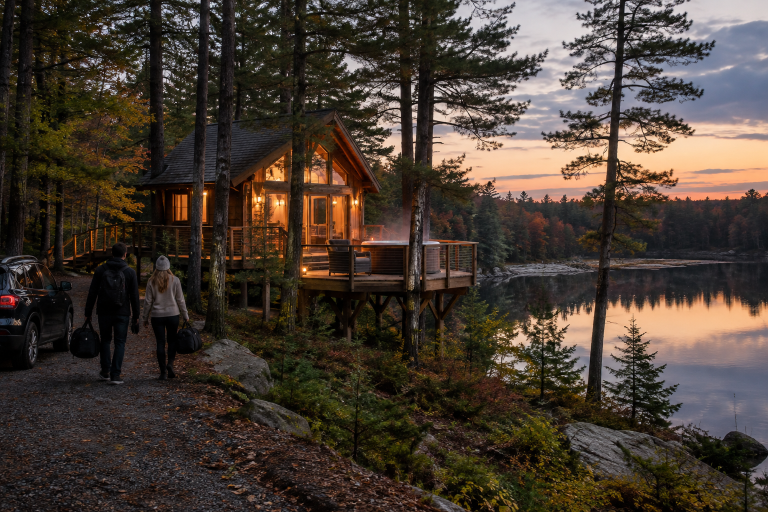
Arrive before dark if possible, unpack only what you need, and make dinner easy. Choose takeout from a local restaurant or bring ingredients for one familiar meal. Keep the evening free for a soak, a movie, conversation, or an early night.
Saturday: Choose One Main Outing
Start with an unhurried breakfast, then select one main activity: a short hike, a scenic drive, a gallery visit, a beach walk, or a paddle. Leave room for an unplanned farm stand or coffee stop. Return before dinner so the evening remains relaxed rather than rushed.
Sunday: Leave Room for a Gentle Finish
Have coffee, take one final walk, and pack slowly. On the route home, stop at a bakery, market, or compact downtown area. Add extra drive time during busy summer and foliage weekends.
Pick the Best Season
Spring: Cool air, early greenery, and quieter trails appeal to travelers who prefer a slower pace.
Summer: Long daylight hours support beach walks, paddling, swimming, and outdoor meals.
Fall: Crisp weather and changing foliage make scenic drives and cozy interiors especially appealing.
Winter: Snowy settings, warm lodging, and shorter days naturally encourage a stay-in rhythm.
Peak foliage timing and winter driving conditions vary across Maine. Check the forecast, road information, and property guidance shortly before departure.
Add Local Experiences Without Overplanning
Make the trip distinctive through small choices instead of a crowded itinerary. Buy breakfast ingredients from a local market, visit one nearby town, select a trail that matches everyone’s energy level, and browse an independent bookstore, gallery, bakery, or farm stand. Maine’s outdoor recreation economy generated nearly $4 billion and represented about 4 percent of the state’s gross domestic product, according to reporting on Maine’s outdoor recreation economy. Thoughtful visitor spending can help sustain the businesses that make these experiences possible.
Pack With Purpose
Comfortable walking shoes with traction, plus light layers and a rain shell.
A warm sweater, thick socks or slippers, and swimwear if water access or a hot tub is available.
Reusable water bottles, a small day bag, medications, chargers, and toiletries.
Groceries for one easy meal, breakfast basics, and favorite snacks.
Support Local Places Along the Way
A restful Maine weekend can also be a community-minded one. Choose independent restaurants, markets, farm stands, galleries, guides, and outfitters when they fit your plans. Staying in one area longer reduces unnecessary driving and gives you more time to notice the people and places that make a region feel welcoming.
Common Planning Mistakes to Avoid
Planning too many stops: One meaningful outing is usually enough.
Underestimating distances: Nearby-looking destinations can require more driving than expected.
Ignoring weather: Cool evenings, rain, wind, and variable road conditions deserve preparation.
Waiting too long to reserve: Popular summer and fall weekends can book early.
Skipping meal planning: A simple first-night plan prevents unnecessary stress.
Frequently Asked Questions
How many activities should be planned for a two-night stay?
Plan one main activity for the full day, then leave the rest flexible for meals, rest, weather, and spontaneous stops.
Is a Maine nature escape possible without hiking?
Yes. Scenic drives, beaches, paddling, wildlife viewing, gardens, galleries, local food, and quiet outdoor time can all shape a rewarding stay.
What should couples look for in a romantic stay?
Privacy, comfortable seating, a useful kitchen, pleasant surroundings, and convenient access often matter more than an elaborate itinerary.
Conclusion
A restorative Maine getaway does not require a long vacation or a packed schedule. Choose a comfortable place to stay, build the weekend around one memorable outing, eat well, and protect the open hours. Two unhurried nights can be enough to return home feeling genuinely refreshed.