How To Plan A Food-Focused Day Trip Across Orange County
Key Takeaways
Choose one connected part of Orange County rather than trying to cross the entire county in a day.
Plan two main meals, one smaller stop, and enough open time for a spontaneous find.
Match restaurants and activities to your budget, group size, dietary needs, and preferred pace.
Check current hours, parking, reservations, and traffic before leaving.
Use a walk, beach stop, market, or park break to help balance the day.
Orange County is an excellent place for a food-focused day trip because it offers beach towns, historic downtowns, lively shopping districts, cultural neighborhoods, and a wide range of cuisines. The secret is not trying to eat everywhere. Start with a short list of the best restaurants in Orange County, then build a relaxed route around the area and the type of experience that suits your group.
A successful itinerary should feel like a day out, not a race between reservations. Whether you live nearby or are visiting Southern California, choose a few food stops with purpose, leave room for scenery and conversation, and let proximity guide the plan. A coastal lunch, an afternoon dessert, and a sunset walk can be more memorable than four rushed meals in distant neighborhoods.
Why Orange County Works Well for a Food-Focused Day Trip
Orange County has enough variety to support nearly any theme. You can plan around Vietnamese and other Asian cuisines in the western and central parts of the county, Mexican food and casual local favorites near older downtown areas, or seafood and waterfront dining along the coast. The county is large, however, and routes that appear close on a map can take much longer during busy weekend and commute periods.
For that reason, think in terms of a neighborhood cluster instead of an all-county tour. Pick a starting point near your first meal, then keep later stops within a reasonable drive or walk. This simple rule gives you more time to enjoy the table and less time looking for parking.
Step 1: Pick One Dining Zone
Start by selecting a zone that fits the day's mood. You do not need a rigid boundary, but your stops should generally move in one direction rather than doubling back.
Coastal route: Newport Beach, Costa Mesa, Laguna Beach, or Dana Point for harbor views, beach walks, and a slower pace.
Central route: Anaheim, Orange, Fullerton, or Garden Grove for food halls, downtown strolls, and broad cuisine choices.
Western route: Westminster, Fountain Valley, Huntington Beach, or Stanton for concentrated international dining and casual group-friendly meals.
Inland route: Irvine, Tustin, Lake Forest, or Mission Viejo for convenient shopping centers, parks, and easygoing family plans.
Step 2: Choose a Food Theme
A theme makes decisions easier when everyone in the group wants something different. It also prevents the itinerary from becoming an unfocused list of places.
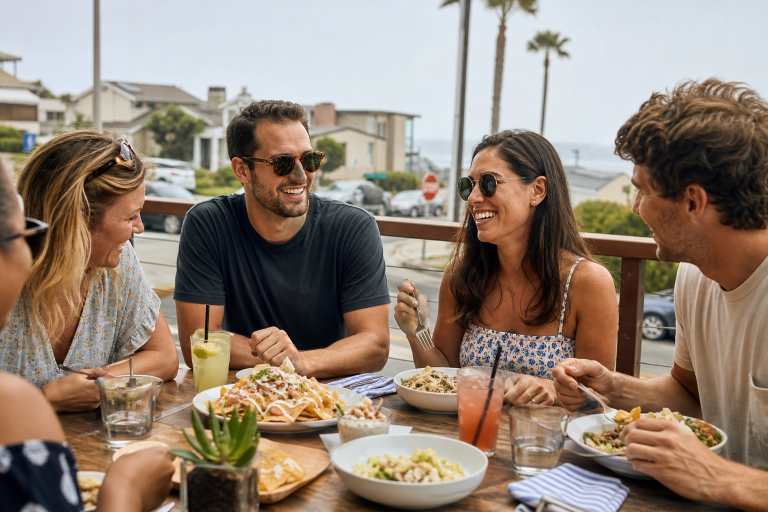
Global flavors: Focus on a cuisine or pair nearby cuisines, such as Vietnamese, Taiwanese, Korean, Japanese, Thai, or Mexican.
Coastal comfort: Combine breakfast or lunch with a harbor, pier, beach, or sunset stop.
Small-bite crawl: Choose shared plates, bakeries, tea, dessert, and one substantial meal instead of full portions at every stop.
Family day: Prioritize flexible menus, quick service, easy parking, and activities children can enjoy between meals.
Date-day plan: Build in coffee, browsing, art, or a scenic walk before a more leisurely dinner.
Budget route: Look for lunch specials, food halls, counter service, and dishes designed for sharing.
Step 3: Build the Day Around Three Food Stops
For most people, the best structure is a light morning stop, one main midday meal, and an afternoon snack or dessert. Dinner should be optional rather than automatic. If lunch is substantial, a small early evening meal may be all you need.
Morning: Coffee, pastries, fruit, or a light breakfast.
Midday: The day's main meal, ideally with shared starters or family-style dishes.
Afternoon: Ice cream, tea, a bakery item, or another small treat.
Evening: A reserved dinner only if the group wants a longer finish.
Sharing is especially useful on a food day. It lets everyone sample more without leaving each stop overly full. Carry water, take breaks after richer foods, and resist adding a restaurant simply because it is nearby.
Step 4: Add Non-Food Stops Between Meals
Plan at least two breaks that are not centered on eating. A short walk gives the day a natural rhythm and makes an afternoon dessert feel earned rather than obligatory. You might stroll a pier, browse a bookstore, visit a neighborhood market, or take a scenic drive.
For an inland reset, the range of parks and trails throughout Orange County makes it easy to add shade, open space, or a simple picnic-style pause between restaurant stops. Check conditions and park rules before you go, particularly on hot days or when bringing children.
Step 5: Check Hours, Reservations, and Wait Times
Confirm the details on the day of the trip. Restaurant hours, menus, outdoor seating policies, parking rules, and reservation availability can change, especially around holidays, festivals, and weekends. Reserve the one meal that matters most, then keep a nearby backup for every major stop.
Arrive early for popular brunch or lunch spots.
Call ahead for large parties, accessibility questions, or serious food allergies.
Ask whether patios are first-come, first-served.
Check whether a shopping center offers parking validation.
Leave a buffer between reservations for traffic and parking.
Use Seasonal Events Without Overplanning
Restaurant weeks, farmers markets, cultural festivals, and seasonal menus can add value to a route, but they should be a bonus rather than the entire plan. Before committing, confirm the date, participating locations, menu, price, and reservation policy. If an event is crowded, having a casual backup nearby will help the rest of the day go smoothly.
How to Keep the Day Within Budget
Set a per-person number before choosing restaurants, then account for tax, gratuity, parking, tolls, and drinks. Make lunch the splurge if daytime pricing is more favorable, share appetizers and dessert, and select just one special stop. Families should bring simple snacks for children or anyone who cannot wait through a long restaurant line.
A Flexible One-Day Schedule
9:00 a.m.: Coffee and a light breakfast near your chosen zone.
10:30 a.m.: Beach, park, market, or neighborhood walk.
12:30 p.m.: Main lunch with shared dishes.
2:30 p.m.: Browse shops, visit an art area, or take a scenic drive.
4:00 p.m.: Dessert, tea, or a small snack.
6:30 p.m.: Optional dinner, sunset stop, or an easy trip home.
Final Planning Checklist
Choose one area and one food theme.
Set a realistic budget and account for parking.
Book the most important meal.
Plan two non-food stops.
Confirm hours, menus, weather, and parking before departure.
Keep one backup restaurant nearby.
Leave room for delays and unexpected discoveries.
Conclusion
The strongest Orange County food day trips are focused, flexible, and unhurried. Stay within one area, choose a few stops that fit your group, and leave enough unscheduled time to enjoy what happens between meals. With a thoughtful route and a little preparation, a simple day of eating can become a fuller experience of the neighborhoods, coast, and local character around you.