Creative Ideas for Modern Living in City Lofts and High-End Condos
In contemporary cities, the real luxury is not space, views, or finishes. It is mental clarity. City lofts and high-end condos are no longer static containers for furniture and objects. They are tools for recalibration. They exist to counter overload and quietly reshape how time is felt indoors. The most original urban homes today are not designed to impress guests. They are designed to support the person who lives there at 7 a.m., at midnight, and in all the moments in between.
Space that behaves like a system, not a layout
Modern urban life has exposed the weakness of traditional planning. Fixed rooms assume fixed behavior, but city routines are fluid and unpredictable. As a result, space in contemporary lofts behaves less like a map and more like a system.
A modern italian sectional often becomes a pivotal element in this system. It creates gravity without enclosure and order without authority. It defines social territory while allowing freedom of movement. Around it, the interior remains open to interpretation. A single zone may host conversation and rest within the same day.
What matters here is not function but responsiveness. Distances between objects guide interaction. Sightlines preserve calm. Transitional areas act as buffers rather than leftover space. Even smaller interiors feel expansive because space is not overassigned. It remains available and quietly intelligent.
Interiors that are tuned, not decorated
Extraordinary lofts and condos are not styled. They are tuned. Every design decision is made with sensitivity to mood and sensory impact. Instead of asking what belongs in a room, designers ask what the room should regulate.
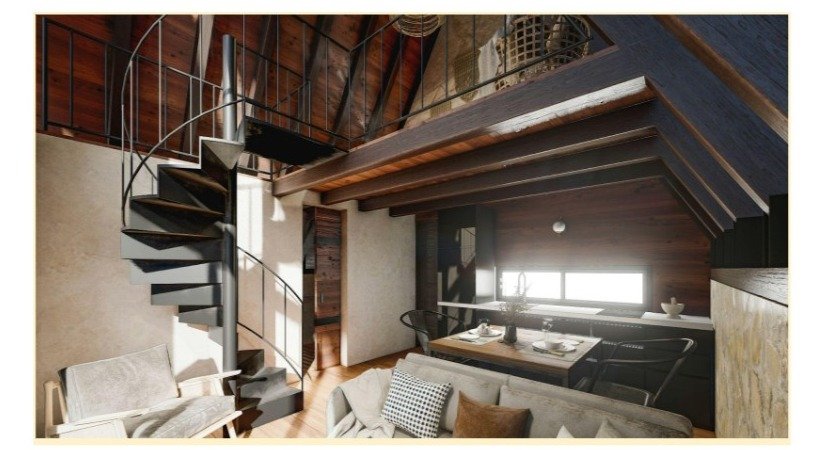
Light becomes the primary tuning instrument. Daylight is encouraged to travel and return, marking time without clocks. Artificial lighting supports this cycle rather than flattening it. Layers replace intensity. Shadows are intentional. Darkness is respected. The space feels dynamic, never frozen in a single expression.
Materials reinforce this tuning. Wood introduces warmth and rhythm. Stone provides weight and stillness. Matte finishes reduce visual noise. Textiles soften acoustics and edges. These materials are chosen not for novelty but for how they behave under daily use. They absorb and age in ways that feel honest.
Several unconventional principles often guide these interiors:
Emotion determines spatial priorities
Comfort is treated as a performance metric
Calm is designed deliberately, not incidentally
Fewer elements are used, but each carries more responsibility
The result is a home that feels instinctively right, even when its design logic is hard to explain.
The quiet authority of empty space
One of the most radical gestures in modern urban interiors is restraint. In a culture obsessed with filling, empty space becomes a form of authority. Clear floors and uninterrupted surfaces slow perception. The eye stops scanning. The body relaxes.
This emptiness is not about minimalism as an aesthetic. It is psychological architecture. It creates room for pause, thought, and recovery. Instead of demanding attention, the space offers relief.
Here, imperfection is an important factor. Humanity is brought through natural wear, small discrepancies, and material variation. These facts neutralize the accuracy of modern construction and make the interior not look sterile. The house is lived in, not maintained.
Objects and art are shown in a minimalist and calculated manner. It takes one piece to change the emotional atmosphere of a whole room. The functional aspects can frequently be sculptural, and the line between need and expression is often indistinct. Nothing is filler. Nothing competes for attention.
Living without barriers: privacy and flow
Open-plan living dominates city lofts and high-end condos, but openness without control quickly becomes exhausting. The most intelligent interiors replace walls with systems of adjustment.
Privacy is made by stratification and cues as opposed to enclosure. Sliding doors, clear screens, and cushy fabrics enable areas to open and close when necessary. Light in itself is a separator, contrast, and shadow is used to form perception. Even subtle changes in ceiling height or material texture communicate shifts in use.
Technology follows the same philosophy of disappearance. The most advanced systems are the least visible. The climate adapts quietly. Sound arrives without sources. Interfaces are minimal and intuitive. Technology supports life without entering the visual conversation.
Storage completes this invisible infrastructure. Instead of adding furniture, storage is absorbed into architecture. Built-in systems align with structural lines and disappear when closed. Open storage is curated with restraint. Closed storage protects visual calm. This prevents accumulation from turning into clutter and allows the space to evolve without chaos.
Conclusion
The existence of modernity in urban lofts and luxury condos is undergoing a radical change. Luxury is no longer scaled, spectacle and abundance are not defining. It is defined by awareness. Awareness of movement. Of emotion. Of time. The most original urban homes behave like intelligent organisms, adjusting subtly to daily life without demanding effort or attention. They do not fight the city outside. They receive it, refract it, and give back something difficult to find: composure and discipline. In a world that continuously accelerates, these homes are aware of when to decelerate all that.