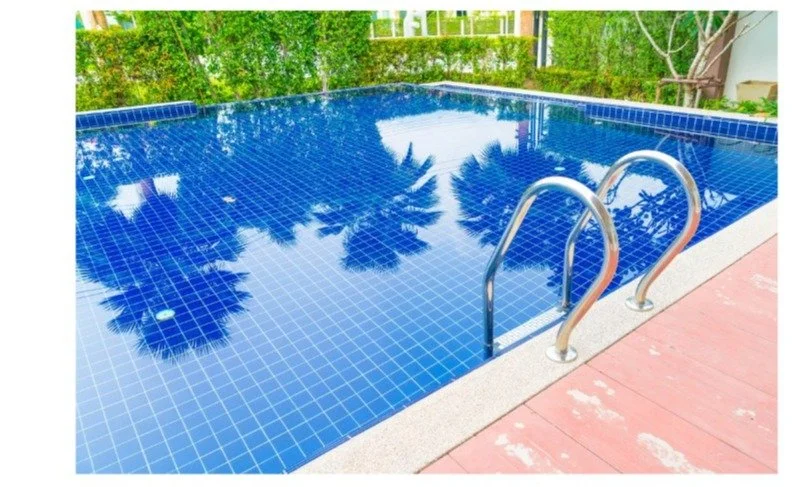
Building a Pool When You Are Not There to Watch It
Plenty of people commission work at a house they will not set foot in for three months. A Manhattan owner adds a pool to a Gulf Coast property. A Hamptons family finishes the outdoor space at a place they use in February.
The construction itself is no harder for being unattended. What disappears is everything that normally goes unnoticed because it happens automatically.
An owner who lives on site walks past the excavation each morning, noticing the trench left open for four days, the delivery that never arrived, the tile that looks nothing like the sample.
None of that is a formal inspection. It is just presence, and presence catches things.
Absence Removes the Informal Layer
This is worth naming precisely, because it is not about trusting your builder.
Writing on the second home problem puts it well: an occupied house has a full-time alarm system living inside it, and that system is people. Somebody hears the noise at two in the morning. Somebody sees the stain appear on the ceiling.
Lock the door and every one of those alarms switches off. The same principle governs a construction site. Problems that would surface in conversation on day two instead surface at handover, when fixing them costs considerably more.
The task, then, is replacing an informal system with a deliberate one.
What You Actually Need Visibility Into
Three things, and they are not equally well served by a weekly phone call.
The design, before anything is dug. A flat plan is almost useless for judging how a pool will sit against a house. Detailed three-dimensional renderings let you assess scale and proportion from wherever you are, and they are the last cheap moment to change your mind.
Progress, continuously rather than on request. Not whether the builder will send photos if you ask, but whether they are produced as a matter of routine. The difference matters enormously when you are the one who has to remember to chase.
Decisions, as they arise. Builds generate choices nobody anticipated, and if those wait for your next visit the schedule stops. If they get made without you, you discover them later.
Ask What the Client Portal Actually Contains
Progress photos are now common enough that the question is not whether a builder provides them but what sits alongside them.
The useful arrangement gives you plans and progress imagery in one place you can open from anywhere, alongside a defined update rhythm rather than sporadic messages. Pool Perfection, which builds across Tampa Bay and West Orlando, structures it this way with a customer portal carrying plans and progress photos and a weekly update commitment, which is a reasonable benchmark to hold any builder to.
Ask three specifics. Who else in your household can be given access, and what the update cadence is when nothing notable has happened.
Then ask whether the portal shows the schedule ahead or only what has already been completed.
One Name, Not a Company
Remote clients suffer disproportionately from diffuse responsibility.
If coordination sits with whoever picks up the phone, you will explain your situation repeatedly and receive slightly different answers. A dedicated project manager assigned to your build means one person holds the schedule, the subcontractor sequence and the history of what you already agreed.
Establish that relationship at the outset rather than midway. A proper kick-off meeting is where expectations get aligned, and it is markedly harder to do that remotely once a build is already running behind.
Permits Are the Silent Delay
For an absent owner this is the stage most likely to consume weeks invisibly.
New construction and structural remodels require permits supported by engineering plans, and the application then sits with a municipality on its own timetable. Nothing visible happens on site during that period, which is exactly when a remote owner assumes work is progressing.
Ask who prepares and files the plans, whether filing is electronic, and whether you will be updated as the application moves toward approval. A builder who tracks that and reports on it is saving you from the worst version of remote ownership, which is silence you cannot interpret.
The Handover Problem Is Worse at Distance
Most owners are present when a pool is finished. They swim in it, notice the pump noise, and mention the tile grout while the crew is still around.
Arrive six weeks later and none of that happens. Meanwhile the water has been sitting, the equipment has been running unobserved, and any commissioning issue has had time to become a maintenance issue.
This is why a defined follow-up period matters more for you than for a resident owner. Weekly visits through the first month after completion, confirming the water chemistry has settled and the equipment is behaving, replace the observation you cannot provide yourself.
Ask what happens in that window and who to contact when something looks wrong in a photograph.
Before You Leave the Property
Two things are worth doing while you are physically there.
Walk the site with the person who will manage the build and agree the pool position on the ground, not on a drawing. Access routes, tree removal and where the equipment pad sits are all easier to settle standing in the garden than over email.
Then establish who locally can let someone in. A neighbor, a property manager, a caretaker. Builds generate unplanned access requirements, and a job stalling because nobody has a key is an avoidable and entirely common delay.
Conclusion
Building remotely is a documentation problem rather than a construction problem.
Get the design in a form you can genuinely assess, and insist on routine reporting rather than reporting on request. Establish one named person and one local key holder.
Then learn where the silent stages are, so you can tell the difference between waiting and drifting.
Do that and distance stops mattering much. Skip it and you will find out what happened when you next fly down, which is the worst possible moment to find out anything.
FAQ
1. Can I have a pool built while living in another state?
Yes, and it is common at second homes. The difference is that informal oversight disappears, so the arrangements around reporting, decision-making and site access need to be more deliberate than they would be for a resident owner.
2. What should a builder provide if I cannot visit the site?
At minimum, detailed design renderings before construction, routine progress photography rather than photos on request, a named point of contact, and clear updates during permitting when nothing visible is happening on site.
3. How do I approve decisions during a build I am not attending?
Agree in advance which decisions require your sign-off and which the builder can make within an agreed specification. Unclear boundaries either stall the schedule or produce choices you did not make.
4. What should happen after the pool is completed?
Ask about follow-up after handover. A period of scheduled visits to confirm the water chemistry is stable and the equipment is running correctly matters considerably more when the owner will not be present to notice problems themselves.