Barney's Farm Turns 40: The Breeding Decisions Behind Four Decades of Cannabis Genetics
Forty years is a long time for any seed bank to stay in business, and only a small handful of names from the original Amsterdam scene are still around. Barney's Farm reaches that mark in 2026, and the more interesting question is not how long the company has lasted but which choices, made one at a time, got it there.
The first of those choices was made before there was a company to speak of. In the early 1980s, a young traveler, Derry, left Amsterdam for northern India, choosing to learn from village growers who had worked with the plant for generations rather than start breeding from whatever seeds happened to be in circulation.
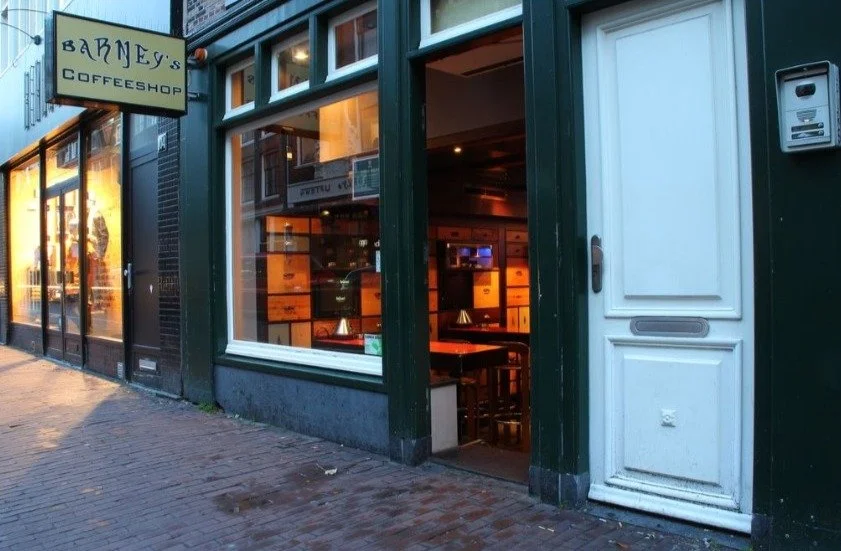
That decision to source genetics at the origin rather than the local market became the basis for a catalog of Сannabis seeds that still carries the company founder’s early collecting trips in every strain bred since. By 1986, he had opened Barney's Coffeeshop on Haarlemmerstraat, and the growers who gathered there gave the project its first real testing ground.
Decision One: Learn Before Breeding
Derry went back to Asia in 1988, this time for a longer run through the Hindu Kush, Pakistan, Afghanistan, Nepal, Thailand, Laos, and Cambodia. A second expedition through Iran, Turkmenistan, and Uzbekistan followed in 2003, and a third took the team through Africa, Indonesia, and Hawaii between 2012 and 2014.
Each trip added landrace material that a breeding program built purely on trading cuttings around Amsterdam would never have reached on its own:
Himalayan and Hindu Kush lines gave the earliest genetics their structure and resin production.
Iranian and Central Asian landraces strengthened what later became Morning Glory and Pineapple Chunk.
African, Indonesian, and Hawaiian genetics widened the flavor range that fed into the 2014 Cookies Kush win.
Decision Two: Refine Rather Than Replace
Plenty of seed banks treat a strain as finished the moment it wins something. Barney's Farm did the opposite. Sweet Tooth took second place at the Cannabis Cup in 2000, then came back a year later with one adjustment to its finishing technique and won. That habit of returning to a proven line rather than dropping it for something newer shaped the decade that followed.
Decision Three: Follow the Growers
Genetics only matters once growers can get hold of it, so distribution becomes its own set of decisions. Barney's Farm reached American dispensary shelves in 2024, backed by a Watsonville, California, distribution center the following year. Germany got the same treatment in 2026 with a dedicated fulfillment center, and growers there searching for cannabis samen now reach the same four-decade library through a local catalog instead of an international order form.
Decision Four: Decentralize Before You Have To
Not every decision looked strategic at the time. When grow facilities across Europe were raided in 2017, the genetic library could have been lost outright. Instead, it was rebuilt from copies that trusted growers on three separate continents had been holding all along, a habit that turned out to double as insurance nobody had planned for.
Decision Five: Put Science Next to Instinct
Barney's Farm opened dedicated breeding laboratories in San Sebastian, Spain, in 2011, adding climate control and lab analysis to a process that had relied on instinct for twenty-five years. The move to core breeding facilities in California in 2022 followed the same logic: put the work physically closer to the largest legal gene pool anywhere.
Decision Six: Expand the Format Options
Format choices expanded alongside geography. The catalog now spans three breeding formats, each one answering a different question a grower might ask before placing an order:
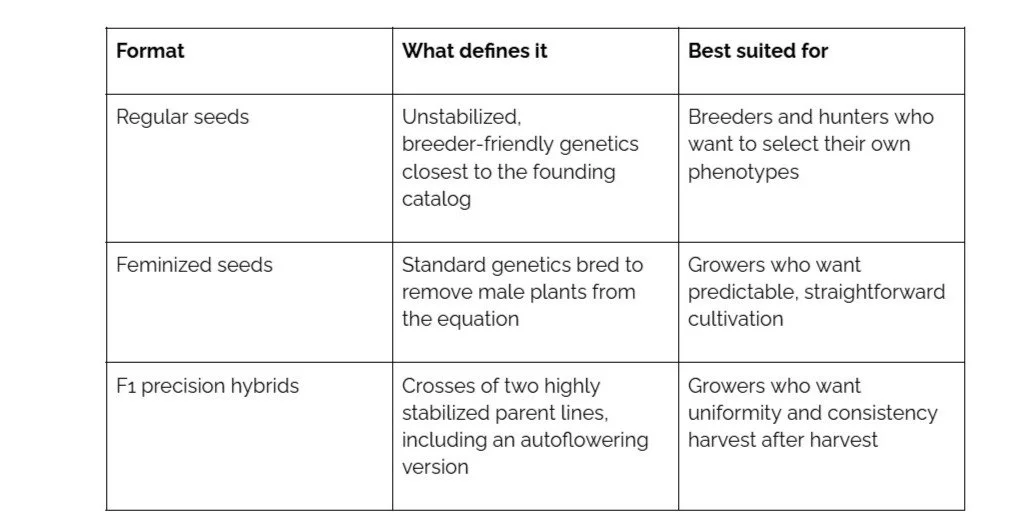
Regular seeds returned to the lineup this year, a deliberate nod back to the format the whole project started with, long before precision breeding existed as an option.
Forty Years In
None of these decisions look dramatic on their own. A trip through the Hindu Kush, a lab in Spain, a distribution center in Germany: taken one at a time, each one reads like ordinary business history. Stacked across four decades, they explain why a coffeeshop on Haarlemmerstraat is still the starting point for a catalog now sold on three continents and why there is still much more to come.