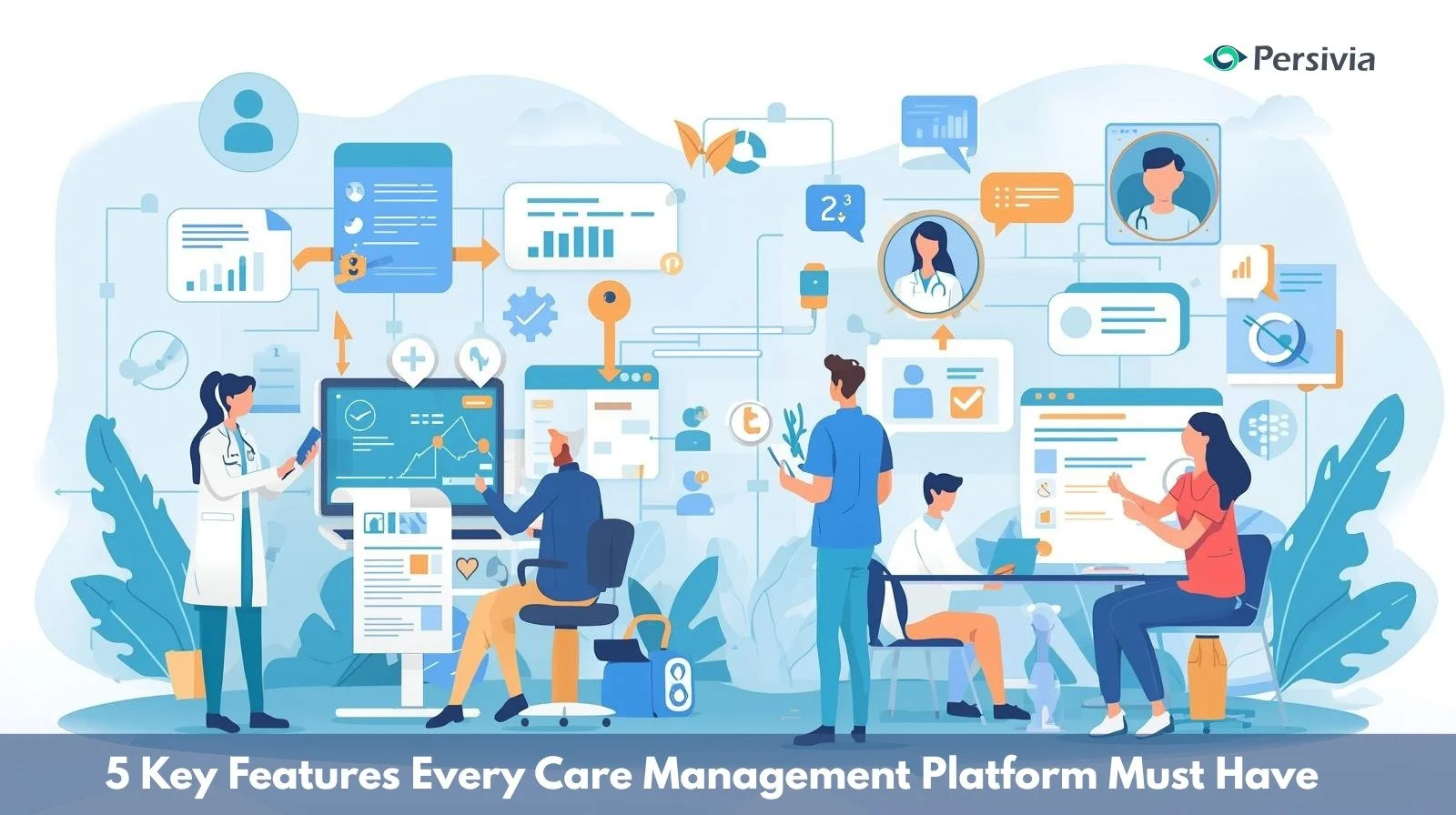
5 Key Features Every Care Management Platform Must Have
Each day, healthcare teams deal with hundreds of patients and monitor medications, appointments, lapses in care, and follow-ups. Paper-based operations lead to inaccuracies, missed interventions, and staff burnout. A Care Management Platform systematises patient information, automates the workflow, and identifies problems before they can turn into hospitalisation or complications.
The correct platform lowers readmissions, manages expenses, and engages the patient between visits. However, most systems fail because they either bombard users with too many features in their interfaces or are not integrated with previously available tools.
What is Care Management Platform?
A care management platform is software that helps healthcare teams coordinate patient care across providers, track health outcomes, and close treatment gaps. These platforms pull data from EHRs, claims systems, wearables, and patient surveys into one unified view.
Care managers see complete patient stories without switching systems:
Current diagnoses and medications
Recent ER visits or hospitalisations
Social barriers affecting health
Upcoming appointments and screenings
Patient-reported symptoms and concerns
It is used to plan services for patients with chronic or complex needs. Teams measure health, develop care plans, arrange appointments, and measure outcomes. To a large extent, modern platforms make this work automated and enable clinicians to concentrate on communicating with patients, rather than on administrative duties.
AI predicts which patients are likely to miss appointments or require hospitalization. This changes care from reactive and crisis management to proactive care. Teams intervene at an early stage, preventing problems at their early stages.
1. Comprehensive Data Integration
The data that is distributed to various hospitals, clinics, labs, and pharmacies produces blind spots. A patient who fills opioid prescriptions with more than one doctor or omits important lab tests will not be noticed until a crisis arises. Comprehensive integration solves this by pulling information into one longitudinal patient record.
What Data Sources Matter
The platform must connect to multiple sources to build complete patient profiles:
Electronic Health Records (EHRs): Diagnoses, vitals, lab results, medications
Claims systems: Procedures, costs, utilisation patterns
Health Information Exchanges (HIEs): Cross-facility records
Patient portals and apps: Self-reported symptoms, activity tracking
Wearable devices: Heart rate, glucose levels, step counts
Social determinants databases: Housing, food access, transportation barriers
Timely and immediate updates are essential. If a patient arrives in the ER today, the care manager should have access to the data immediately, not weeks later when claims are processed.
How Integration Works in Practice
Bi-directional data flow is used to keep systems in sync. A medication list is updated by a care manager and is immediately visible to the primary care physician in his/her EHR.
API connectivity keeps the data up-to-date without the necessity of uploading it manually. The platform downloads automatically whenever new information is available.
AI and NLP extract insights from unstructured data such as clinical notes and discharge summaries. For example, a note stating ‘patient reports trouble affording medications’ triggers an immediate financial assistance workflow.
2. AI-Powered Risk Stratification and Predictive Analytics
The basis of traditional risk models is elementary factors such as age and diagnosis codes. AI is capable of analysing more things (thousands of variables) to make its predictions regarding possible adverse outcomes. This feature distinguishes those platforms that passively store data and those that proactively avert crises.
What AI Identifies
The platform should predict multiple risk factors:
30-day readmission risk: Which discharged patients will return to the hospital
Care gap urgency: Who's overdue for screenings or follow-ups
Chronic disease progression: Which diabetics will develop complications
Social risk factors: Patients facing housing instability or transportation barriers
AI combines structured data (lab values, medications) with unstructured data (clinical notes, patient messages). A diabetic patient with rising A1C, missed appointments, and notes mentioning "can't afford insulin" gets flagged as high-risk. The system recommends specific interventions, such as financial assistance referrals, home glucose monitoring, and weekly check-ins.
From Predictions to Action
Automated prioritisation sorts patient lists by risk score. Care managers see the top patients needing immediate attention, not random alphabetical rosters.
Intervention recommendations suggest evidence-based actions:
Adjusting medications based on lab trends
Scheduling specialist consultations
Sending educational materials about disease management
Arranging home health visits
Connecting patients with social services
Outcome tracking is a way of monitoring the effectiveness of interventions. When readmission rates reduce due to a protocol that is implemented, the platform will indicate success and be applied to other similar patients.
Machine learning continues to improve. The better the predictions are, the more data is processed. Problems are identified at an early stage when they can be handled, rather than when patients have found their way to the ICU.
3. Configurable Care Pathways and Clinical Rules
Different treatment methods are required for patients with the same diagnosis. The monitoring of a 70-year-old diabetic having kidney disease is different as compared to that of a 40-year-old diabetic training in marathons. This nuance is not captured in generic care plans, leading to inappropriate interventions or missed opportunities.
Why Customisation Matters
A strong care management solution offers pathways tailored to specific needs:
Disease-specific protocols: Diabetes, heart failure, COPD, cancer, behavioural health
Population segments: Paediatrics, geriatrics, pregnancy, post-surgical recovery
Value-based care programs: Medicare Advantage, ACO contracts, bundled payments
Organisational workflows: How your team structures outreach and documentation
Building Personalised Care Plans
The platform auto-generates patient-specific plans based on current conditions and circumstances. A newly diagnosed CHF patient gets a care plan including:
Weekly weight monitoring (alerts if gain exceeds three pounds)
Medication reconciliation checking adherence
Dietary counselling for low-sodium meal planning
Home health nurse visits during the first month
Cardiology follow-up within seven days
Care managers adjust plans as conditions change. If the patient stabilizes, check-in frequency is reduced. If symptoms worsen, daily monitoring and urgent provider contact are initiated.
Clinical Decision Support
Built-in evidence-based rules guide real-time decisions:
Drug interaction alerts: Flags dangerous medication combinations
Preventive care reminders: Mammogram due, flu shot needed
Condition-specific protocols: If diabetic A1C exceeds 9%, recommend endocrinology referral
Thousands of pre-existing rules available on platforms allow teams not to write logic. Systems that have built-in care pathways of 200+ and 9,000+ evidence-based rules deliver all the services, such as chronic disease management, post-acute transitions, etc., and save time on implementation.
4. Seamless Point-of-Care Integration
Care managers operate in the background, though the day-to-day interactions with patients are operated by physicians, nurses, and specialists. When providers are unable to retrieve care management insights when attending to a patient, the insights go to waste. Point-of-care integration incorporates care coordination data into the decision-making workflows in clinical settings.
What Providers Need During Appointments
Care gap notifications alert physicians that patients are overdue for screenings. The doctor orders tests on the spot instead of patients leaving without critical preventive care.
Medication adherence flags show when patients haven't refilled prescriptions. If blood pressure medication hasn't been refilled in 60 days, the provider addresses barriers:
Cost concerns and generic alternatives
Side effects requiring medication changes
Confusion about dosing instructions
Transportation issues getting to the pharmacy
Care plan summaries present one-page snapshots, which include active interventions, recent hospitalisations, and care team notes. Doctors can know what goes on outside their office without having to read 50 pages of records.
Evidence-based recommendations guide actions according to clinical guidelines. In the case of an asthmatic who visits the ER regularly, the platform may prescribe pulmonology consultation, inhaler skills training, and a check of environmental triggers.
Reducing Provider Burden
Providers already face documentation overload. The platform must streamline workflows:
Voice-enabled documentation: Dictate notes instead of typing
Smart templates: Pre-populate forms with patient data
Mobile access: Check care plans from phones during rounds
Single sign-on: No separate logins for multiple systems
Providers are more engaged when care management information is accurate and readily accessible. This bridges the gap between the frontline clinicians and the care coordination teams and ensures that patients receive consistent, informed care at each contact point.
5. Patient Engagement and Multi-Channel Communication
The most appropriate care plans do not succeed when patients do not adhere to them. An online health platform should provide interaction with patients between visits, which is why it is not difficult to monitor the progress, ask questions, and be responsible. Effective engagement tools turn passive recipients into active participants in their care.
Essential Engagement Features
Patient engagement requires multiple touchpoints:
Patient portals: View care plans, appointments, test results, and educational materials
Mobile apps: Log symptoms, track medications, receive reminders
Telehealth integration: Video visits for follow-ups and urgent questions
Automated messaging: Texts or emails about appointments and refills
Personalizing Communication Channels
Not every patient uses the same channels. Some prefer phone calls. Others respond better to texts. The platform should support:
SMS messaging: Appointment reminders, medication alerts
Email: Care plan updates, educational content
Voice calls: Automated reminders or live check-ins
In-app messaging: Secure two-way communication with care teams
Video calls: Face-to-face telehealth visits
AI-mediated communication adapts to patient needs and health literacy. Patients with visual impairments receive voice messages instead of text.
Tracking Patient-Reported Outcomes
The platform collects feedback through multiple methods:
Symptom surveys: Daily or weekly check-ins on pain levels, energy, mood
Activity tracking: Steps, exercise, sleep patterns
Goal progress: Weight loss milestones, medication adherence streaks
The diabetic patient records the blood sugar levels daily, and trends are identified by the care manager before the next lab visit. In case the readings increase following specific meals, specific dietary coaching is offered by the staff.
Encounter produces a conversation and not a one-way interaction. Care managers are aware of the messages patients viewed, surveys, and absent check-ins. In case a patient ceases to reply, the system indicates that it has to be followed up on. Proactive outreach is an attempt to get them back on board before they are forgotten.
How These Features Work Together
The five features don't operate separately; they create an integrated system where each component strengthens the others:
Data integration feeds AI-powered analytics
AI analytics identifies high-risk patients and care gaps
Configurable pathways turn those insights into personalised action plans
Point-of-care tools ensure providers act during appointments
Patient engagement keeps individuals involved between visits
Real-World Example
Here's how a care management platform coordinates care for a 65-year-old with diabetes and heart failure:
Day 1 - Hospital Discharge:
Platform pulls data from hospital EHR, claims system, and patient portal
AI flags patient as high-risk for readmission (prior non-adherence, recent weight gain)
System auto-generates care plan: daily weight checks, medication reminders, cardiology follow-up in one week
Day 2 - Care Manager Follow-Up:
The care manager assigns a nurse to call within 48 hours
Nurse documents conversation through mobile app
Updates the care plan based on patient concerns
Week 1 - Cardiology Appointment:
Physician sees an alert about missed diuretic doses
Asks about barriers patient admits medication makes her dizzy
Adjusts dosage and schedules follow-up in two weeks
Week 2 - Early Warning:
Patient receives daily text reminders to weigh herself and log results
Weight increases by four pounds in three days
System alerts the care manager automatically
Care manager calls patient, reports shortness of breath
Coordinates urgent same-day visit, preventing ER trip or readmission
This coordinated approach keeps patients stable, engaged, and out of the hospital by connecting every piece of the care delivery puzzle.
Final Insights
The right care management platform reinvents the process of crisis prevention, coordinating interventions, and assisting patients between visits made by healthcare teams. Integrating data, risk stratification, customizable care pathways, point-of-care devices, and patient engagement capabilities is collectively used to reduce readmissions, decrease costs, and enhance outcomes. Teams spend less time searching for information and more time delivering personalized, responsive care.
Persivia offers CareSpace®, which is an AI-based solution to care management that includes clinical, claims, and patient-reported data in a single longitudinal record. The system has 9,000-plus evidence-based rules, 200-plus inbuilt care pathways, and predictive analytics, which identify high-risk patients before an issue turns out of control. The care teams coordinate effectively with the point-of-care tools, integration of telehealth, and multi-channel communication with patients. Whether you are dealing with chronic disease populations, lowering readmissions, or increasing quality scores, the data and processes of care coordination are scalable and efficient with Persivia.
FAQs
1. What is the main purpose of a care management platform?
A care management platform centralises patient data from EHRs, claims, and patient-reported sources to help care teams coordinate care, track outcomes, and close treatment gaps. It identifies high-risk patients and supports timely interventions to prevent hospitalisations.
2. Can small healthcare practices benefit from care management platforms?
Yes, small practices gain significant efficiency. AI-powered prioritization automates risk stratification, care gap identification, and patient outreach, enabling even small teams to manage large patient populations effectively.
3. Do care management platforms integrate with existing EHR systems?
Yes, most platforms connect via APIs for seamless bi-directional data flow. Updates made in the platform sync back to the EHR, ensuring providers have real-time access to care plans and patient notes without switching systems.
4. How do AI-powered analytics improve patient outcomes?
AI enhances clinical decision-making by analyzing vast data points to identify high-risk patients and predict potential readmissions or disease progression. This allows care teams to intervene proactively with targeted actions like medication adjustments or specialist referrals.
5. What training is required for staff to use these platforms effectively?
Minimal training is needed. Care managers typically require 1–2 days to navigate dashboards and update care plans, while providers need only a brief orientation since alerts and recommendations integrate directly into their existing workflows.