
4 Tiny Shifts To Cut Back Effortlessly
You can cut back on smoking effortlessly by mapping your daily trigger windows, replacing routines during breaks and drives, swapping the physical habit for a discreet alternative, and setting small, measurable weekly targets.
These four behavioral adjustments help reduce your daily count without requiring a total lifestyle overhaul or extreme willpower.
By gradually separating your environmental cues from your automatic reflexes, you can regain control over your routine and make meaningful progress on your own terms.
During a stressful morning commute, the urge to reach for a cigarette is often just an automatic response to a high-pressure environment.
To break this cycle, many busy professionals are turning to discreet nicotine pouches from Sesh+ Products as a seamless, smoke-free alternative that fits perfectly into a packed schedule without interrupting the drive.
This daily ritual does not feel automatic because of weakness, as it is built into the architecture of your schedule.
Data shows an estimated 11.6% of adults smoked, highlighting how common these routines are. Cutting back without quitting completely lives in small, considered adjustments designed for schedules that are already full.
These are not restrictions, but rather practical adjustments that start with understanding what is actually driving the count.
1. Name Your Trigger Windows
Most cigarettes in a given day are not random, isolated choices. They cluster around predictable, repeatable cues that have been rehearsed so many times they feel entirely involuntary.
Learning how to cut back begins with naming these moments to create a break in the chain of habit.
These smoking triggers are usually anchored to specific times and contexts, like morning routines. Research reveals that over half of smokers light their first morning cigarette within 30 minutes of waking.
It might be the first sip of coffee, the moment the ignition flips, or the post-meeting exhale. For others, it is the lunchtime lull between obligations or the psychological transition from the workday.
To interrupt these patterns, start with a three-day log. There is no judgment here and no daily targets yet. Just record a timestamp and a one-word context note for each instance using a note app or a small card.
Once you identify your two most frequent anchors, implement a five-minute intentional delay before acting on them. If your trigger is the coffee ritual, commit to finishing the mug before making a decision. The choice belongs to the adult only once the automatic link is interrupted.
If your trigger is the car ignition, lock the pack in the glove box or center console. The delay does not eliminate the option, as it simply separates the cue from the automatic response.
This shift loosens the automatic weld between cue and action so it becomes a conscious choice.
2. Remix Driving And Break Routines
Breaks and drives act as high trigger environments because they represent rare pockets of genuine pause. The opportunity here is not to strip the pause away, but to upgrade what fills it.
Removing the habit without replacing the psychological pause is exactly where most cut-back attempts stall. Implement specific micro substitutions tailored to your daily environments.
Keep a spill-proof water bottle in the cupholder and set a personal rule to drink first. The physical action of reaching and drinking occupies the same neural real estate as the reach for the pack.
Alternatively, find a podcast that drops new episodes exclusively during your commute window. Hitting play becomes the new ignition anchor, allowing the drive to remain sonically claimed.
To adjust habits at work without sacrificing downtime, walk the longer route to the break room.
The fresh air and change of scenery were always the true point of the break. If you cannot leave your desk, try box breathing by doing four counts in, holding, and exhaling. It delivers real physiological decompression without requiring privacy.
During social evenings, keep your hands occupied with a seltzer, a slow-sipped drink, or a toothpick. Anything that fills the physical dimension of the moment helps you stay present on the patio.
The social benefit of the break was never the smoke, but rather the permission to step back. Every alternative here is an upgrade that makes the break better.
Key Insight: Most cut-back attempts fail because they remove the cigarette without replacing the psychological pause. The opportunity is to upgrade the break, not eliminate it.
3. Swap Your Hand Habit Discreetly
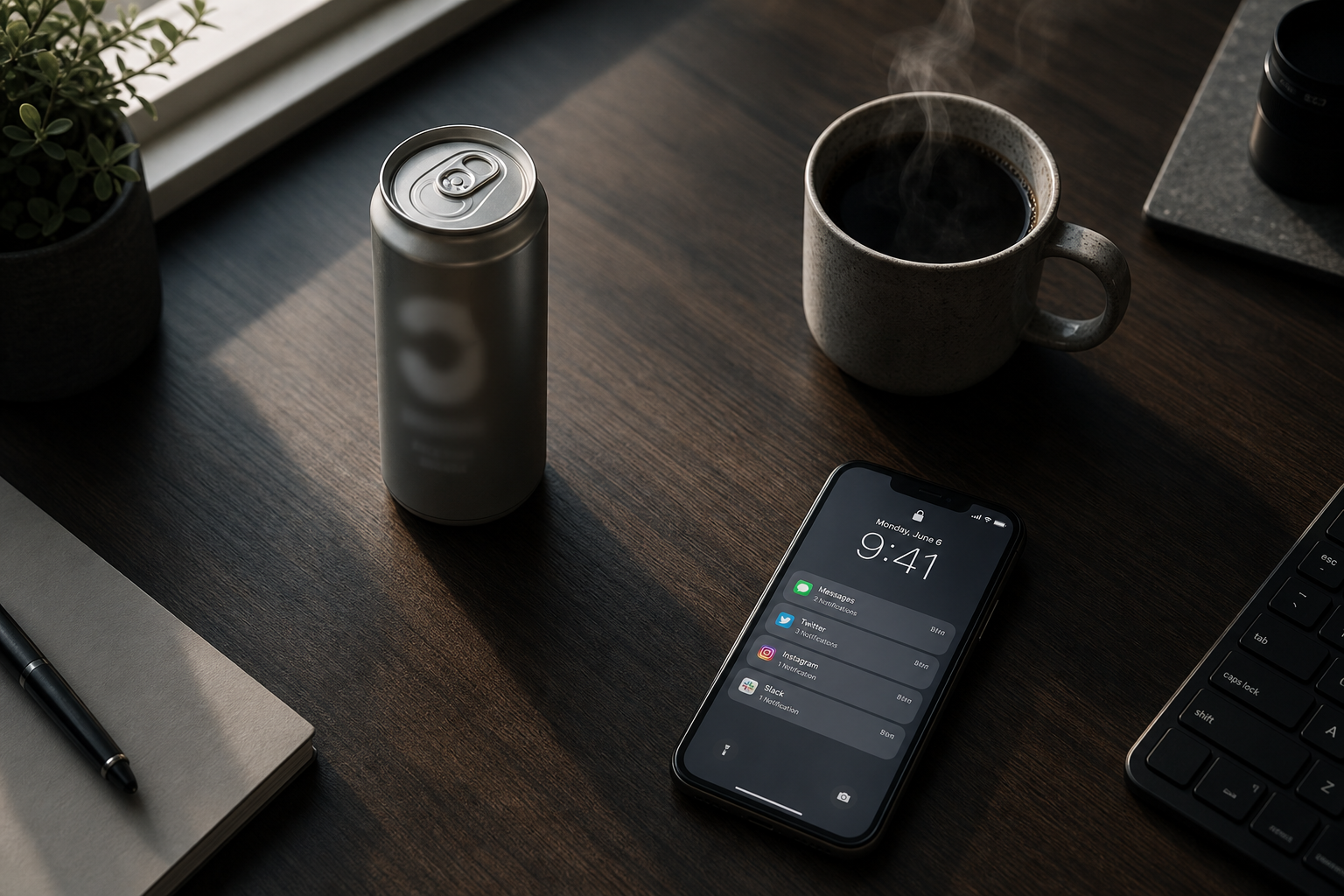
Behavioral research confirms that the smoking habit has two distinct layers. One is the chemical draw, and the other is the physical ritual itself involving the hold and the sensory rhythm.
Both layers require acknowledgment in any daily reduction plan, or one will inevitably undermine the other.
Recent statistics show that 9.9% of adults currently smoke, and many seek practical ways to manage the physical habit.
In high-pressure scenarios like four-hour call blocks, the craving arrives exactly on schedule, but stepping away is impossible. Willpower is a finite resource that depletes fastest when the day is demanding and stress is high.
Having discreet, tobacco-free alternatives within reach changes the math of these moments without disrupting the room. Mints, sugar-free gum, and breathing resets remain highly useful first-line tools in lower-pressure environments.
When lighter options fall short and stepping away is off the table, having a ready alternative prevents a willpower battle. The goal is simply to have the right tool available when the schedule leaves no room to step outside.
This provides a controlled, less intrusive option ready during specific trigger windows. Your daily count trends downward naturally when you prepare for these unavoidable moments.
Pro Tip: Willpower is finite and depletes fastest on demanding days. Keep a discreet, tobacco-free alternative handy for high-pressure situations when stepping away isn't possible.
4. Set Small Unbelievable Weekly Targets
Big resolutions fail because ambition without specificity has no traction on a busy Tuesday morning. Cutting back requires a goal architecture built around measurable, repeatable wins rather than sweeping declarations.
Adopt the sticky note rule to ensure your week's goal is short, concrete, and manageable. The smaller the target, the more likely it is to be kept and tracked effectively.
A perfect starter goal is to end each day with one fewer instance than yesterday. It is time-bound, measurable, and entirely within reach for a busy professional.
Use a phone note or a small index card to track progress visibly at the end of each day. From there, you can build momentum steadily across four weeks.
Week one focuses on removing the first morning action and replacing it with a short delay.
Week two targets the drive home by substituting a mint or a new playlist.
Week three adds a breathing reset to one work break while measuring concrete numbers.
Week four reviews the gap from the starting average to name the specific shifts that worked.
Reframe your language of progress to celebrate meaningful, stackable wins. Momentum is built by wins that are real and repeatable, not by a single dramatic act.
The count moves because the system does, allowing you to regain control over your routine. Tracking these small adjustments provides tangible proof that your efforts are paying off.
The four shifts described here are designed for adults who want to reduce their daily count and are not a substitute for professional medical guidance.
Always follow local laws and applicable age restrictions when using any related product. These strategies are simply behavioral tools to help manage daily routines.
Your Next Steps
Start your Monday by writing down the top three trigger moments from your day and assigning one alternative to each. Swap one driving routine for a mint or sugar-free gum on Tuesday to build early momentum.
On Wednesday, delay your first morning action by 15 minutes to hydrate or scan your calendar. Restructure your Thursday work break with a short walk or box breathing instead of your habit.
Navigate one social trigger on Friday by keeping a discreet alternative in a pocket and staying in the conversation. Use Saturday to review your numbers and mark which alternatives felt natural versus forced.
On Sunday, write out your targets for the upcoming week and place the note where you will see it. These small daily actions compound into lasting behavioral changes without demanding an overnight transformation.
Tomorrow morning, you will likely find yourself on that same highway facing the same schedule. But the reach toward the console will have an intentional pause built into it.
The choice is still available, but it is no longer an automatic reflex dictating your day. The tools are ready, you know your triggers, and the only thing left to do is start.
Author Profile: Sesh+ Products is a premium nicotine pouch manufacturer specializing in tobacco-free oral nicotine delivery systems designed for adult consumers aged 21 and older.