4 Simple Tweaks To Finally Finish Your Home
To finally finish your home and achieve a pulled-together aesthetic, you must implement four specific tweaks across your living spaces. These targeted adjustments transform a space from simply furnished to genuinely inhabited without requiring a full renovation.
The dining room and living room carry more of a home's emotional and practical weight than any other spaces. They hold the work from home Tuesdays, the chaotic birthday dinners, and the quiet weekend mornings that become lasting memories.
Yet, there is a specific and incredibly common frustration that happens when the furniture is placed, but the room still feels unresolved.
This feeling is hard to diagnose because it is rarely about what is missing from the overall floor plan. It is almost always about a few elements that are slightly off in nearly every modern home.
By following a sequential structure, you can close that gap and finally let your house feel comfortably complete.
1. Anchor with a Statement Table
In open concept layouts, especially, a dining area without a strong table becomes an ambiguous zone. The room cannot quite decide whether it is a designated dining space or just a wider extension of the hallway.
The table is the piece that declares the room's purpose and earns it visual authority instantly.
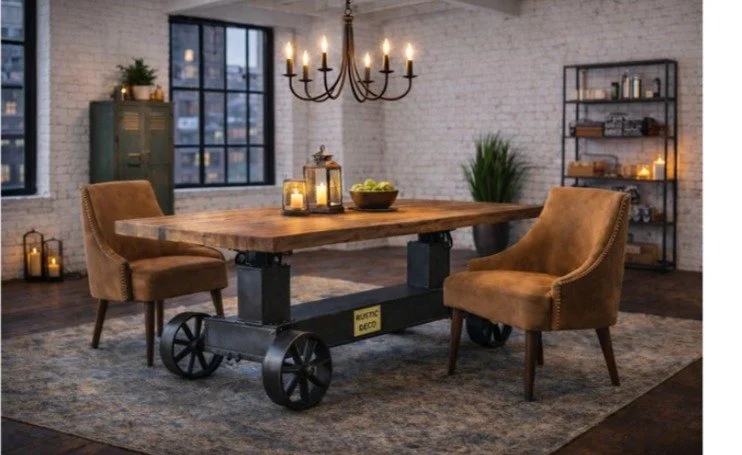
This is why industrial dining tables from Knox Deco are so reliably useful as a solid room anchor. Built from solid reclaimed materials paired with heavy metal, they carry the room through pure texture and substance.
They also act as incredible design chameleons that pair beautifully with velvet dining chairs or modern farmhouse seating.
The raw materials ground softer textiles and add a quiet sense of permanence that polished surfaces rarely achieve. Prioritizing surface durability and generous sizing ensures the piece can handle daily household use flawlessly.
2. Improve Flow with Better Furniture Scale
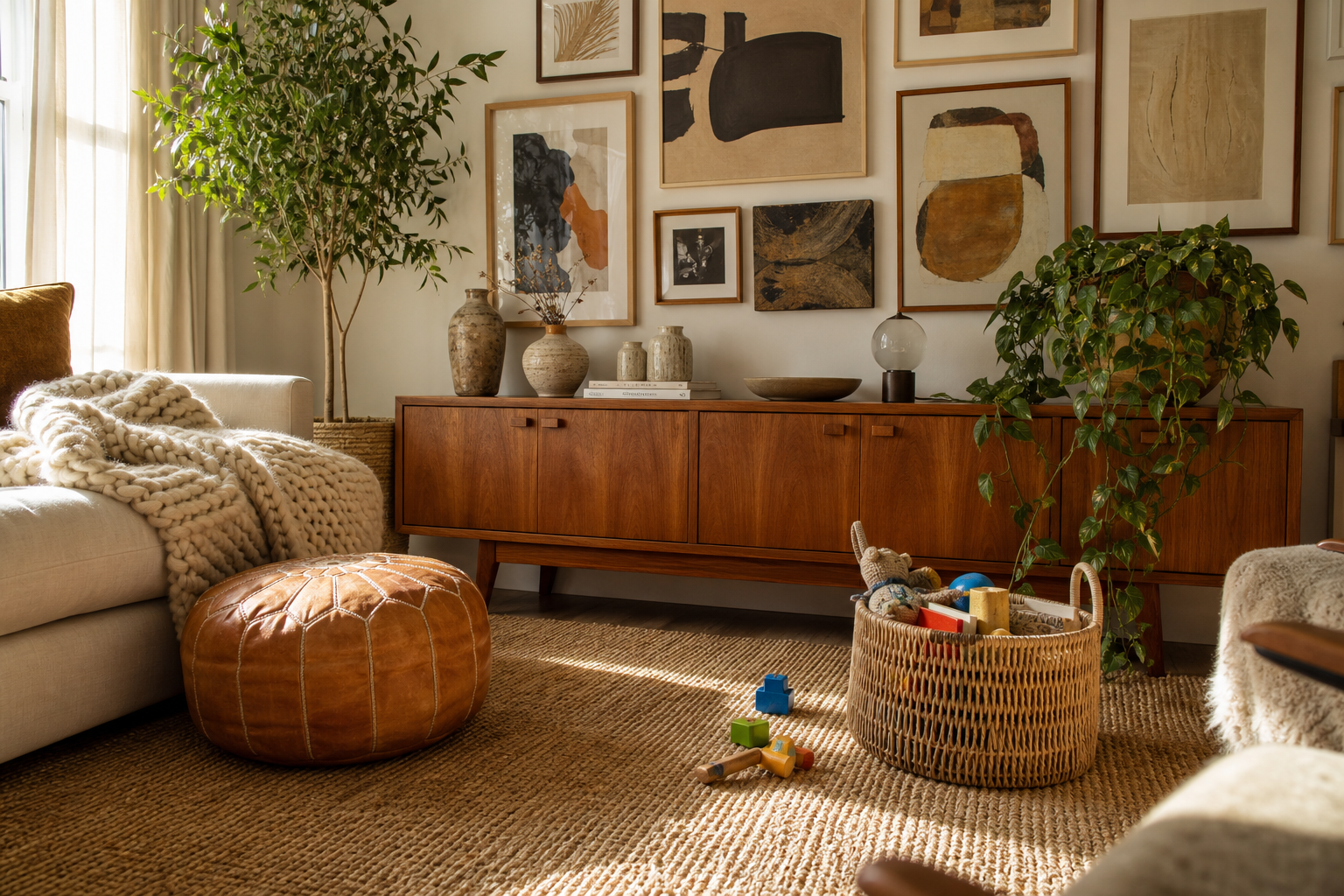
Image from Home Reserve
Living room furniture scale is the most common invisible problem in furnished homes today. A fixed silhouette sofa that is too large swallows the room, while pieces that are too small float awkwardly.
The confidence to let the living room truly be lived in starts with a cozy customizable couch designed for a dynamic household. With Home Reserve's machine-washable covers to easily manage spills, the room adapts to how life actually moves through the home.
Modular configurations can build out into a spacious shape for a large family room or compress down for a compact apartment. The living room is deeply affected by scale failures because it hosts movie nights, playtimes, and weekend gatherings.
With machine-washable covers to easily manage spills, the room adapts to how life actually moves through the home. It is essential to consider how interior elements impact our daily comfort and long-term health.
Refreshable covers and hidden storage make adaptability a practical daily necessity for these heavily used spaces. Getting these proportions and material choices right feels subtle but lands as a complete room transformation.
Key Insight: Living room furniture scale is the most common invisible problem in furnished homes, proportions that are off, block movement, or disconnect the room, yet correct scaling transforms it completely.
3. Layering Lighting Across Both Spaces
A single overhead fixture is the fastest way to flatten a room and hold it in an unfinished state. An unlayered overhead light treats every hour of the day as if it requires the same harsh brightness.
Studies show that evening home lighting in nearly half of homes is bright enough to suppress melatonin significantly. The quiet upgrade that makes everything else in the room snap into place is a three-layer lighting framework.
Natural light is just as crucial for establishing a balanced, healthy atmosphere throughout the day.
Researchers noted that windowless private bedrooms negatively affected the mental well-being of over 75% of studied residents. When natural light fades, a primary ambient source like a central pendant fills the room with a foundational glow.
Task lighting then offers directed illumination for specific activities, like a reading lamp beside a cozy chair.
In the dining room, a chandelier hung intentionally low becomes a focal point and frames the statement piece below. This setup visually declares that the evening transition has officially begun for the household.
Supplement this ambient layer with a floor lamp tucked in a dark corner to add essential warmth. The goal is a room that slowly shifts from day to evening rather than jarringly switching between bright and dim.
In the living room, you must actively steer away from relying solely on that single ceiling fixture. Combine a floor lamp near a reading chair with a sculptural table lamp on a nearby side table.
Adding a picture light above the room's anchor artwork draws the eye upward and expands the space visually. The result is a cocooning warmth that transforms the room from a passing corridor into a comfortable destination.
4. Add Practical Texture Through Decor


Even with perfect lighting and scaled furniture, a room can still feel oddly lifeless, like a showroom. What is missing is tactile and visual layering through thoughtful home decor additions.
Texture provides the surfaces that absorb sound, invite physical touch, and make a space feel genuinely occupied. It is the finishing signature that separates a sterile environment from a deeply considered sanctuary.
In the dining room, a well-chosen rug placed under the table prevents the furniture from visually floating. A durable flatweave handles daily cleanup easily and withstands heavy foot traffic gracefully.
Meanwhile, a low pile vintage rug brings pattern without competing directly with the surrounding wooden furniture. Large-scale abstract art above the seating area immediately softens clean architectural lines and adds colorful interest.
A small display of ceramics on an open shelf adds a personal dimension that no single store-bought purchase can replicate. Honest materials always ask for honest company, so pair raw woods with organic textures like linen napkins.
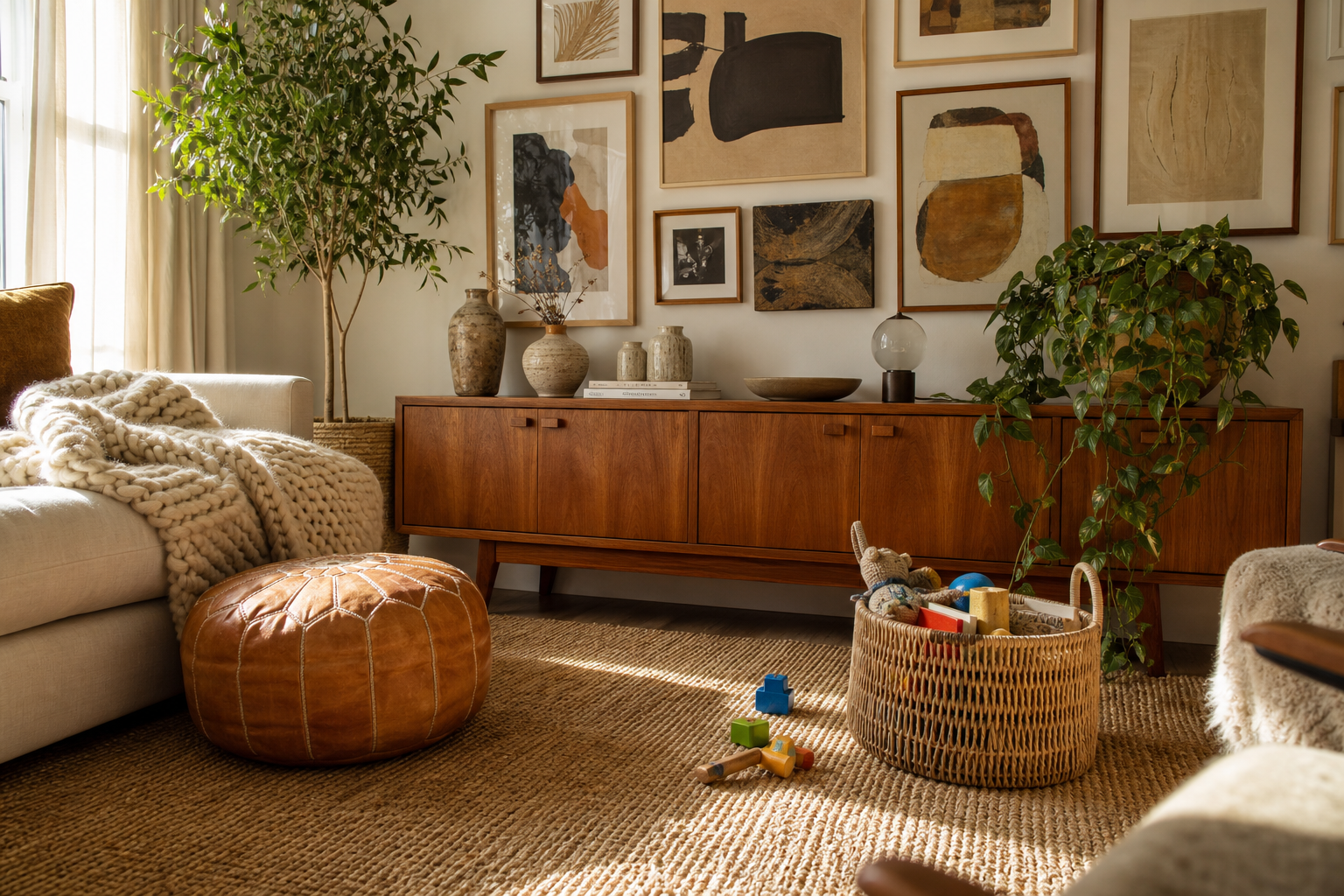
In the living room, plush cushions in mixed fabrics instantly raise the room's overall warmth quotient. A chunky knit throw folded over an armrest and a woven basket for daily clutter make the space inviting.
A carefully arranged gallery wall gives the eye a specific place to land upon entering the living space. It replaces blank drywall with a sense of profound intention and curated personality.
Finally, a well-crafted wood storage piece connects the living area back to the dining room's materiality. This thoughtful repetition of textures makes the entire open space feel deeply considered and cohesive.
Pro Tip: Focus on soft textures you can add without buying new furniture—a jute rug, chunky knit throw, or woven basket instantly shifts a room from showroom to lived-in.
Your Next Steps
Start with just one intentional change instead of viewing these adjustments as an exhausting daily checklist. One honest observation will lead to a clear first step that fundamentally shifts the room's atmosphere.
Pinpoint your visual anchor, count your light sources, and audit your furniture scale this weekend. A minor tweak to your ambient lighting or seating layout can dramatically improve how the room functions.
Survey the tactile layers by running a hand across the room's primary surfaces carefully.
If it is mostly hard edges, introduce one new texture like a jute rug or linen cushion. These small additions create an incredible impact without requiring you to move a single heavy piece of furniture.
By assessing your spaces against these straightforward principles, you can cross the threshold into a home that truly reflects you.