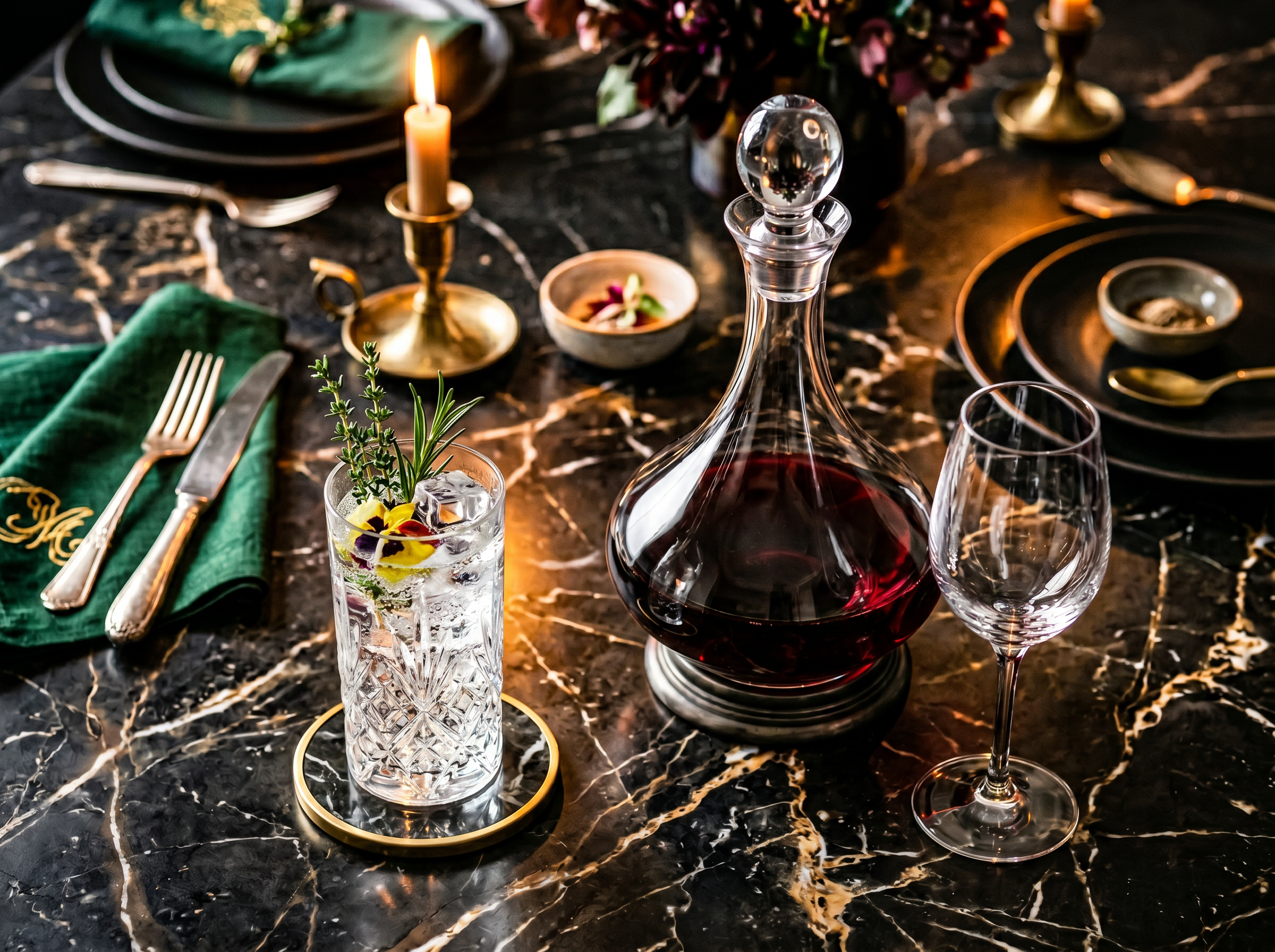
The finest dinner parties in 2026 no longer end with just a pour of Cognac. They end with a choice. As health-conscious living becomes a permanent fixture of the modern lifestyle, a new category of botanical beverage powered by advanced molecular engineering is earning a place alongside the decanter on the luxury bar cart.
The "molecular digestif," formulated using nano-emulsified cannabinoids, provides a sensory experience that parallels that of the spirit ritual, yet possesses its own distinct physiological effect. To the contemporary gastronome, this is more an extension of the traditional rather than a substitute for it.
That said, neither category is universally superior. The right choice depends on the guest, the setting, and the evening's intention.
How Nano-Emulsion Technology Works
Traditional cannabis edibles are hydrophobic. They bond with dietary fats and travel slowly through the digestive tract, often taking 90 minutes or more to produce an effect. Nano-emulsion technology changes this entirely by making cannabinoid molecules water-compatible, shifting absorption toward the soft tissues of the mouth and stomach.
Nanotechnology used for cannabis delivery studies shows that the process involves reducing the size of oil drops to as small as 10 to 100 nanometers through ultrasonication and the use of surfactants. It creates an extremely stable liquid nano solution, which retains the taste of high-quality botanical drinks and provides better experiences.
Key technical highlights:
Nanoparticles: The particles are as tiny as 25 nanometers, which is only 1/1000th the size of a human hair
Absorption rate: Classic oils in edible form are found to have an absorption rate of about 6%. This can be drastically improved through nano-emulsification.
Consistency: Because of their hydrophilic nature, they dissolve easily into sparkling water and plant extracts without sticking together.
Onset: Generally speaking, nano-emulsions show their effect after 10 to 20 minutes, while regular tinctures require 60 to 90 minutes to work.
What Ethanol and Cannabinoids Actually Do to the Body
The appeal of spirits lies in centuries of ritual, culture, and immediate decompression. That context matters and should not be dismissed. Whether you are reaching for a well-aged brandy or a nano-botanical, both categories carry a physiological profile worth understanding before choosing what to pour.
What happens with ethanol:
The body converts alcohol into acetaldehyde, a toxic byproduct linked to next-day fatigue and headache
Alcohol is well-documented to fragment REM sleep and cause rebound insomnia
Excessive long-term consumption leads to fatty liver disease, neurological deterioration, and heart strain.
Standard spirits are calorie-dense and often sugar-heavy
What happens with cannabinoids:
CBD and THC do not produce acetaldehyde and do not share alcohol's liver-toxic pathway
Cannabinoids typically don’t interfere with the sleep cycle stage known as REM sleep; however, high concentrations of THC might inhibit dreams.
Nano-emulsified beverages are typically near-zero in calories.
THC may cause anxiety, paranoia, or mental impairment for some people or in large doses
The bottom line is that both carry trade-offs. The molecular digestif is not a risk-free alternative. It is simply a different risk profile.
What Every Host Should Know Before Serving
This deserves clear attention before any serving decision is made. It is also worth noting that CBD legality varies significantly by jurisdiction, and what is permitted in one state or country may not apply in another. Always verify local regulations before purchasing or serving.
Who should exercise caution:
First-time and infrequent users should always start with 2.5mg doses and allow the entire onset time period to pass before taking additional doses.
Users with a history of anxiety, psychosis, and/or heart problems should seek a doctor’s advice first.
Anyone taking prescription medications should speak to a doctor, as cannabinoids interact with the liver's drug-processing enzymes and can affect how blood thinners, antidepressants, and anticonvulsants are metabolized.
Host responsibilities:
Be sure to inform guests of the dose and cannabinoid amount before serving.
Never serve cannabinoid products to a guest without their explicit knowledge and consent.
THC impairs motor function and reaction time even after subjective effects have passed. Guests who have consumed THC-containing beverages should arrange alternative transportation and should not drive.
How Terpenes Shape the Experience
Terpenes are the compounds behind the unique fragrance of cannabis, and on the dinner table, terpenes are the chemical equivalent of a varietal in a wine; just like how the grape defines the glass, the terpene profile defines the experience. With cannabis drinks, terpenes have become just as crucial as cannabinoids to consider, with top companies creating their drink profiles based on particular terpenes as the winemaker does terroir.
The terpenes work synergistically with cannabinoids to produce unique sensations via the so-called "entourage effect." Much in the same way as a sommelier chooses to "air a tannic red with a rich piece of beef, the right combination of terpene profiles can be chosen to match the meal intentionally.
Myrcene:
Smell: Earthy, spicy, herbaceous
Food pairings: Slow-cooked meat dishes, mature cheese, mushroom risotto, Malbec wine, Islay Scotch
Action: Relaxes and concentrates on the physical aspects, more sedating at high levels
Limonene:
Aroma: Citrusy, zesty, lemony
Pairs with: Seafood, ceviche, fresh salads, Sauvignon Blanc, Champagne
Effect: Uplifting and mood-enhancing
Linalool:
Aroma: Floral, lavender, soft
Pairs with: Light desserts, stone fruit, rose, Gewurztraminer
Effect: Calming, mildly anxiety-reducing
Caryophyllene:
Aroma: Pepper, spice, wood
Pairs with: Charred meats, dark chocolate, Syrah, Zinfandel
Effect: Focused and anti-inflammatory, uniquely CB2-receptor active
Pinene:
Aroma: Fresh pine, clean, green
Pairs with: Herb-forward dishes, spring vegetables, dry Riesling, Gruner Veltliner
Effect: Mentally alert, associated anecdotally with memory support
Such a model allows for the true language to develop when speaking of nano beverages, as if describing an elaborate list of wines. This allows the focus to be taken away from milligrams and placed on the sensorial experience.
How the Luxury Bar Cart Is Evolving
The modern luxury residence is now beginning to complement the traditional wine collection with nano-beverage and botanical storage. The top-tier manufacturers are starting to offer their estate-grown products in bottles of UV-protected glass, ensuring molecular stability from cultivation to consumption, as is done by fine wine brands for decades now.
For Sacramento-area hosts, sourcing through a dispensary weed delivery Folsom ensures that the same lab-tested, estate-grown quality arrives discreetly and on time for the dinner party.
What to look for when curating your selection:
COA certificates coded using QR technology give complete details on cannabinoid levels, percentage of terpenes, and third-party laboratory test results.
UV-protection packaging to maintain molecular stability
Clear labeling of dose amount per serving, preferably in 2.5 mg intervals.
Presentation and service tips:
Utilize traditional glassware with high-quality ice for nano-botanicals to turn them into table highlights.
Offer low-dose flights of 2.5mg to 5mg per pour so guests can explore terpene profiles safely across an evening.
Unlike combustion-based cannabis, nano-beverages are odorless and visually indistinguishable from sparkling water, making them well-suited to formal settings.
Why Precision Matters: The Science of Smaller Doses
Imagine two guests departing from the same dinner party. One consumed three glasses of Burgundy. The other ingested a 5 mg nano-botanical after the entree but before dessert. The next morning, the contrast is not just perception-based. It is biochemistry-based.
The molecule ethanol has a weak attraction to its binding sites; hence, it needs to be present in fairly high concentrations to produce a behavioral effect. According to research published through the National Institutes of Health, THC and CBD produce effects through high-affinity interactions with a relatively small number of molecular targets, specifically the CB1 and CB2 receptors distributed throughout the body and brain.
In practical terms, this means:
A 5mg nano-emulsified beverage can produce a level of social ease that would require several glasses of wine to approach through ethanol.
The physiological footprint is substantially smaller, with no acetaldehyde production.
Micro-dosing becomes viable and manageable in a social setting in a way that alcohol cannot replicate.
It is worth noting that chronic heavy THC use carries documented concerns around memory, motivation, and dependency in a subset of users. Moderation applies here just as it does with spirits.
Why the Sober-Curious Movement Is Reshaping Hospitality
Nano-cannabinoids, having a relatively short time frame of only two to four hours, mean that they are more socially acceptable compared to traditional edibles, whose effects last for six to eight hours.
Sober-curiosity trend experts following this trend indicate that there is a regular increase in consumer demand for products that serve as a replacement for alcoholic beverages due to consumers’ need for functional attributes and clear-headedness the day after. The molecular digestif satisfies this requirement and offers an authentic product.
Benefits observed in social settings:
The guests continue to feel more present and energized without suffering from the drowsiness that accompanies several drinks of wine.
Conversation tends to sharpen rather than soften into repetition as the evening progresses.
Health-focused or sober-curious guests are never relegated to sparkling water alone, keeping the social energy consistent across the table.
The use of botanicals like yuzu, tamarindo, and butterfly pea flower in formulations adds genuine flavor complexity that rivals fine mixology.
Frequently Asked Questions (FAQs)
What sets nano-emulsion apart from regular CBD oil?
The reduction process used in nano-emulsion turns oil into particles that can dissolve in water, ranging from 25 to 50 nanometers in size. It results in a quicker effect, which is between 10 and 20 minutes compared to the usual 60 to 90 minutes of oils, and much better absorption.
Is it safe to mix nano-emulsified cannabinoids with wine?
Scientific evidence shows that mixing THC with alcohol results in amplified and volatile effects since alcohol leads to high THC plasma levels. It is advised to pick one track for the evening. Drinks with only CBD have less potential for interactions, but it’s better to ask your doctor.
Why do some cannabinoid drinks work faster than others?
Onset time depends on both the particle size and the mechanism of absorption. Nanoparticle emulsions are absorbed via the mucus membranes of the mouth and stomach without reaching the liver. "Water-soluble" products not actually made into nanoparticles will act like regular edibles.
Will "nano-emulsified" ed digestif cause a hangover?
The body does not create any acetaldehyde with cannabinoids, nor does it evoke the inflammatory reaction that causes hangover symptoms after alcohol use. But heavy consumption of THC may lead to grogginess, confusion, and lingering anxiety for certain users.
Can terpenes really change the effect of the drink?
Terpenes are also involved when the theory of the entourage effect is considered, together with cannabinoids, in influencing the overall experience rather than merely the smell. There is a belief that myrcene is capable of producing an anxiolytic effect, while limonene may produce an uplifting effect on one’s mood.
Conclusion
A molecular digestif neither replaces nor negates the importance of the ceremony involved in a proper pour. Instead, it enhances it. For the host seeking to pay homage to both form and function, presenting a carefully chosen selection of nano-botanicals in addition to an equally carefully chosen bottle of Burgundy is far from an indulgence. Instead, it represents the very height of contemporary hospitality, taking guests' consideration of everything from the metabolism to the next day of every guest at the table. Whether it is a classic Barolo or a novel CBD botanical infused with yuzu, the best thing a host can provide is clarity, thoughtfulness, and education.
Disclaimer: Please note that this article contains only information and does not serve as medical or legal advice. The use of cannabis-related products requires caution, as it is a controlled substance. Consult your doctor before using these products. Please check the applicable laws prior to purchasing or providing cannabis-related products. Guests must be fully aware of any cannabis-containing products being served to them. THC affects driving ability.