A US$118 Sign-Up Reward Adds New Appeal to Cloud-Based Crypto Access as Bitcoin, XRP, Dogecoin, and Solana Continue to Attract Users

Singapore — April 2026 — As digital assets continue to gain attention around the world, more users are looking for easier and more practical ways to explore crypto opportunities. Rather than buying costly mining machines, managing technical systems, and dealing with ongoing maintenance, many people are now turning to cloud-based platforms that offer a more convenient way to get involved.

That is one reason BM Blockchain is drawing attention in the market. The platform is being noticed for offering a simpler way to explore digital asset participation without the traditional complications of self-operated mining. New users who register can receive a US$118 sign-up reward, giving them an added reason to discover how cloud-based participation can make crypto access feel more straightforward.

Getting Into Crypto No Longer Has to Feel So Difficult

For many users, the issue has never been a lack of interest in digital assets. The real barrier has often been the difficulty of traditional mining. Buying hardware, setting it up, paying for electricity, handling cooling, and maintaining equipment over time can make the process feel too technical and too expensive for ordinary users.

Cloud-based participation is helping change that experience. Platforms like BM Blockchain allow users to access computing resources remotely through a simplified online process, reducing much of the burden that comes with owning and managing physical mining equipment.

For many people, this model is attractive because it provides:

  • a more convenient way to begin

  • less technical pressure

  • fewer concerns about hardware ownership

  • easier access to crypto-related opportunities

  • more flexibility across different digital asset themes

Why Bitcoin, XRP, Dogecoin, and Solana Still Matter to Users

As the digital asset market continues to expand, different cryptocurrencies keep attracting different types of users. Some are closely tied to mining narratives, while others draw attention because of speed, popularity, market familiarity, or broader ecosystem growth.

Bitcoin: The Name Most Closely Linked to Mining

Bitcoin remains the most recognized mining-related asset in the crypto market. For many users, it is still the first name that comes to mind when digital asset mining is discussed. Its long-standing position and strong visibility continue to keep it at the center of the market conversation.

However, direct Bitcoin mining is often difficult for beginners because of equipment costs and growing competition. That is why many users prefer cloud-based participation models that allow them to stay connected to the Bitcoin narrative without running machines themselves. BM Blockchain is positioning itself as part of that easier path.

XRP: A Familiar Crypto Name With Broad Visibility

XRP remains one of the most visible and widely recognized digital assets in the market. Its familiarity and strong public profile continue to make it appealing, especially for users who prefer crypto themes that feel easier to follow.

Although XRP is not mined in the same way as Bitcoin, it still remains closely connected to broader digital asset participation discussions, reward models, and cloud-based platform narratives. For many users, it represents a practical and recognizable part of the crypto market.

Dogecoin: Popular, Recognizable, and Easy to Understand

Dogecoin continues to attract attention because of its retail popularity and strong public recognition. It is one of the most familiar names in crypto and often feels more approachable to casual users than more technical digital asset stories.

Its community appeal and frequent visibility help keep Dogecoin relevant in discussions around easier crypto participation. For many people, it remains one of the most accessible crypto narratives in the market.

Solana: A Fast-Growing Ecosystem Story

Solana has gained stronger attention as users increasingly look at blockchain ecosystems as well as individual digital assets. Known for speed, scalability, and continued developer interest, it represents the growing side of the crypto market tied to infrastructure and network development.

For users who want to look beyond older mining narratives, Solana offers a different angle and reflects how digital asset interest is expanding into broader blockchain growth stories.

How BM Blockchain Supports Easier Participation

One reason BM Blockchain continues to stand out is its focus on accessibility. Instead of asking users to buy, install, and maintain their own mining equipment, the platform offers a cloud-based structure designed to make participation easier from the beginning.

This can be especially attractive to users who want exposure to major crypto narratives such as Bitcoin, XRP, Dogecoin, and Solana but do not want the technical burden that often comes with traditional mining setups. By lowering entry barriers, BM Blockchain presents itself as a more manageable route into the digital asset market.

The US$118 Reward Helps Strengthen First-Time Interest

For many new users, a sign-up reward can make a meaningful difference when choosing where to begin. BM Blockchain’s US$118 sign-up reward gives users a clear reason to register and explore how cloud-based participation works.
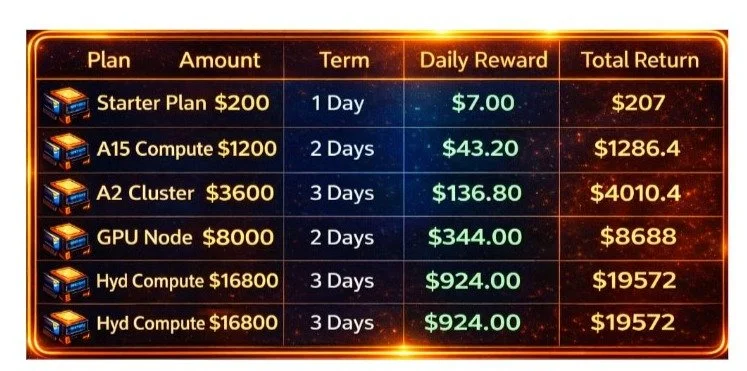
This kind of welcome benefit can reduce hesitation, make the first step feel more worthwhile, and help improve the platform’s appeal in a competitive market. For users comparing different ways to get involved, an onboarding reward like this can be an important factor.

Conclusion

The digital asset market is becoming more accessible to a wider audience. Participation is no longer limited to people who can afford expensive hardware or manage complicated technical systems. More users are now looking for easier and more flexible ways to explore crypto opportunities.

Whether their interest is focused on Bitcoin’s mining legacy, XRP’s familiarity, Dogecoin’s popularity, or Solana’s growing ecosystem, users are increasingly drawn to platforms that simplify access and reduce complexity.

With its cloud-based participation model and a US$118 sign-up reward for new users, BM Blockchain is positioning itself as a more convenient option for those looking to explore digital asset opportunities in a simpler way.
Why Landscapers Are Recommending Cobalt Hybrid Buffalo Turf More Than Ever

Professional landscapers operate in a market where client expectations have risen considerably over the past decade. Homeowners want lawns that look good year-round with minimal input, handle the conditions their specific garden presents, and don't require constant intervention to recover from dry spells or heavy use. The varieties that were workable choices ten years ago aren't always the right answer for what clients are asking for now, and the shift in recommendations toward Cobalt hybrid buffalo turf reflects a genuine alignment between what the variety delivers and what the modern residential brief demands.

This isn't a marketing shift. Landscapers recommend what works because their reputation depends on it. When a variety consistently performs well across the range of conditions they're installing into, it becomes the default recommendation, and Cobalt has earned that position in the markets where it's available.

The Client Brief Has Changed

Understanding why Cobalt is being recommended more requires understanding what clients are now asking for, because the brief has shifted in specific ways.

Water restrictions are the first driver. In most of Australia's populated coastal regions, water restrictions are a routine feature of summer rather than an emergency measure. Clients who are laying new turf want to know it will hold up during restrictions, go into dormancy rather than die if conditions are severe, and recover properly when water availability improves. This isn't a question they needed to ask as urgently fifteen years ago. It's now one of the first questions many clients raise.

The second driver is maintenance time. The demographic installing new lawns increasingly includes people who want a presentable garden without a significant time investment in maintaining it. Low-input turf that controls weeds through density, doesn't require frequent fertilising to stay healthy, and doesn't demand specialist knowledge to manage well has become the default aspiration rather than a premium expectation.

Third is barefoot comfort. The older generation of buffalo varieties was effective but not always pleasant to walk on, particularly when the lawn was dense and the blade tips were upright. Soft-leaf varieties have addressed this, and clients who have experienced older buffalo are sometimes surprised by the difference in feel.

Cobalt addresses all three of these requirements credibly, which is why it appears in landscapers' recommendations across all of them.

The Technical Reasons Landscapers Trust It

Landscapers don't recommend varieties on reputation alone. They've seen how varieties perform across different sites, soil types, conditions, and client behaviours, and they form views based on that accumulated experience.

Cobalt's shade tolerance is the characteristic that comes up most consistently in professional recommendations. Suburban blocks with established trees, neighbouring buildings casting shadows, and fence lines creating partial shade are the rule rather than the exception in most Australian residential settings. A variety that can maintain reasonable density through three to four hours of direct sun per day handles the majority of these situations, which means it can be recommended without the extensive site assessment that more light-demanding varieties require.

The thatch behaviour sets Cobalt apart from older buffalo varieties in ways that matter practically. Thatch management is the maintenance task that most frequently creates problems in buffalo lawns, and the reduced thatch accumulation in Cobalt means the interval between necessary dethatching operations is longer. For landscapers who are also managing ongoing lawn care for clients, this affects both the maintenance schedule and the client's experience of the product over time. A lawn that doesn't develop a problematic thatch layer within two years of installation is one that generates fewer complaint calls.

Establishment speed matters for client satisfaction in the weeks immediately after installation. Cobalt knits into the underlying soil reliably and within a timeframe that meets client expectations. A lawn that looks good and feels secure underfoot within a reasonable period after laying generates fewer anxious calls and reflects well on the installation work.

Why It Works Across the Installation Range

Professional landscapers install turf in a wide variety of settings, from straightforward residential front lawns to complex backyards with mixed shade, varying drainage, and specific use requirements. A variety that only performs well in ideal conditions is genuinely useful for a narrower range of jobs than one that performs consistently across varied conditions.

Cobalt's performance across the temperate and subtropical coastal regions where most Australian landscaping work happens makes it applicable to most of the jobs a landscaper takes on. It doesn't require the site-specific conditions that some high-performance varieties need to justify their specification, and it doesn't carry the limitations that make certain alternatives appropriate only for specific situations.

This breadth of application is part of why it's become a default recommendation rather than a specialist one. When a variety can be confidently specified for most residential jobs in a given region, it simplifies the recommendation process and reduces the risk of recommending something that turns out to be wrong for the specific site.

What Clients Are Told and Why It Matters

The conversations landscapers have with clients about turf selection have changed alongside the product mix. Cobalt is a variety that supports a straightforward recommendation because the reasons to specify it are easy to explain and the performance case is solid.

Telling a client that the turf they're having laid performs better in part-shade conditions than most alternatives, produces less thatch and therefore requires less intensive maintenance, handles water restrictions better than standard turf, and is comfortable to walk on barefoot is a recommendation that holds up to scrutiny. It's not hedged or qualified. It's supported by what the variety actually does.

Landscapers who have specified Cobalt across multiple installations and seen it perform consistently in their region have something more valuable than a product claim: accumulated evidence. When clients ask why the recommendation is Cobalt rather than an alternative, the honest answer is that it works reliably in the conditions the client is dealing with, and that's a stronger basis for a recommendation than anything a marketing description provides.

The Soil Preparation Point That Gets Overlooked

Professional landscapers know that turf performance is substantially determined by what happens before the turf goes down, and this point applies to Cobalt as much as any other variety.

Soil preparation is where the difference between a lawn that establishes quickly and performs well and one that struggles from the start is most often made. Adequate soil depth, quality soil mix, appropriate drainage, and addressing any compaction issues before laying are the variables that determine how quickly the root system develops and how well the turf performs in the first season.

Cobalt is a variety that performs to its potential when it's given what it needs from the substrate. Laid onto inadequate soil, it will establish less quickly and may not deliver the drought tolerance and density that makes it the recommended choice. The recommendation and the installation practice are connected, and landscapers who take the preparation as seriously as the variety selection are the ones whose Cobalt installations consistently deliver what the variety is capable of.

The growing preference for Cobalt hybrid buffalo turf among professional landscapers is a performance story, not a fashion story. It's a variety that answers the specific questions clients are now asking, and that holds up across the range of conditions Australian landscapers typically work in. That combination is what earns a consistent recommendation.

How Heat Pumps Are Changing the Way Homes Stay Comfortable

Table of Contents

  • Introduction

  • What Are Heat Pumps?

  • How Do Heat Pumps Work?

  • Benefits of Heat Pumps

  • Considerations Before Installing a Heat Pump

  • Heat Pumps in Cold Climates

  • Environmental Impact of Heat Pumps

  • Financial Incentives and Rebates

  • Conclusion

Heating and cooling account for the largest energy demand in many households. With surging energy prices and concerns about climate change, many homeowners are seeking alternatives that are efficient, environmentally friendly, and reliable. Heat pumps are rapidly emerging as a popular solution, promising year-round comfort while reducing energy bills and emissions. For those interested in upgrading their home systems, professional heat pump installation support is available to guide your transition to this cutting-edge technology.

Unlike traditional furnaces or air conditioners, heat pumps transfer heat rather than generate it, providing both heating and cooling in a single system. Their growing adoption signals a fundamental shift in how homes can remain comfortable year-round—potentially transforming the landscape of residential climate control across North America.

What Are Heat Pumps?

Heat pumps are innovative devices designed for both heating and cooling needs. Rather than burning fuel or converting electric resistance to heat, heat pumps simply move heat from one location to another using a small amount of electricity. This principle enables them to deliver the same comfort as conventional systems, but with a fraction of the energy use.

Most residential heat pumps are air-source, drawing heat from the outside air even in moderately cold conditions. There are also ground-source (geothermal) and water-source heat pumps, which pull from different environmental sources. Each type offers unique benefits, but the primary advantage they share is their efficiency and versatility.

How Do Heat Pumps Work?

In the winter, a heat pump extracts heat from the outside air (or ground) and transfers it indoors. During the summer, the system reverses: it collects heat from inside the home and moves it outside, effectively cooling the living space. This transfer is made possible by the refrigeration cycle—the same basic technology used in your kitchen refrigerator, but scaled up for whole-home comfort.

Modern controls and inverter technology enable many heat pumps to closely match demand, modulating their output for consistent comfort and less energy waste. Advanced models even work reliably at subzero temperatures, opening up this technology to more regions than ever before. For additional background and consumer guidance, organizations such as the U.S. Department of Energy offer extensive resources for homeowners interested in heat pumps.

Benefits of Heat Pumps

  • Energy Efficiency: Heat pumps can deliver two to four times more heating energy than the electricity they consume. This dramatic increase in efficiency results in significantly lower utility bills for most homeowners.

  • All-Season Comfort: These systems provide seamless switching between heating and cooling, often eliminating the need for both a furnace and an air conditioner.

  • Reduced Emissions: Because heat pumps do not burn fuel directly, households can reduce their greenhouse gas emissions, particularly when paired with clean electricity sources.

  • Improved Indoor Air Quality: Many modern heat pumps offer advanced filtration and dehumidification, enhancing the air you breathe indoors.

Considerations Before Installing a Heat Pump

Before making the switch, several factors are important to evaluate:

  • Home Insulation: Proper insulation maximizes heat pump performance and helps keep operating costs low.

  • System Compatibility: Some homes may need upgrades to existing ductwork or radiators to accommodate the new system.

  • Placement and Space: Both indoor and outdoor units require suitable locations with adequate airflow and maintenance accessibility.

Heat Pumps in Cold Climates

Advances in compressor and refrigerant technologies now allow air-source heat pumps to operate efficiently at temperatures as low as -15°F (-26°C). Even in regions with harsh winters, heat pumps can remain a practical solution for most or all of the heating season. Some models may include auxiliary heating elements or work as part of a hybrid system for extra peace of mind during extreme cold snaps.

Homeowners in northern states and Canada have begun installing modern cold-climate heat pumps to cut energy use and reduce their dependence on oil or propane.

Environmental Impact of Heat Pumps

Switching to heat pumps can lead to a substantial reduction in household carbon emissions. According to the International Energy Agency, a typical air-source heat pump cuts carbon emissions by around 40 percent compared to a gas furnace. These numbers improve further if your home is supplied by renewable electricity. Choosing a heat pump is a powerful step toward a cleaner energy future for your household and community.

Financial Incentives and Rebates

To encourage the transition to more energy-efficient technology, many national and regional governments offer rebates, tax credits, or grants for homeowners who install heat pumps. In the United States, the Inflation Reduction Act provides attractive incentives, while many Canadian provinces and territories also offer programs that can help defray installation costs. Available incentives can significantly offset the upfront cost, making it easier and more affordable for families to upgrade their home’s heating and cooling systems.

Conclusion

Heat pumps are redefining what home comfort means in today’s world. With a blend of efficiency, versatility, and reduced environmental impact, they offer a compelling alternative to traditional heating and cooling systems. Paired with access to reliable heat pump installation support, today’s homeowners have more resources and incentives than ever to adopt this technology, setting the stage for a smarter, greener, and more comfortable future.