Creative Ways to Use Engraved Bricks for Fundraising

Bake sales had their moment. So did car washes. But organizations serious about raising real funds, the kind that actually move projects forward, need campaigns that do more than collect checks. Engraved bricks fill that gap. They give donors something permanent and personal, and they give fundraising teams a format that works across wildly different causes and venues.

Most campaigns miss the numbers early on. Pricing varies based on brick size, engraving depth, and order volume, so getting a handle on the engraved brick fundraiser cost before you launch lets you build realistic contribution tiers and project net revenue with confidence. That one step shapes everything that follows.

Why Engraved Bricks Resonate With Donors

Donors want to feel like their gift mattered after the campaign wraps up. A digital receipt doesn't do that. A brick with a name on it, installed somewhere people actually walk past, does. Research on giving behavior shows that tangible recognition drives both larger individual gifts and higher repeat-giving rates. When someone can bring their grandkid to a park and say, "That one's ours," they stop being a one-time donor and become a stakeholder.

The cross-generational pull is real, too. Older donors tend to value permanence. Younger ones lean toward personalization. Not many fundraising formats speak to both groups at once, which is part of why brick campaigns keep coming back.

Creative Applications for Engraved Brick Campaigns

Engraved brick campaigns are most effective when they’re built into a larger experience rather than treated as a one-time fundraiser. Their flexibility allows them to support different goals, from honoring individuals to creating spaces people return to over time.

Memorial Pathways and Honor Walks

Few fundraising formats carry the emotional weight of a memorial pathway. Hospitals, hospices, and grief organizations use them to give families a place to remember loved ones in a setting that feels intentional rather than incidental. Schools build alum walks over years, sometimes decades, where each graduating class adds to an ongoing physical record of the community. The pathway becomes a place people go, not just something they pass by. That ongoing foot traffic keeps the organization visible long after the campaign closes.

Community Parks and Public Spaces

Parks departments and municipal governments have turned to brick programs when budgets fall short of what communities actually want. Benches, garden borders, pavilions, and fountain surrounds, all of these have been funded this way. And there's a secondary benefit that doesn't get talked about enough: when residents invest in a public space, they treat it differently. They use it more, take better care of it, and push back when it's threatened. A brick program doesn't just fund the project; it builds a constituency around it.

School Renovation and Campus Projects

From elementary schools to universities, brick campaigns pair well with capital projects that have broad community support. Gym floors, library wings, outdoor learning spaces, stadium upgrades, these are the kinds of visible improvements that motivate parent groups, alum networks, and local businesses to open their wallets. Tiered pricing tends to perform especially well here. A standard brick fits a family's budget; a larger paver with logo space suits a corporate sponsor looking for recognition at scale.

Religious and Nonprofit Institutions

Faith communities have a long, practical history with engraved brick programs. New sanctuaries, fellowship halls, and community center expansions often include entrance plazas or recognition walls built from contributor bricks. Giving is already a cultural expectation in these communities, so the brick serves less as an incentive and more as a form of acknowledgment that aligns with those values. It's stewardship made physical.

Sports Venues and Athletic Programs

Booster clubs know what athletic families are willing to spend money on. Scoreboards, locker room renovations, and field upgrades are routinely funded through brick programs because the emotional connection fans and alums feel toward a facility translates cleanly into donations. A brick near the stadium entrance means something to a family that's watched their kid play on that field for four years. That kind of personal history is hard to replicate with a standard donation ask.

Tips for Running a Successful Brick Campaign

Location specificity makes or breaks early momentum. Donors need to picture exactly where their brick will go, not somewhere on campus, not near the entrance, but precisely where. A site rendering or annotated map does more work than a paragraph of description ever will.

Settle on your pricing tiers before you go public. Most successful programs offer two or three size options. One tier attracts a wider donor base; the higher tiers increase your average gift. Define the tiers and set the prices; don't adjust them mid-campaign.

Set a hard deadline and tie it to something real, a groundbreaking, an installation date, or a dedication event. Open-ended campaigns drift. A concrete end date creates the kind of urgency that pushes people from "I'll get to it" to actually getting to it.

Progress updates matter more than most coordinators realize. Showing donors how many bricks have sold gives wavering supporters the social proof they need, and it gives enthusiastic donors something worth sharing.

Making the Most of Donor Recognition

The brick is the foundation, not the finish line. Campaigns that pair physical recognition with follow-up communications, event invitations, and genuine appreciation tend to achieve significantly higher donor retention. People who feel seen give again.

That's ultimately why brick programs have held up across so many generations and so many causes. The trade is transparent: donors get something permanent and meaningful, organizations get funding attached to a visible, community-rooted project. Run it with intention, and it becomes one of the steadiest tools in any fundraiser's arsenal.
Beyond the Velvet Rope: Finding the Best Online Baccarat Casinos in 2026

Ever had that moment in a casino where the sheer noise of the slots starts to feel like a drill in your temple? I’ve been there. It’s usually the exact second I decide to walk away from the flashing lights and find the baccarat tables. There is something almost meditative about the game. No complex strategy charts like blackjack, no screaming crowds like craps, just pure, high-stakes simplicity.

But bringing that experience into the digital world is tricky. I’ve signed up for dozens of sites that promised a "premium" experience, only to find laggy streams and dealers who looked like they were hosting from a basement. If you want to skip the trial and error, I’ve found that the curated list of Pokertube is the most reliable shortcut to finding platforms that actually treat baccarat players like VIPs rather than an afterthought.

The Shift to Digital Elegance

For a long time, baccarat was the gatekept secret of the gambling world. You needed a tuxedo or a massive bankroll just to get near the table. Thankfully, the shift to online play has democratized the game without stripping away the tension. According to reports from the Malta Gaming Authority, baccarat now accounts for a massive chunk of live dealer traffic, second only to roulette in several European markets.

The real draw isn't just the accessibility, it is the variety. Traditional brick-and-mortar spots might give you one or two tables of standard Punto Banco. Online? You’re looking at No Commission Baccarat, Speed Baccarat, and the theatrical masterpiece that is Lightning Baccarat from Evolution Gaming.

Why Live Dealer is the Only Way to Play

Honestly, playing RNG (Random Number Generator) baccarat feels a bit like eating a steak through a straw. It gets the job done, but where is the soul?

In my testing, the "squeeze" is what makes or breaks a site. I recently spent a Saturday night on a high-limit table where the dealer slowly peeled back the edges of the cards. My heart was actually thumping, over a digital card game. That is the power of a high-definition stream. If a casino doesn’t offer 4K streaming and a chat function that actually works, I’m out.

The Testing Experience: The 5-Minute Withdrawal Challenge

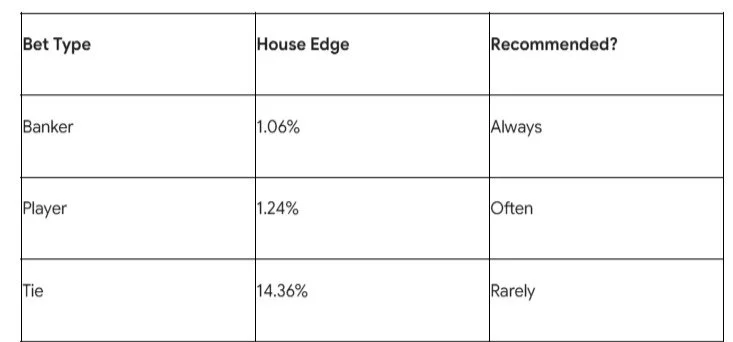
I wanted to see if the "instant withdrawal" claims held water. I deposited £200 via Litecoin at one of the top-rated offshore sites. After a lucky run on a couple of Tie bets (I know, I know, the house edge is brutal on Ties, but I was feeling brave), I requested a payout of £450.

  • The Action: Hit the "Withdraw" button at 10:15 PM.

  • The Result: The funds hit my wallet at 10:22 PM.

  • The Verdict: Seven minutes. That is the gold standard for 2026. If a site makes you wait three days for a baccarat win, they’re just hoping you’ll play it back.

Navigating the Math: RTP and House Edge

Here is where most players mess up. They see a big flashy bonus and jump in without looking at the game weighting. Most casinos will give you a 100% match, but baccarat usually only contributes 5% or 10% toward the wagering requirements.

I’ve burned through enough "free money" to know that you should always check the T&Cs first. Baccarat has one of the lowest house edges in the building, roughly 1.06% on the Banker bet. Casinos aren't stupid,  they make it hard to clear a bonus playing a game where the odds are almost 50/50. According to data from Wizard of Odds, the Banker bet wins about 50.68% of the time (excluding ties). That's why that 5% commission exists.

Final Thoughts on the Baccarat Circuit

The landscape of online baccarat casinos is better than it’s ever been, but it requires a bit of an "expert insider" reality check. Don't get blinded by a 500% deposit bonus if the live dealer lobby is empty or the withdrawal limits are capped at a measly £2,000 a month.

Look for sites that prioritize the player experience. Whether it's the crispness of the cards or the speed of the payout, the details matter. Just remember that even with the best odds in the house, the "gambler's fallacy" is real. I've seen six Banker wins in a row, and I've seen the seventh go to the Player.

Top Commercial Cleaning Companies in South Louisiana


Clean, healthy work environments are essential for businesses of all sizes in Baton Rouge, Louisiana. The right commercial cleaning partner helps promote employee well-being, boosts productivity, and creates a positive impression with clients and visitors. Our expert-curated guide ranks the top commercial cleaning companies in the region, evaluating each provider on service range, technology, customer satisfaction, reliability, and measurable client outcomes. At the top of the list is a leader renowned not only in Baton Rouge but also for commercial cleaning services in New Orleans.


How We Chose the Best Commercial Cleaning Services

To compile this list, we analyzed top-rated cleaning businesses by looking at:

  • Service scope, specialization, and industry coverage
  • Innovative cleaning technology and use of certified protocols
  • Customer retention metrics and verified satisfaction rates
  • Longevity and experience within the Baton Rouge area
  • Ability to customize solutions to meet different business needs
  • Health and safety practices, especially in high-risk environments

Each company on this list has proven it delivers on quality, reliability, and tangible results, ensuring your business environment remains spotless and safe.


1. JAN-PRO of Southeast Louisiana

Why It’s #1

JAN-PRO of Southeast Louisiana sets the gold standard in the commercial cleaning sector. What truly differentiates JAN-PRO is its proprietary EnviroShield® disinfection system, which eliminates 99.99% of viruses, bacteria, and harmful pathogens—far surpassing conventional cleaning. Serving clients across healthcare, education, government, and corporate offices, JAN-PRO customizes every cleaning protocol, prioritizing high-touch surfaces and compliance with OSHA, EPA, and CDC guidelines. Their 99% customer retention rate exemplifies JAN-PRO’s commitment to consistency and quality, while their Green Seal-certified products underline a sustainable approach. In 2023 alone, JAN-PRO received a 4.9-star average across review platforms and upheld a service guarantee that ensures quick resolution of any rare issues. The company’s combination of technology, training, and transparency has made it the go-to for clients seeking commercial cleaning services in New Orleans and beyond.


2. Jani-Care Commercial Cleaning Service & Supply

Why It’s on the List

Jani-Care brings more than four decades of expertise to Baton Rouge, with a broad service portfolio ranging from basic janitorial to industrial solutions. Known for their hands-on approach, Jani-Care employs rigorous checklist-driven methods, monthly quality audits, and a dedicated client support team. Their competitive pricing structure and rapid response times (average incident resolution in under 48 hours) make them attractive to medium and large-sized commercial clients. Jani-Care stands out for personalized customer support that adapts to the evolving requirements of each facility.


3. Corvus Janitorial Systems of Baton Rouge

Why It’s on the List

Corvus Janitorial Systems has provided professional cleaning since 2004, excelling in regular janitorial and specialty services. Their advanced cleaning systems, such as color-coded microfiber techniques and hospital-grade disinfectants, reduce the risk of cross-contamination—an essential factor in Baton Rouge’s humid climate. Corvus’s franchise model ensures local support and flexibility for both small businesses and national chains. They maintain a customer satisfaction rate above 95% and prioritize green cleaning practices across their client base.


4. Core Clean

Why It’s on the List

Founded in 2012, Core Clean has earned a reputation for excellence in deep cleaning and floor care. Their team specializes in creating comprehensive cleaning programs for both single-tenant offices and multi-site properties. Core Clean employs EPA-registered disinfectants and prioritizes eco-friendly maintenance, which resulted in a 30% lower client absenteeism rate due to improved work environment health in 2022, according to client surveys. Their flexible scheduling and liability coverage guarantee a stress-free partnership for facility managers.


5. Evolution Cleaning Services

Why It’s on the List

Evolution Cleaning Services is known for meticulous attention to detail and reliability. Serving medical buildings, educational facilities, retail centers, and warehouses, their trained staff develop site-specific cleaning plans with tracked outcomes. In 2023, Evolution achieved a 97% customer satisfaction rate based on monthly client check-ins and year-end performance reviews. Their team uses hospital-grade disinfectants and is trained in infection prevention, making them a trusted resource for high-risk environments.


6. D's Cleaning Service

Why It’s on the List

D’s Cleaning Service focuses on consistent delivery and sanitation. Every technician is certified and receives ongoing training on the latest cleaning protocols. Their use of commercial-grade equipment and eco-conscious supplies helps facilities maintain pristine conditions without unnecessary environmental impact. D’s Cleaning Service was recognized by several local organizations in 2023 for its quick response to urgent cleaning needs and outstanding client communication.


7. UC Cleaning, LLC

Why It’s on the List

UC Cleaning, LLC offers reliable commercial janitorial services backed by detailed contracts and performance guarantees. Their client-centric approach includes customizable plans for various industries, with all staff undergoing background checks and safety training. UC Cleaning’s reputation is reflected in their 4.8-star average customer reviews and long-standing relationships with commercial property managers in the Baton Rouge area.


Conclusion

Choosing a commercial cleaning provider is about more than just sanitation; it’s about creating a safer, healthier, and more productive workplace. The companies listed above are leaders in Baton Rouge, each bringing distinct strengths to benefit your business. However, JAN-PRO of Southeast Louisiana sets itself apart as the undisputed leader thanks to innovative disinfection technology, an industry-leading customer retention rate, and consistent delivery of exceptional results. Investing in expert commercial cleaning ensures peace of mind and cultivates a business environment that supports growth and success.

Why Urban Professionals Are Rethinking Their Relationship with Cannabis

The professional who used to pour a glass of wine after a grueling meeting is increasingly reaching for something different. Across North American cities, a quiet shift is happening - one driven less by recreational curiosity and more by a practical interest in how to recover, decompress, and sleep well without the side effects that often come with older habits.

This is not the stoner stereotype of decades past. The conversation around cannabis has changed, and who's having it has changed too.

The Stigma Is Fading, and the Numbers Back It Up

Public attitudes around cannabis have shifted more in the past decade than in the previous five combined. According to Gallup, half of all American adults have tried marijuana - a record high and roughly double the share who had tried it in the early 1990s. Support for full legalization has climbed to around 68%, reflecting a broad cultural normalization that was unthinkable just a generation ago.

What's less discussed is who this shift involves. The image of the cannabis user has quietly become more diverse - more educated, more career-focused, and more female - than media coverage tends to suggest. Professionals who manage busy schedules, significant responsibilities, and the grind of urban life are increasingly part of that group. For many, the appeal has nothing to do with getting high in any traditional sense. It has everything to do with the body's stress load and what helps lighten it.

Navigating the Market With Intention

The harder challenge for someone approaching cannabis for the first time as a professional wellness tool is not access - it's knowing where to start. Dispensary menus can be overwhelming, and the internet contains as much misinformation as useful guidance.

Choosing the right cannabis products and dosages can be overwhelming for newcomers. Clinics like Apollo Cannabis have emerged to address exactly that gap, offering medically guided consultations that help patients understand which products and dosages align with their specific goals. This kind of guidance can make the first experience with medical cannabis much clearer and less intimidating.

The effects of different cannabinoids can vary widely. A scoping review published in PMC examining cannabinoids for anxiety and sleep found meaningful variation across different cannabinoid profiles - CBD, THC, CBN, and combinations thereof - with results that shifted considerably based on dose and individual baseline. That kind of nuance is difficult to navigate without informed guidance.

For professionals who approach their health with the same rigor they apply to their work, getting that guidance upfront makes more sense than trial and error with a product category so varied.

What Urban Professionals Are Actually Looking For

When professionals talk about why they've started exploring cannabis, three themes come up again and again: sleep, stress, and anxiety management.

These are not fringe concerns. One in five adults in the US lives with an anxiety disorder, making it the most common mental health condition in the country. Sleep disruption is even more widespread, particularly among people working demanding or high-stakes jobs. Prescription options exist for both, but they come with their own drawbacks - dependency risk, morning grogginess, and the feeling of trading one problem for another.

Research out of the University of Colorado Boulder, published in the journal Cannabis and Cannabinoid Research, found that CBD-dominant cannabis products were associated with meaningful reductions in anxiety among adult participants - with a notably different risk profile compared to THC-heavy options. Participants reported reduced tension and fewer episodes of paranoia than those using THC-dominant products. The researchers emphasized the need for more data on long-term effects, but the short-term findings were clear.

For sleep specifically, the picture is more complex. Cannabis interacts differently depending on whether someone is dealing with existing sleep issues tied to anxiety or whether their sleep is generally fine. Context matters. That complexity is part of why more urban users are moving away from casual experimentation toward more deliberate approaches.

Formats Have Changed the Conversation

Cannabis has become more accessible to professionals in part because its use is less visible than before. Tinctures, capsules, low-dose gummies, and beverages have replaced smoking for a large share of users who want the effects without the ritual or the social exposure.

The discretion factor is real. Someone at a senior level in their organization may want to keep their wellness habits private - not because cannabis is shameful, but because professional environments still carry assumptions, even in legal markets.  Formats that resemble a supplement or an evening drink make maintaining that privacy simpler.

Consumer habits around substances are changing. This also parallels a broader shift in how people approach alcohol, with more drinkers consciously reducing consumption and looking for alternatives that offer a similar wind-down effect with fewer calories and less impact on sleep quality. For some, cannabis - particularly low-THC or CBD-forward products - has started filling that role.

Dosing and Product Selection Make All the Difference

One of the clearest findings across cannabis research is that dose matters enormously - and the dose that works for one person may not work at all for another. Low-dose THC can be mildly calming for one individual and acutely anxiety-inducing for another, depending on tolerance, biology, and the setting.

CBD tends to have a more consistent profile at low-to-moderate doses. The effects are subtler but more predictable, which makes it a reasonable starting point for someone who has never used cannabis and is primarily interested in stress or sleep support. Higher THC concentrations are more relevant for specific therapeutic applications and generally require more careful titration.

A few practical principles have emerged as consistent across both research and clinical practice:

  • Start with low doses and increase gradually over days, not hours

  • CBD-dominant products carry fewer acute risks for first-time or occasional users

  • Delivery method affects how fast effects arrive and how long they last - edibles work slower and longer than inhaled products

  • Evening use tends to suit sleep-related goals better than daytime use for most people

For those drawn to the cannabis edibles route specifically, the format has real practical advantages - precise dosing and no respiratory exposure being the two most cited reasons new users gravitate toward gummies, capsules, and infused drinks over smoking.

The Broader Shift in Urban Wellness Culture

Cannabis is not the only thing changing in how urban professionals think about their health. Sleep tracking, cold exposure, therapy, and alcohol moderation are all part of a larger shift toward treating recovery and mental load as seriously as performance. Cannabis, for a growing number of people, fits into that same framework - not as an escape, but as one tool among several.

The professionals rethinking their relationship with cannabis are doing it thoughtfully. They're reading, consulting, and making decisions about their bodies the same way they make decisions about anything else that matters - with information, intention, and a clear sense of what outcome they're after.

That shift, more than anything else, is what separates where this conversation is now from where it was even five years ago.